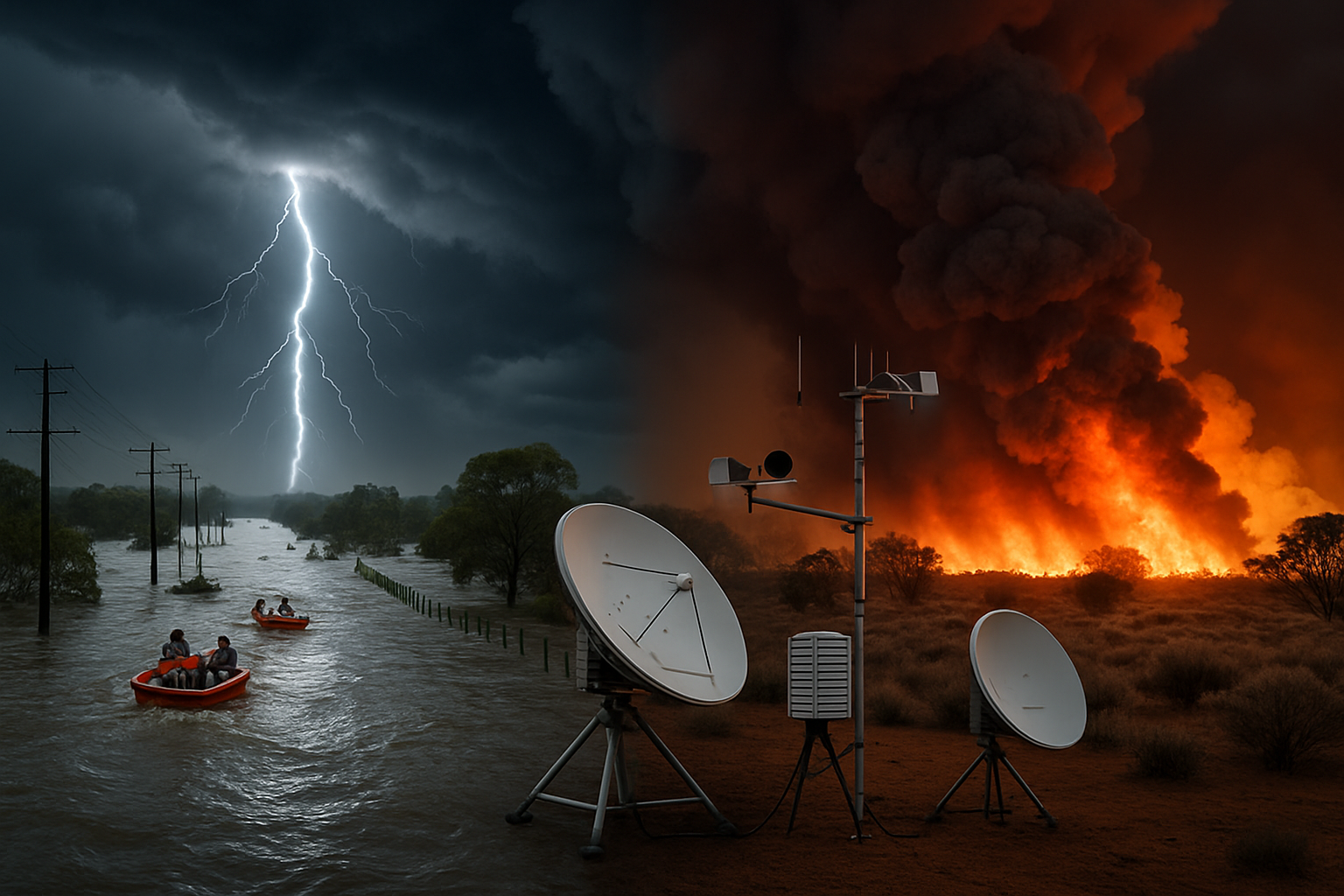
Scientists are sounding the alarm as Australia experiences unprecedented weather volatility, with extreme swings from flooding to searing heat signaling that climate change has now definitively overtaken natural weather drivers across the continent.
The warning comes during the 21st consecutive month that global temperatures have exceeded 1.5°C above pre-industrial levels—the longest sustained warming streak in recorded human history. This summer's sharp oscillations between catastrophic flooding and dangerous fire conditions represent what meteorologists are calling a "climate volatility paradox," where sustained global warming enables both heat records and devastating regional extremes simultaneously.
Summer's Devastating Pattern Emerges
Australia's 2025-2026 summer has delivered a sobering preview of what experts warn will become routine by the 2030s. The continent has lurched between extremes that would have been considered impossible under historical weather patterns, with some regions experiencing their wettest conditions in decades while simultaneously maintaining bone-dry vegetation that creates unprecedented fire risks.
In February, the Bureau of Meteorology issued warnings for "apocalyptic rain" across Sydney and New South Wales, trapping commuters in dangerous flash flooding conditions. Queensland recorded its wettest day since 2010 in some areas, while emergency services struggled to manage the sheer intensity of precipitation that exceeded infrastructure capacity.
Yet even as floodwaters receded, the Australian Fire and Emergency Services Council (AFAC) warned of "increased significant bushfires" due to vegetation that remained dangerously dry despite the record rainfall. This paradoxical condition—simultaneous flood and fire risks—represents a fundamental departure from traditional seasonal fire behavior that has guided emergency planning for decades.
The Science Behind the Shift
The unprecedented weather patterns reflect what climate scientists term "compound extreme events," where multiple environmental stressors occur simultaneously, overwhelming traditional emergency response capabilities designed for sequential rather than concurrent disasters.
January 2026 marked not only the 20th consecutive month exceeding the critical 1.5°C threshold but also became the hottest month ever recorded in human history. This sustained warming has fundamentally altered atmospheric circulation patterns, overriding natural cooling mechanisms including La Niña effects that historically moderated Australian weather.
The World Meteorological Organization has indicated a 50-60% probability of El Niño development during July-September 2026, which could combine with the unprecedented baseline warming to drive temperatures into entirely uncharted territory. This potential double impact has emergency planners preparing for scenarios that have no historical precedent.
"We're witnessing the breakdown of natural climate cycles that have governed weather patterns for millennia. Climate change isn't just making weather more extreme—it's making it fundamentally unpredictable in ways our systems weren't designed to handle."
— Dr. Sarah Mitchell, Climate Systems Researcher at the Australian National University
Infrastructure Under Unprecedented Stress
The extreme weather is exposing critical vulnerabilities in infrastructure designed for historical rather than current climate conditions. Transportation networks, power grids, and communication systems are repeatedly operating beyond their intended parameters as extreme weather events exceed operational thresholds.
The Northern Territory provides a stark example: Katherine Hospital was evacuated during the worst flooding in decades, with the Katherine River peaking at 19.2 meters—approaching the catastrophic 1998 levels. Traditional flood defenses, designed using historical data, proved inadequate against the scale and intensity of the current weather systems.
Emergency management experts note a critical shift from sequential to concurrent disasters. "We're seeing multiple emergency types happening simultaneously across different regions," explains an AFAC spokesperson. "This challenges our traditional mutual aid mechanisms where resources are typically shared between regions experiencing disasters at different times."
Economic and Social Ramifications
The economic toll extends far beyond immediate emergency response costs. Agricultural sectors face mounting losses as extreme weather destroys crops during critical growing seasons. The sugar industry and tourism networks have experienced substantial disruption, while transportation systems struggle with infrastructure damage that requires months rather than weeks to address.
Perhaps most significantly, recovery timelines have fundamentally shifted. What once required weeks of restoration now demands months to years of rebuilding, forcing a rethink of disaster response approaches. The phrase "building back better" has evolved from an optional enhancement to an essential survival strategy for communities facing repeated extreme weather.
Mental health services report increased demand as communities grapple with repeated climate trauma. Families potentially losing generational properties for the second time in a decade face psychological burdens that extend far beyond material losses. The "Bargara Facebookers" community group, which has become essential for emergency coordination when traditional systems are overwhelmed, represents the kind of grassroots resilience networks emerging across the continent.
Global Context and International Implications
Australia's experience reflects a global pattern of simultaneous extreme weather events that are overwhelming traditional international mutual aid mechanisms. The European Union's Civil Protection Mechanism has been activated repeatedly, with a €246 million Sweden-Denmark assistance package representing the largest coordinated European weather response on record—yet still insufficient for the scale of concurrent global disasters.
Emergency services are reaching capacity limits globally, with the traditional assumption that stable regions can assist disaster-affected areas breaking down when multiple continents face emergencies simultaneously. This has forced a fundamental restructuring of international cooperation frameworks designed for sequential rather than parallel disasters.
The Path Forward: Adaptation Imperatives
Climate scientists emphasize that current conditions provide a preview of routine 2030s weather patterns without significant climate adaptation investment. The choice between reactive crisis management and transformative infrastructure adaptation is becoming increasingly critical as the window for effective climate action narrows.
Successful responses are emerging through sophisticated integration of cutting-edge technology with traditional ecological knowledge. Australian authorities are combining advanced meteorological forecasting with Indigenous fire management practices, while satellite imagery, environmental DNA sampling, and AI-powered analysis enhance preparedness capabilities when coupled with community engagement.
The Australian experience demonstrates that environmental protection now functions as economic infrastructure rather than regulatory burden. Countries implementing comprehensive climate adaptation show greater economic resilience and attract sustainable investment across green technology manufacturing and environmental services.
A Watershed Moment
March 2026 represents a critical juncture for global climate preparedness. The convergence of extreme weather, infrastructure vulnerabilities, and emergency response limitations underscores the urgent need for coordinated international action. Australia's experience provides crucial lessons for other nations preparing for similar challenges as extreme weather frequency and intensity increase globally.
The fundamental question is no longer whether transformative climate action is needed, but whether humanity can organize and implement solutions rapidly enough to maintain planetary habitability during Earth's most environmentally challenging period in recorded history.
As emergency management systems require transformation to address permanent climate volatility rather than exceptional weather events, the choices made in coming months may prove decisive for global climate resilience strategies affecting generations to come. Australia's weather whiplash serves as both warning and template for a world grappling with the reality that climate change has definitively altered the rules governing life on Earth.