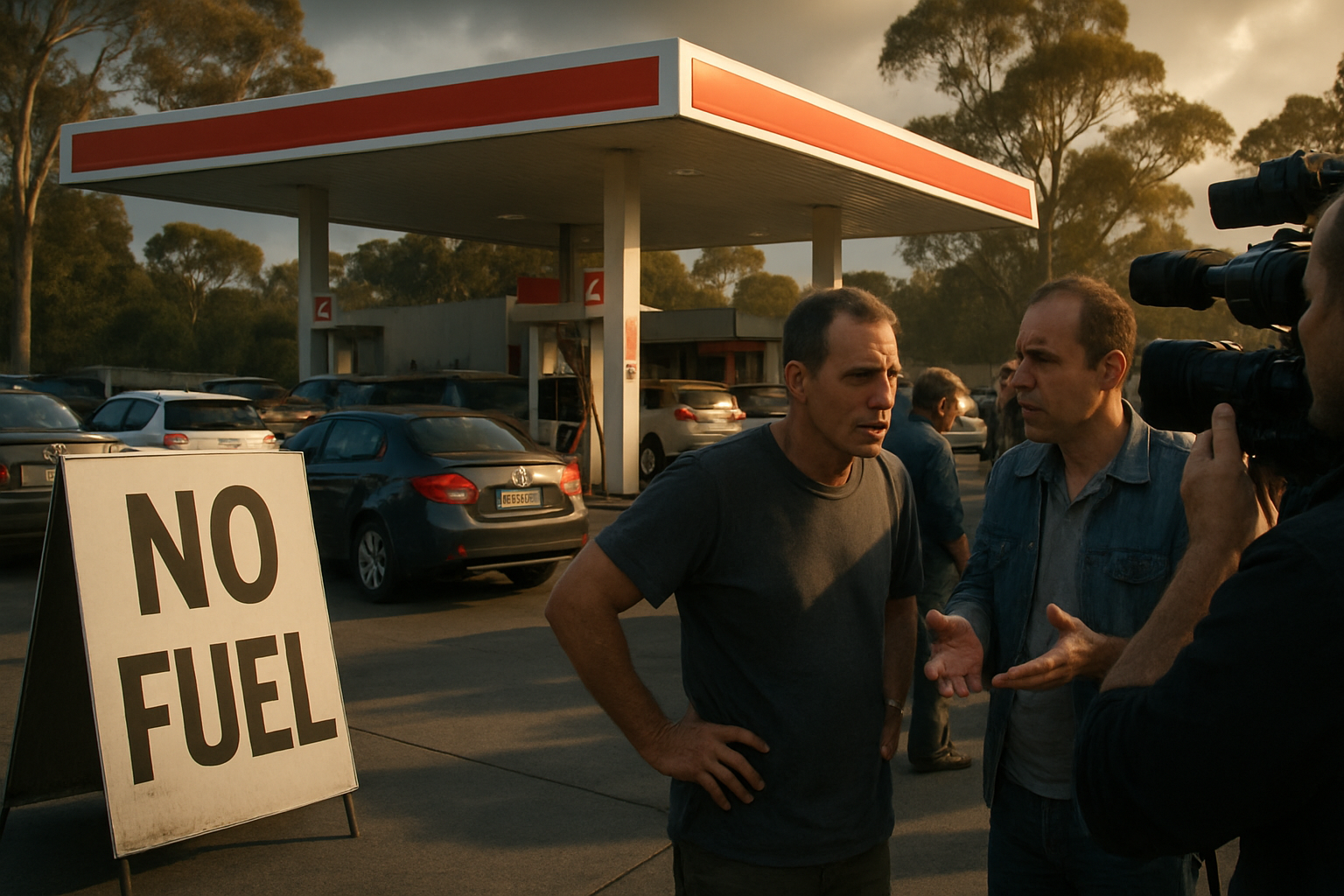
Australia faces an unprecedented fuel supply emergency as the Middle East conflict escalates, threatening potential diesel rationing and widespread fuel shortages across the nation. Regional Queensland towns are already running dry, with some petrol stations completely out of fuel while prices surge toward $3 per liter.
The crisis stems from Iran's Revolutionary Guard declaring the Strait of Hormuz "unsafe for shipping," effectively blocking 40% of global seaborne oil transit through the critical 21-mile chokepoint. This has triggered what experts describe as the most severe global energy emergency since the 1970s oil shocks.
Regional Australia Hit First and Hardest
Small Queensland townships are bearing the brunt of the crisis, with the town of Texas completely depleting its fuel supplies over the weekend. Regional stations from Robinvale to Goondiwindi are running dry as major suppliers prioritize their own bulk distributors over independent retailers.
"Major suppliers are favoring their own bulk distributors, leaving independent stations without supply," reports Goondiwindi Mayor Lawrence Springborg. This supply hierarchy is creating acute regional shortages precisely where transport alternatives are most limited.
"Regional communities are particularly vulnerable - they have limited transport alternatives and heavy vehicle dependence for basic services."
— Industry Source
Government Emergency Response Escalates
NSW Energy Minister Penny Sharpe is chairing crisis talks in Sydney with transport, agriculture, mining, and consumer groups as the situation deteriorates. The Australian Competition and Consumer Commission (ACCC) is monitoring fuel companies for price gouging as petrol surges past $2.50 per liter nationally, approaching the critical $3 threshold in some regions.
Deputy Prime Minister Richard Marles has acknowledged that fuel rationing remains a possibility if the Iran conflict continues. This represents the most significant government intervention in fuel markets since the 1970s energy crisis.
The crisis has also triggered unprecedented responses from international agencies. The International Energy Agency (IEA) has announced the largest strategic petroleum reserve release in its 50-year history - 400 million barrels from 32 countries, double the amount released during the 2022 Ukraine crisis.
Transport and Rideshare Industry in Crisis
Australia's transport sector is experiencing severe disruption, with rideshare companies Uber and DiDi among the first to increase their fees in response to soaring fuel costs. The gig economy is particularly hard hit, with drivers reporting significant income losses as fuel prices eat into earnings.
The aviation industry faces parallel challenges, with jet fuel costs surging from $85-90 to $150-200 per barrel - a staggering 122% increase. Major airlines are implementing emergency fare increases and cutting flights, while 18,000+ flights have been cancelled worldwide in what aviation experts describe as the most extensive disruption since COVID-19.
Global Context: Strait of Hormuz Closure
The crisis escalated when Iran's Revolutionary Guard declared the narrow Strait of Hormuz "unsafe for shipping" following the breakdown of U.S.-Iran nuclear talks. This strategic waterway handles 40% of the world's seaborne oil traffic, and its closure has stranded over 150 oil and LNG tankers worth billions in cargo.
Oil prices have breached $100 per barrel for the first time since 2022, with Brent crude peaking at $119.50 and West Texas Intermediate jumping a record 18.98% to $108.15 in a single day. Natural gas prices have exploded by 24% in Europe and 78% in the United States.

Cross-Tasman Comparison: New Zealand's Severe Response
New Zealand faces even more acute challenges, with Prime Minister Christopher Luxon warning citizens to prepare for a "prolonged Iran conflict." Petrol has breached NZ$3.32 per liter, with some stations hitting NZ$3.49, and economists forecasting potential prices of NZ$4 per liter.
The New Zealand government is considering emergency measures not seen since the "Muldoon-era" of the 1970s, including car-free days and petrol sale limits. Stewart Island faces particular vulnerability, as it relies on diesel generators for electricity, burning through approximately 1,000 liters of diesel daily.
Strategic Vulnerability Exposed
Australia's limited domestic refining capacity and heavy dependence on fuel imports make it particularly vulnerable to global supply disruptions. The crisis has highlighted dangerous over-dependence on strategic chokepoints in volatile geopolitical regions.
Energy Secretary Christopher Wright is considering lifting Russian oil sanctions to stabilize global supply, with "hundreds of millions of barrels of sanctioned oil" potentially available for market stabilization. This represents a significant policy shift driven by the severity of the crisis.
"This is the most severe energy security crisis in decades, exposing single-chokepoint vulnerabilities in our global energy architecture."
— Samuel Ciszuk, Energy Analyst
Economic and Social Impact
Financial markets worldwide have crashed in response to the energy crisis. Pakistan's KSE-100 index suffered its largest single-day decline in history at -8.97%, while South Korea's KOSPI fell 12% triggering circuit breakers and pushing the Korean won to a 17-year low.
The crisis extends beyond energy markets, affecting supply chains for consumer goods and industrial materials worldwide. Manufacturing networks dependent on Gulf shipping routes face severe disruptions, with Singapore reporting 30% increases in logistics costs.
For Australian consumers, the impact is immediate and severe. Rural communities face operational challenges as transport costs escalate, while tourism and domestic travel prospects diminish as families reconsider holiday plans due to fuel costs.
Key Consumer Impacts:
- Petrol prices surging past $2.50/liter, approaching $3 threshold
- Regional fuel stations running completely dry
- Transport and logistics costs escalating rapidly
- Small businesses facing operational challenges
- Emergency services and agricultural operations at risk
International Crisis Management
The current crisis represents the most dangerous international emergency since the end of the Cold War, simultaneously affecting regional war prevention, global energy security, nuclear governance credibility, and international law enforcement principles.
UN Secretary-General António Guterres has called it the "greatest test of multilateral cooperation in the modern era." The nuclear dimension adds particular urgency, as the New START treaty between the U.S. and Russia expired on February 5, leaving the world without nuclear constraints for the first time in over 50 years.
Iran continues 60% uranium enrichment with over 400kg of weapons-grade material - sufficient for multiple nuclear weapons if weaponized. This combination of energy warfare and nuclear escalation creates unprecedented risks for global stability.
Government Response Strategy
The Albanese government's response focuses on demand management rather than immediate supply solutions. Energy Minister Chris Bowen has acknowledged it would be "sensible" for Australians to explore working from home more frequently to reduce overall fuel consumption.
This approach avoids the drastic measures implemented by other nations, such as rationing or price controls. However, the government is preparing contingency plans should the crisis escalate further or persist for an extended period.
Looking Ahead: Recovery Timeline Uncertain
Unlike weather-related disruptions, recovery from this crisis depends on military operations and diplomatic resolution rather than predictable economic factors. Aviation industries cannot schedule long-term operations with multiple airspaces closed, and energy markets remain volatile with critical transit routes blocked.
The crisis highlights the urgent need for fundamental energy architecture transformation to reduce dependence on volatile geopolitical regions. Strategic petroleum reserves provide only temporary buffering for sustained disruptions, making supply diversification and renewable energy transitions more critical than ever.
"Success in containing this crisis could provide a framework for nuclear crisis resolution. Failure may accelerate military solutions, reshape Middle Eastern geopolitics for decades, and encourage nuclear proliferation globally."
— International Relations Expert
Template-Setting Moment for 21st Century
March 2026 represents a watershed moment for global energy security planning. The crisis demonstrates how regional conflicts can instantly create global economic disruptions in our interconnected world, requiring new paradigms for crisis management and international cooperation.
The outcome will establish precedents for diplomatic versus military solutions in future conflicts, affecting international stability mechanisms for decades beyond the current events. For Australia, it serves as a stark reminder of the importance of energy security and supply chain resilience in an unstable world.
As the situation continues to evolve, Australian households and businesses face immediate challenges while policymakers grapple with long-term strategic planning requirements. The crisis underscores the vulnerability of import-dependent economies to geopolitical shocks and the critical need for enhanced energy security infrastructure.