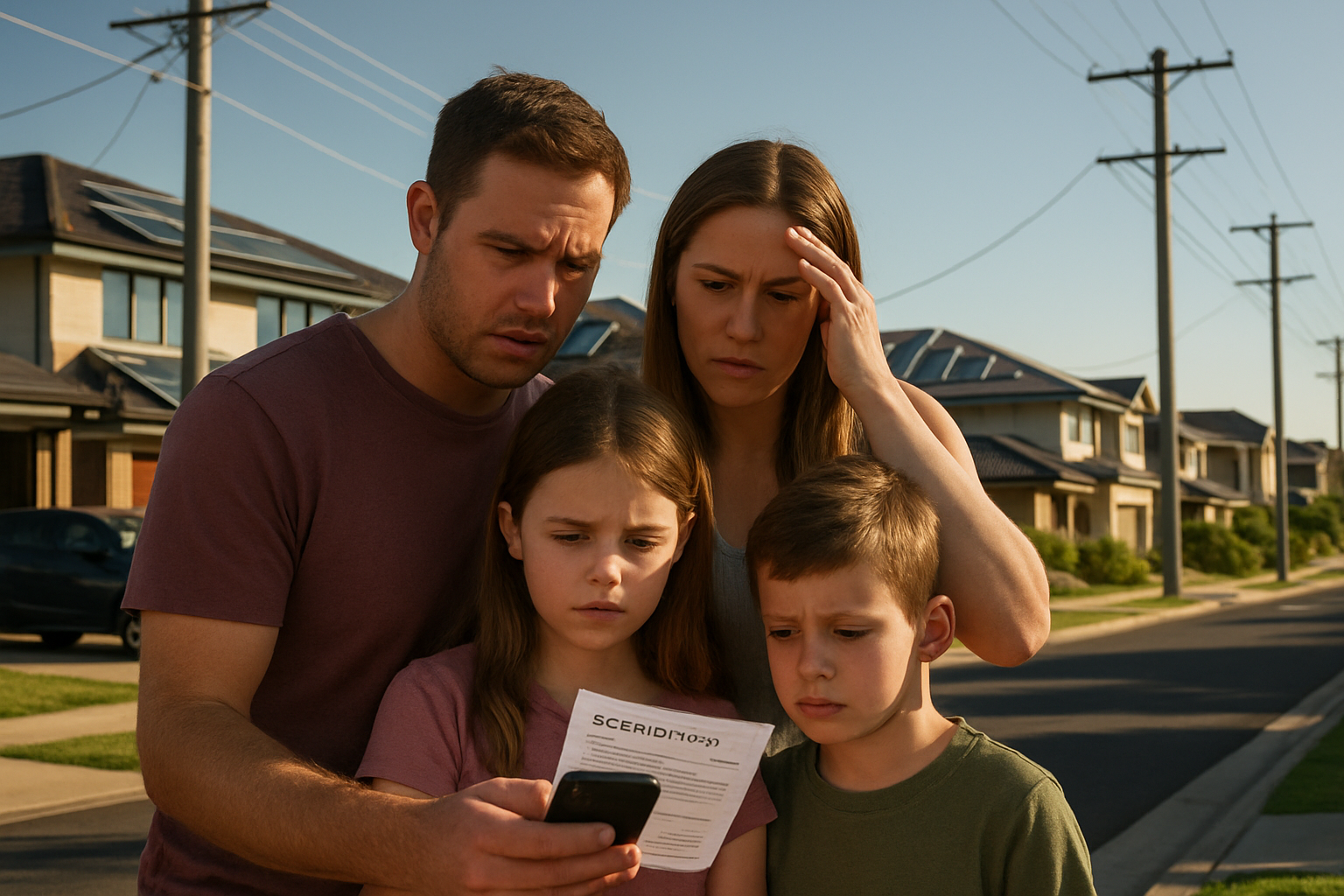
Australia's energy regulator has proposed the steepest electricity price reductions for households since 2022, with cuts of up to 10% across major states. However, these savings offer little respite for millions of Australians grappling with a deepening cost-of-living crisis driven by housing unaffordability, record interest rates, and warnings of economic recession.
The Australian Energy Regulator (AER) announced changes to its default market offer affecting maximum electricity prices that retailers can charge in New South Wales, Queensland, and South Australia. Residential properties could see power bills fall by up to 10.1% in some regions, potentially saving households hundreds of dollars annually.
However, the energy savings come at a time when the Reserve Bank of Australia has raised interest rates to unprecedented levels, creating what economists describe as a perfect storm for household budgets. The RBA's cash rate pressure at 3.85% is creating "unprecedented challenges for first-time buyers and existing homeowners," fundamentally altering buy-versus-rent calculations across Australian markets.
Interest Rate Pressure Undermines Energy Relief
The energy regulator's positive news is overshadowed by broader economic warnings. The Reserve Bank has raised alarms about a potential recession as Australia battles consecutive cash rate hikes, job losses, soaring fuel prices, and volatility from the ongoing Middle East crisis.
Latest employment figures have stoked fresh fears that Australia's economy could face its second recession in six years. The combination of high interest rates and global energy market disruptions—driven by the Iranian closure of the Strait of Hormuz affecting 40% of global oil transit—has created an environment where traditional monetary policy tools are proving inadequate.
Domain reports show existing homeowners possess a "financial shield" through record property profits, but this is simultaneously widening the gap between established owners and first-time buyers to historic proportions. Young Australians are increasingly priced out of homeownership, with buy-versus-rent calculations being "rewritten" across select markets amid sustained high interest rates.
Energy Market Dynamics and Global Context
While electricity prices are falling due to increased renewable energy generation, Australia faces broader energy security challenges. The global energy crisis—triggered by Middle East conflicts disrupting critical shipping routes—has seen oil prices surge past $100 per barrel for the first time since 2022.
Australia's energy market demonstrates the complex relationship between renewable energy growth and pricing. Despite significant investments in solar and wind power, household energy costs remain elevated due to infrastructure investment requirements and global supply chain pressures affecting renewable technology components.
"The outlook remains clouded by the war in Iran,"
— Sydney Morning Herald energy analysis
The semiconductor shortage has driven chip prices up sixfold, affecting smart building technologies and renewable energy infrastructure. This supply chain crisis adds 20-30% to construction costs, impacting both energy infrastructure and housing development until new fabrication facilities come online in 2027.
Housing Affordability Reaches Crisis Point
Australia's housing crisis has reached unprecedented levels, with analysis revealing potential home buyers may find better financial outcomes purchasing versus renting only in very select locations. The property market demonstrates extreme dysfunction, with reports of $2 million one-bedroom apartments emerging in inner suburbs, while the NSW government's plan for 8,500 homes west of the CBD faces criticism as potentially creating "exclusive waterfront enclaves for the rich."
Young women are particularly affected, falling behind in homeownership rates despite expressing stronger ownership desires than their male counterparts. This systematic exclusion from traditional wealth-building pathways creates long-term financial security disadvantages extending far beyond immediate housing concerns.
The construction industry faces universal pressure with rising material costs creating negative developer profit margins, reducing housing supply incentives precisely when demand remains strong. This supply-side crisis affects all markets regardless of local policies, creating dynamics where existing properties gain value due to limited new competition while simultaneously restricting options for new buyers.
Recession Risk and Economic Outlook
The Reserve Bank's assessment that recession has become "a possibility" reflects the complex challenges facing Australian policymakers. The central bank is prioritizing inflation control over growth, acknowledging the difficult balance between economic stability and household welfare.
Consumer spending patterns show households under increasing stress, with essential services like energy and housing consuming larger portions of family budgets. The proposed energy savings, while welcome, represent only marginal relief against the backdrop of mortgage stress, rental increases, and broader cost-of-living pressures.
Financial counselling services report increased demand amid rising household stress indicators, while first-time buyers are effectively priced out as banks factor higher interest rates into serviceability assessments.
Global Context and Future Outlook
Australia's crisis mirrors broader global patterns identified in comprehensive housing market analysis. European initiatives include Croatia's ambitious 600,000 empty homes conversion program and Cyprus's foreign investment restrictions, demonstrating that housing challenges require coordinated international responses.
The global construction crisis—with memory chip shortages and material cost inflation affecting all regions—means that even innovative local policies face supply-side constraints. International cooperation and knowledge sharing have become essential as housing and energy challenges increasingly transcend national borders.
Technology integration continues despite constraints, with smart city systems, sustainable materials, and community-centered design becoming standard requirements rather than premium options. However, the 20-30% cost increases from semiconductor shortages create implementation challenges for margin-pressured developers.
Policy Challenges Ahead
The current crisis tests traditional policy frameworks designed for sequential rather than simultaneous global challenges. Housing accessibility is determining whether Australian cities remain diverse and economically competitive versus transforming into exclusive wealthy enclaves.
Success requires sophisticated approaches balancing housing supply adequacy, affordability for middle and lower-income populations, construction industry viability, and environmental sustainability. The window for effective action is narrowing amid demographic pressures, urbanization trends, and climate adaptation complexity.
As Australia navigates this complex landscape, the energy price reductions represent a small positive development in an otherwise challenging economic environment. However, addressing the underlying structural issues of housing unaffordability, interest rate pressure, and economic uncertainty will require far more comprehensive policy responses than energy market adjustments alone can provide.