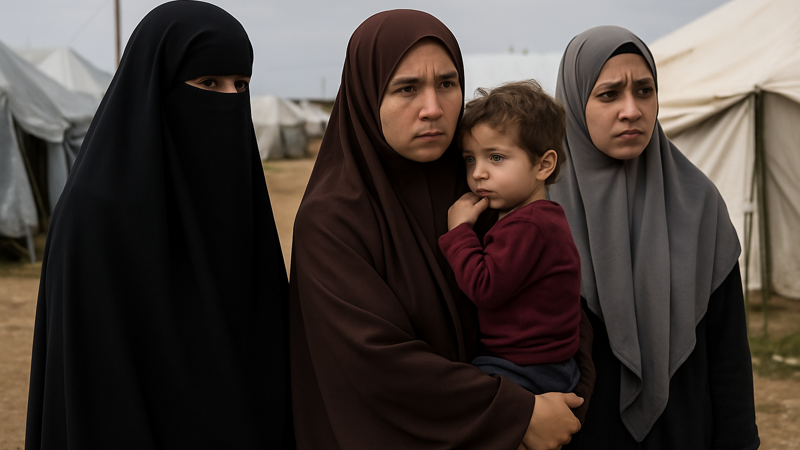
Thirty-four Australian women and children with alleged ties to Islamic State militants remain stranded in Syrian detention camps after the Australian government confirmed it will not assist their repatriation, despite initial arrangements for their release and return home.
The families from 11 households were temporarily released from the Roj camp in northeastern Syria on Monday, February 16, 2026, only to be forced to return approximately one hour later when Syrian authorities in Damascus reversed their departure approval. The incident has reignited debate over Australia's obligations to its citizens detained in foreign facilities and the complex challenges surrounding repatriation of individuals with alleged terrorist connections.
Failed Departure and Government Response
Rashid Omar, an administrator at the Roj camp, confirmed that about an hour after the families departed the facility, they were contacted by officials in Damascus who informed them that the procedures for their departure were not complete and they would not be permitted to travel. The families, who had been accompanied by relatives who traveled from Australia to facilitate their repatriation, were subsequently forced to return to the camp.
Prime Minister Anthony Albanese's administration has maintained a firm stance on the issue, with government officials reiterating that Australia will not provide assistance to citizens with alleged Islamic State connections seeking to return from Syria. "They made a choice," government ministers have stated, referring to the individuals' decisions to travel to Syria during the height of the Islamic State's territorial control.
However, the government's position appears to conflict with statements from camp officials who told journalists that Australia had previously issued passports for the detainees, suggesting some level of official engagement in the repatriation process.
Living Conditions and Legal Status
The detained Australians are described as wives, widows, and children of deceased or imprisoned Islamic State fighters who have been held at the al-Roj camp, which is controlled by the Kurdish-led Syrian Democratic Forces. The facility houses foreign nationals with alleged connections to the extremist group, many of whom have been detained for years without formal charges.
The 34 individuals represent a significant portion of the estimated Australian citizens believed to be held in Syrian detention facilities. Their prolonged detention without trial has raised concerns among human rights advocates about the legal and humanitarian obligations of the Australian government toward its citizens abroad.
"These are Australian citizens, including children who had no choice in their circumstances. The government has a duty of care regardless of the alleged actions of their parents."
— Human Rights Advocate
International Context and Precedents
Australia's approach stands in contrast to several other Western nations that have repatriated their citizens from Syrian camps, often with strict monitoring and rehabilitation programs. Countries including France, Germany, and several Nordic nations have established processes for bringing back their nationals, particularly focusing on children who were taken to Syria by their parents.
The case highlights the ongoing challenge faced by multiple governments in balancing national security concerns with legal obligations to citizens. The complex legal status of individuals in Syrian camps, which operate under Kurdish administration in territory not fully controlled by the Damascus government, further complicates repatriation efforts.
Security Concerns and Assessment Challenges
Australian security agencies have consistently raised concerns about the potential risks posed by returning foreign fighters and their families. The assessment process for individuals seeking repatriation involves extensive security screening to determine the level of involvement with terrorist organizations and potential ongoing threats.
Officials have argued that the remote detention facilities make comprehensive security assessments difficult, and that inadequate information about individuals' activities while in Syria creates unacceptable risks for national security. This position has been supported by intelligence assessments that highlight the potential for radicalization within the camps themselves.
The government has also pointed to successful prosecutions of returning foreign fighters in other countries as evidence of the serious legal and security challenges involved in repatriation cases. These precedents inform Australia's cautious approach to requests for assistance from citizens in Syrian detention.
Humanitarian Concerns and Children's Rights
Among the 34 individuals are children who were taken to Syria by their parents and have spent significant portions of their lives in detention. Child welfare advocates have argued that these minors should not be held responsible for their parents' decisions and deserve protection under international law governing children's rights.
The prolonged detention of children in camp facilities has been criticized by international organizations, which argue that the conditions fail to meet basic standards for child welfare and development. Educational opportunities are limited, healthcare is inadequate, and the psychological impact of indefinite detention raises serious concerns about long-term harm.
Legal and Diplomatic Implications
The incident has exposed the complex diplomatic and legal challenges surrounding the repatriation of Australian citizens from Syria. The involvement of multiple jurisdictions – including Kurdish authorities controlling the camps, the Syrian government, and Australian officials – creates a web of competing legal frameworks and political interests.
Legal experts have noted that the Australian government's obligations to its citizens abroad are complicated by the absence of diplomatic relations with Syria and the disputed legal status of detention facilities operated by Kurdish forces. However, they argue that citizenship cannot be conditional on location or alleged criminal activity without proper legal process.
The case also highlights the broader international failure to develop comprehensive frameworks for dealing with foreign fighters and their families following the territorial collapse of Islamic State. The ad-hoc nature of current arrangements leaves thousands of individuals in legal limbo while governments struggle to balance competing interests.
Political and Public Opinion
Public opinion in Australia remains divided on the issue of repatriation for Islamic State-linked individuals. Polling has shown that while many Australians support strict security measures, there is also concern for the welfare of children caught in these circumstances.
The government's firm stance reflects broader political considerations, including concerns about appearing soft on terrorism and the potential domestic backlash from facilitating the return of individuals associated with the extremist group. These political calculations have influenced policy decisions despite legal and humanitarian arguments for repatriation.
Opposition parties have generally supported the government's cautious approach, reflecting a bipartisan consensus on the security risks involved. However, some members of parliament have called for more nuanced policies that distinguish between adults who voluntarily joined Islamic State and children who had no choice in their circumstances.
Ongoing Challenges and Future Prospects
The failed departure attempt underscores the complex bureaucratic and political challenges involved in repatriation cases. Even when initial agreements appear to be in place, the involvement of multiple governments and authorities can lead to rapid reversals based on changing political calculations or security assessments.
The Australian government faces ongoing pressure from families, legal advocates, and international partners to develop clearer policies for dealing with citizens detained abroad. The absence of established procedures creates uncertainty for both officials and the families involved, contributing to the prolonged nature of their detention.
As the situation in Syria continues to evolve, with ongoing political instability and changing control over territory and facilities, the challenge of repatriating foreign nationals is likely to persist. The Australian case serves as an example of the broader international struggle to balance security concerns with legal and humanitarian obligations to citizens abroad.
International Monitoring and Advocacy
International human rights organizations continue to monitor conditions in Syrian detention facilities and advocate for the repatriation of foreign nationals, particularly children. These groups argue that indefinite detention without trial violates fundamental legal principles and creates humanitarian crises that require immediate attention.
The United Nations and other international bodies have called on countries to take responsibility for their citizens and to prioritize the welfare of children in these situations. However, the complex political and security environment in Syria makes implementation of these recommendations extremely challenging.
The case reflects broader questions about international law, state responsibilities, and the limits of sovereignty in addressing transnational terrorism. As governments worldwide grapple with similar challenges, the Australian approach will likely influence international discussions about appropriate responses to citizens associated with terrorist organizations abroad.
The denial of assistance to the 34 Australian citizens represents a significant test of the government's commitment to its stated policies on terrorism-related repatriation. With no clear resolution in sight, these families remain in indefinite detention while legal, political, and humanitarian debates continue both domestically and internationally.