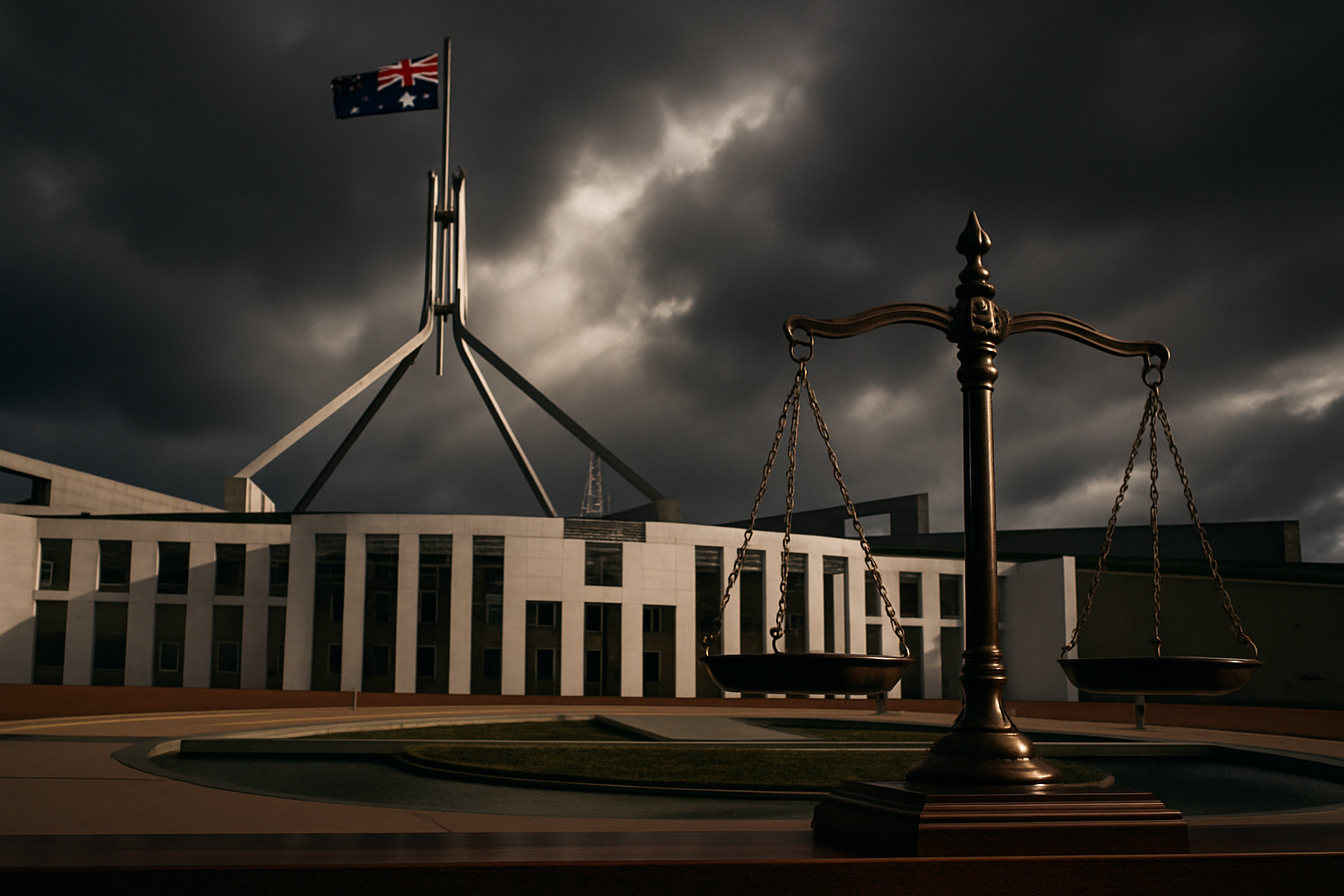
Australia's political and judicial landscape entered a turbulent phase this week as the country's most decorated living soldier Ben Roberts-Smith faced war crimes charges while former political staffer Bruce Lehrmann prepared for a high-profile rape trial set to begin in November.
The developments have exposed deep divisions within Australian society about military accountability, media freedom, and the proper administration of justice, with powerful voices questioning the substantial costs and methods of ongoing investigations.
Roberts-Smith War Crimes Investigation Under Fire
Mining billionaire Gina Rinehart, Australia's richest person, launched a scathing attack on the investigation into Ben Roberts-Smith after the decorated SAS veteran was arrested and charged with five counts of murder - war crime. Roberts-Smith, 47, was taken into custody at Sydney Domestic Airport yesterday following his arrival on a flight from Brisbane.
"I don't understand how it can be justified to spend more than $300 million to try for years to bring SAS veterans, who have served our country, towards criminal proceedings, and most recently the arrest of Ben," Rinehart said in a statement that quickly drew both support and criticism across political lines.
Roberts-Smith, who holds both the Victoria Cross and Medal for Gallantry - making him one of only four Australians to receive both decorations - served with distinction in Afghanistan between 2006 and 2012. His Victoria Cross citation praised his "conspicuous gallantry" during the Battle of Tizak in Kandahar Province in 2010.
The Weight of War Crimes Allegations
The charges against Roberts-Smith stem from a comprehensive five-year investigation by the Australian Federal Police (AFP) and the Office of Special Investigator (OSI), established following the damning 2020 Brereton Report. Justice Paul Brereton's inquiry identified 39 potential war crimes by Australian special forces and found evidence of a "warrior culture" within certain SAS elements that may have contributed to alleged crimes.
AFP Commissioner Krissy Barrett stated that the alleged victims were "not participating in hostilities" and were "detained, unarmed and under control of ADF members when killed." The allegations include claims that Roberts-Smith personally shot victims or ordered subordinates to kill in his presence.
"This represents an unprecedented moment in Australian military history - a test of our commitment to international humanitarian law enforcement regardless of the accused's status or decorations."
— Legal Expert Commentary
The case has created stark political divisions. One Nation leader Pauline Hanson vowed she would "not abandon" Roberts-Smith, while former Prime Minister Tony Abbott maintained his support. Other political leaders emphasized the importance of the legal process and that no one should be above the law, regardless of their service record.
Lehrmann Trial Date Finally Revealed
In a separate but equally significant development, former political staffer Bruce Lehrmann's trial date to face rape charges was finally revealed after an application for a blanket non-publication order over the case was withdrawn. Lehrmann, 30, is set to stand trial from November 2, just over five years after the alleged offences took place at a house in regional Queensland.
Lawyers for Nine Entertainment, News Corp and the ABC were informed last week that Lehrmann was no longer attempting to ban all media coverage of his court case before the trial. The decision to withdraw the non-publication order marks a significant shift in the legal strategy surrounding one of Australia's most closely watched cases.
The case has drawn intense public interest due to its connections to allegations that first emerged concerning events at Parliament House, though the current charges relate to separate alleged incidents in Queensland.
Media Freedom and Legal Transparency
The withdrawal of the non-publication order represents a victory for media organizations who had argued that open justice principles required public scrutiny of the proceedings. Legal experts suggest this development could set important precedents for how high-profile cases are covered in the Australian media landscape.
The timing of both cases highlights the complex intersection of public interest, legal process, and media coverage in contemporary Australian democracy. Both the Roberts-Smith and Lehrmann matters involve allegations that have already been subject to extensive civil proceedings and media coverage.
Broader Implications for Australian Justice
These parallel legal proceedings occur against a backdrop of ongoing debates about military accountability and institutional transparency in Australia. The Roberts-Smith case represents the most high-profile outcome of investigations stemming from Australia's longest military deployment, while the Lehrmann matter touches on issues of workplace safety and conduct in political institutions.
The substantial cost of the military investigations - highlighted by Rinehart's criticism - has become a point of contention. However, legal experts argue that the integrity of Australia's commitment to international law and military justice cannot be measured solely in financial terms.
The Office of Special Investigator continues its work examining other cases identified in the Brereton Report, suggesting that Roberts-Smith's charges may not be the final prosecutions to emerge from the investigation into Australian special forces conduct in Afghanistan.
International Scrutiny and Democratic Accountability
Both cases are being watched closely by international observers as tests of Australia's democratic institutions and commitment to the rule of law. The handling of war crimes allegations involving highly decorated military personnel, and the prosecution of cases involving political figures, demonstrates the resilience of Australian judicial independence.
The Roberts-Smith proceedings, in particular, have drawn attention from countries worldwide grappling with questions of military accountability. Australia's approach could establish important precedents for how democratic nations address allegations of misconduct by their most decorated service members.
As both cases move forward through the legal system, they will continue to test the balance between public interest, legal process, and institutional accountability that lies at the heart of Australia's democratic governance. The outcomes will likely influence how similar cases are handled for years to come, both domestically and internationally.