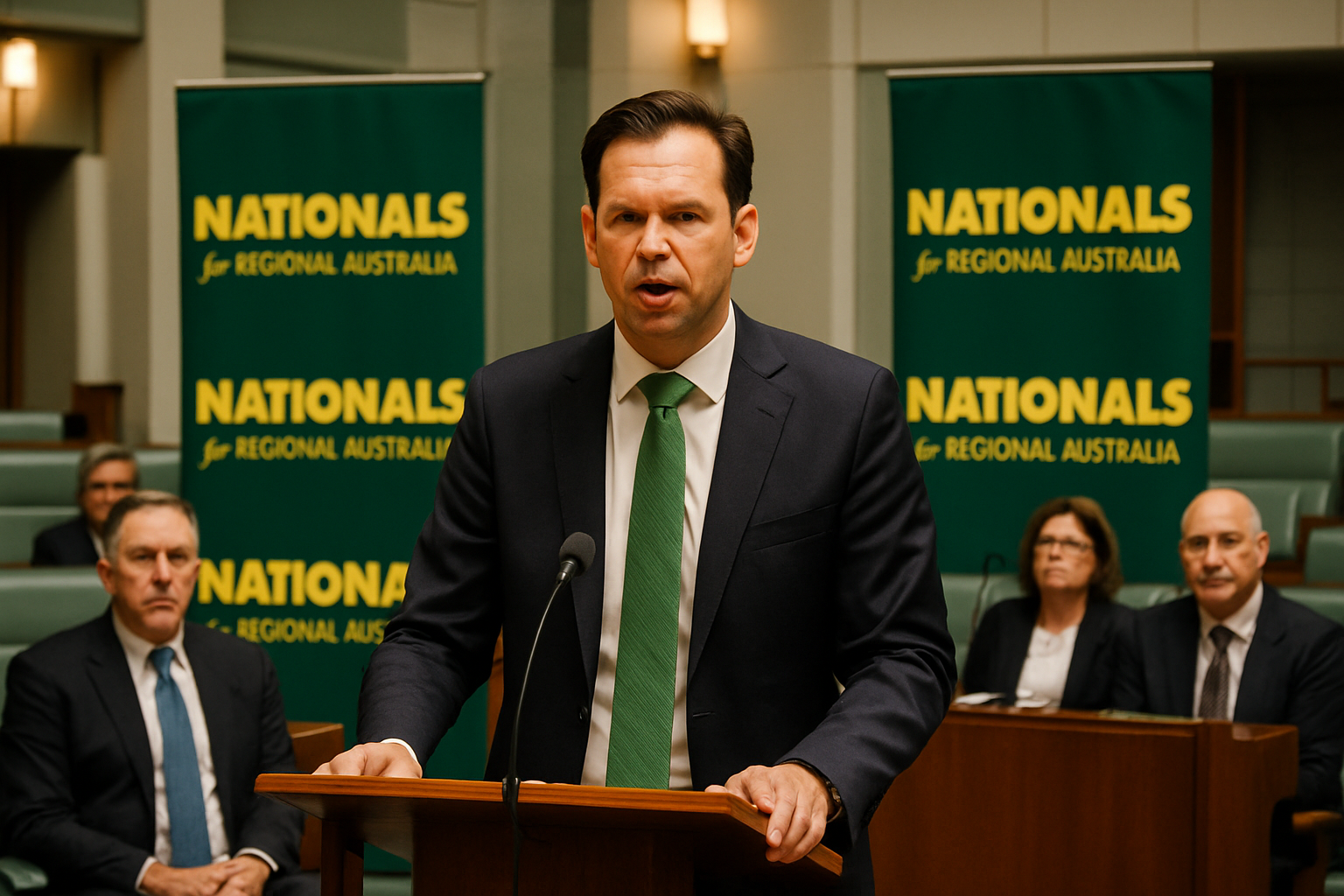
Australia faces a period of significant political realignment and international security challenges as Matt Canavan assumes leadership of the National Party while the nation grapples with complex asylum decisions for Iranian athletes amid escalating Middle East tensions.
The convergence of domestic political changes and international humanitarian crises has positioned Australia at a critical juncture, testing both its Coalition partnership dynamics and its commitment to human rights protection during one of the most dangerous international periods since the Cold War.
National Party Leadership Transformation
Matt Canavan's election as National Party leader represents a pivotal moment in Australian conservative politics, occurring during a parliamentary session marked by the ongoing Middle East conflict and Coalition leadership restructuring. The Queensland senator's ascension comes at a time when Australia's political establishment faces unprecedented international pressures and domestic security concerns.
The leadership transition reflects broader tensions within the Coalition partnership that have periodically surfaced over policy disagreements, particularly regarding hate speech legislation following the Sydney shooting incident. These internal dynamics have required careful management to maintain the traditional Liberal-National alliance that forms the foundation of conservative opposition politics.
"The Coalition is back together and looking to the future, not the past."
— Sussan Ley, Former Opposition Leader
Canavan's leadership emerges from a political landscape where the Coalition has worked to rebuild unity after previous fractures over ideological differences. His appointment signals a potential shift toward more assertive conservative positioning, particularly on regional security issues and economic policy approaches that could influence Australia's response to global challenges.
Iranian Athletes' Asylum Crisis
The humanitarian crisis involving Iranian women's football team members has become a defining test of Australia's international humanitarian commitments. The situation escalated when multiple players were labeled "wartime traitors" by Iranian state television for their silent protest during national anthem ceremonies at the AFC Women's Asian Cup on the Gold Coast.
Home Affairs Minister Tony Burke personally intervened in the asylum process, conducting secret meetings with the athletes before granting humanitarian visas. The decision followed unprecedented international pressure, including direct intervention from US President Donald Trump, who warned Australia of making a "terrible humanitarian mistake" if the players were forced to return to Iran.

The crisis revealed the complex dynamics facing athletes caught between representing their country and personal safety concerns. Australian Federal Police coordinated a dramatic 1:30 AM extraction operation from the Royal Pines resort, moving the players to secure locations under police protection with pathways to permanent residency.
The response from Australia's football community has been overwhelmingly supportive, with A-League clubs including Brisbane Roar offering training facilities, professional support, and career continuation opportunities. This community solidarity provides not just safety but practical pathways for the athletes to continue their careers in Australian football.
Regional Security Implications
Australia's handling of the Iranian asylum case occurs within the broader context of the most dangerous international crisis since the Cold War. The death of Iran's Supreme Leader Ali Khamenei on March 1 in Operation Epic Fury has created unprecedented instability in the Middle East, directly affecting Australia's security assessments and international relationships.
The crisis has prompted Australia's largest evacuation operation since the Arab Spring, with over 115,000 Australian nationals trapped in Middle Eastern countries as aviation systems collapse and regional conflicts escalate. This massive humanitarian operation demonstrates Australia's capacity for international crisis response while highlighting the interconnected nature of global security challenges.
The government's decision to grant asylum to Iranian athletes, despite global trends toward restrictive immigration policies, reflects Australia's commitment to humanitarian principles even during periods of international tension. This approach contrasts with more restrictive policies adopted by other Western nations, positioning Australia as a leader in athlete protection frameworks.
Template for International Sports Governance
Australia's response to the Iranian athletes' crisis has established important precedents for international sports governance and athlete protection mechanisms. The case highlights significant gaps in FIFA and AFC protection systems for athletes facing persecution for symbolic protests, generating calls for stronger international sporting body responses.
The situation demonstrates how sports have become flashpoints for broader political and social tensions, where athletes face impossible choices between representing their countries and personal conscience. Australia's intervention provides a template for protecting athletes who engage in peaceful symbolic protests on international sporting platforms.
"They want to be clear they are not political activists. They are athletes who want to be safe."
— Tony Burke, Home Affairs Minister
The international community's capacity to coordinate protective responses has been demonstrated through this case, showing how sustained public pressure, diplomatic intervention, and humanitarian principles can override standard restrictive immigration policies. The success may encourage other threatened athletes to seek international protection from authoritarian regimes.
Coalition Dynamics and Future Challenges
Matt Canavan's National Party leadership coincides with broader challenges facing Australia's conservative political movement. The Coalition must navigate complex international relationships while maintaining domestic political unity and addressing citizen concerns about economic pressures and regional security threats.
The Iranian asylum case has provided rare bipartisan political support, demonstrating Australia's capacity for unified humanitarian responses despite political divisions. This consensus reflects broader Australian values regarding human rights protection and international cooperation, even during periods of domestic political change.
As Australia faces continued international instability, the new National Party leadership will need to balance traditional conservative approaches with pragmatic responses to global humanitarian crises. The success of Australia's response to the Iranian athletes' situation provides a foundation for future international engagement while maintaining domestic political stability.
Long-term Strategic Implications
The convergence of National Party leadership changes and international humanitarian responses positions Australia as a significant player in global crisis management. The nation's willingness to provide protection for threatened athletes, combined with its massive evacuation operations in the Middle East, demonstrates substantial international engagement capacity.
These developments occur during a period when traditional international cooperation frameworks face unprecedented strain. Australia's approach to balancing domestic political changes with international humanitarian commitments provides insights for other democracies facing similar challenges.
The success of Australia's humanitarian interventions, from athlete protection to large-scale evacuations, establishes the nation as a reliable partner in international crisis response. This reputation will prove valuable as global tensions continue to escalate and international cooperation becomes increasingly crucial for managing complex security challenges.
Moving forward, Australia's political leadership will need to maintain this balance between domestic priorities and international responsibilities, ensuring that humanitarian commitments remain sustainable while addressing citizen concerns about regional security and economic stability in an increasingly volatile global environment.