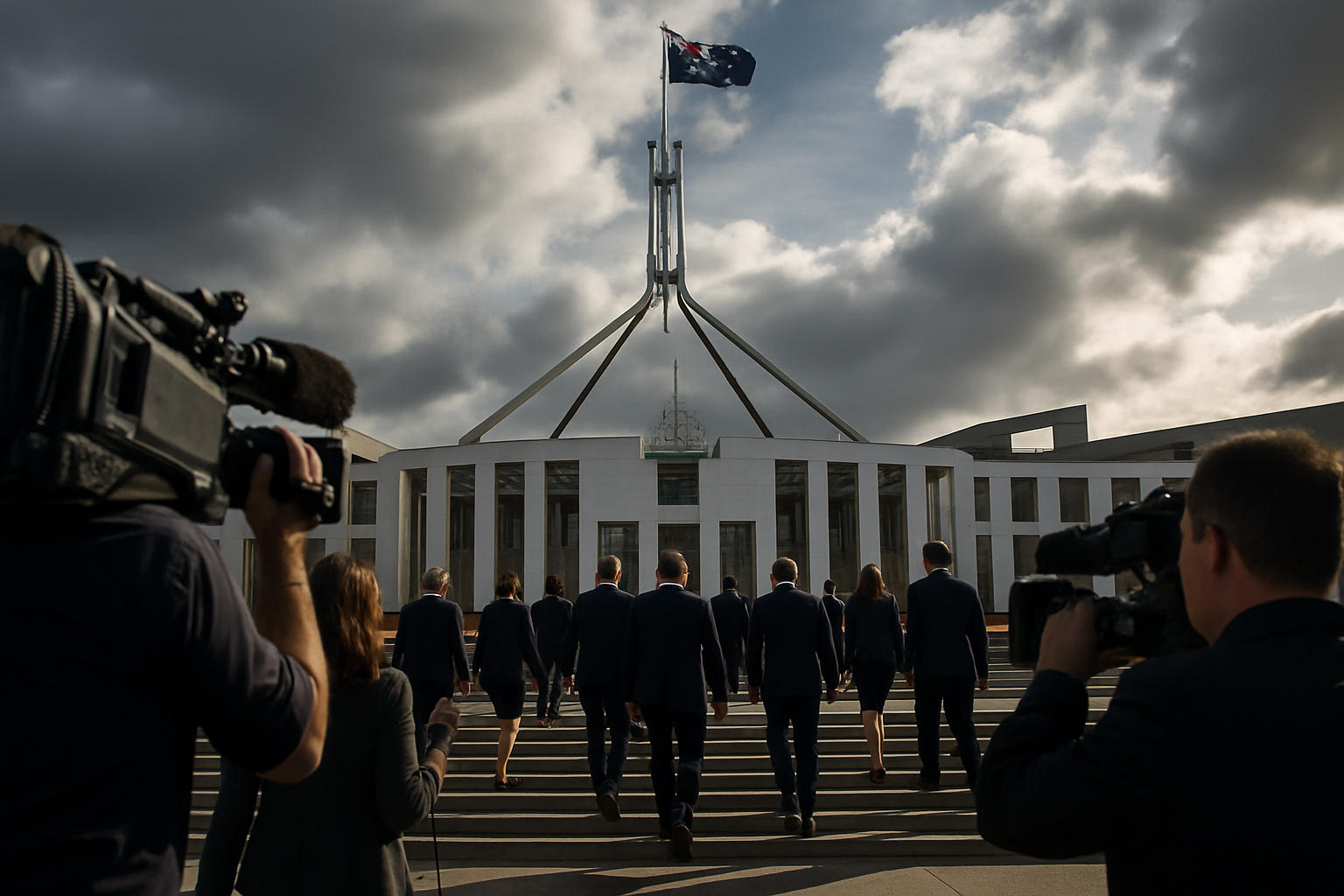
Australian politics was rocked by significant developments as NSW Premier Chris Minns revealed his intention to retire from politics before 2032, while federal parliament witnessed heated exchanges culminating in the censure of One Nation leader Pauline Hanson over anti-Muslim comments during Angus Taylor's first question time as Liberal leader.
Minns Sets Retirement Timeline
In a candid press conference on Monday, March 2, 2026, NSW Premier Chris Minns made the surprising announcement that he would not continue in his role beyond the next state election scheduled for March 2027. When questioned about his vision for Sydney's future infrastructure projects, including the completion of the Sydney Metro, Minns acknowledged the political reality with characteristic directness.
"Well, I won't be here, at least in this role," Minns stated, confirming that the 2027 election would mark his final campaign as leader of the NSW Labor Party. The announcement comes as a significant development in Australian state politics, with Minns having led Labor to victory in NSW after years in opposition.
The Premier's decision appears to be driven by personal considerations regarding long-term political service, though he emphasized his commitment to completing his current term and delivering on election promises. There are two NSW elections scheduled before 2032, and Minns has made clear that 2027 will represent the culmination of his leadership ambitions at the state level.
Federal Parliament Drama Unfolds
Meanwhile, in Canberra, federal parliament returned to question time under new leadership following the recent Liberal Party transition. Angus Taylor, who decisively defeated Sussan Ley in a 34-17 leadership ballot in February, took his place as opposition leader during what proved to be a particularly contentious session.
The day's proceedings were overshadowed by controversy involving One Nation leader Pauline Hanson, who faced censure from parliament over anti-Muslim comments made during recent debates. The censure motion, which garnered broad cross-party support, represents a significant parliamentary rebuke of Hanson's rhetoric and reflects growing concerns about divisive political discourse in Australian politics.
Taylor's Leadership Test
For Taylor, the session represented his first major test as Liberal leader, coming at a time when the party is attempting to rebuild following electoral setbacks and internal divisions. The former Shadow Defence Minister and MP for Hume won the leadership contest after positioning himself as the candidate best equipped to hold the Labor government accountable.
Taylor's victory in February represented a decisive conservative faction triumph over the moderate wing of the party, with his criticism that the Liberal Party had failed to "hold the bad Labor government to account effectively" resonating with parliamentary colleagues seeking a more aggressive opposition approach.
The new Liberal leader inherits significant challenges, including the need to rebuild party unity after the factional victory, manage Coalition partnership stability, and establish himself as a credible alternative Prime Minister. His background as both the party's "smartest policy brain" and a "controversial deal-maker" reflects the polarized views within political circles about his leadership potential.
Hanson Censure Controversy
The parliamentary censure of Pauline Hanson marks a significant moment in Australian federal politics, representing one of the strongest formal rebukes issued against a sitting parliamentarian. The anti-Muslim comments that prompted the censure motion have been widely condemned across party lines, highlighting the ongoing challenges Australian politics faces in addressing divisive rhetoric and maintaining respectful public discourse.
The censure motion, while largely symbolic, sends a clear message about parliamentary standards and acceptable conduct in public debate. It reflects broader concerns about the impact of inflammatory political rhetoric on community cohesion, particularly regarding Australia's diverse multicultural population.
Political Implications and Context
These developments occur against the backdrop of Australia's evolving political landscape, where traditional party structures and leadership stability continue to face unprecedented pressures. Minns' early retirement announcement, while unusual in its timing and directness, reflects broader trends in political leadership where long-term planning and succession management are becoming increasingly important.
The Premier's decision to announce his retirement timeline so far in advance provides the NSW Labor Party with significant time to plan for succession and maintain political stability. This approach contrasts sharply with the often chaotic leadership transitions that have characterized Australian politics in recent years at both state and federal levels.
For the federal Liberal Party, Taylor's leadership represents an attempt to chart a clearer conservative path following periods of internal uncertainty and mixed messaging. His success in uniting the party after the factional victory will be crucial for establishing effective opposition credentials and building toward future electoral prospects.
Broader Democratic Implications
The parliamentary censure of Hanson also reflects Australia's ongoing struggle to balance free speech principles with the need to maintain respectful political discourse in an increasingly diverse society. The cross-party support for the censure motion demonstrates a broader consensus about the importance of maintaining certain standards in parliamentary debate, even while allowing for vigorous political disagreement.
These events highlight the continuing evolution of Australian democratic institutions and the challenges they face in adapting to changing social expectations and political norms. The ability of parliament to respond decisively to inappropriate conduct, while maintaining space for legitimate political debate, remains a crucial test of democratic health.
Looking Forward
As Australia moves forward from these significant political developments, several key challenges emerge. For NSW, the early announcement of Minns' retirement plans provides both opportunity and uncertainty, with Labor needing to manage succession planning while maintaining governing effectiveness and public confidence.
At the federal level, Taylor's leadership of the Liberal Party faces immediate tests in demonstrating effective opposition performance while rebuilding party unity and establishing credible alternative policy positions. The success or failure of his leadership approach will have significant implications for the broader conservative movement in Australian politics.
The parliamentary response to Hanson's comments also sets important precedents for how similar situations might be handled in the future, potentially influencing the broader tone and conduct of Australian political discourse. The effectiveness of censure as a tool for maintaining parliamentary standards will likely be closely watched by political observers and democratic institutions worldwide.
These developments collectively represent a significant moment in Australian political history, demonstrating both the ongoing challenges facing democratic institutions and their capacity to adapt and respond to changing circumstances. The coming months will reveal how effectively the political system can manage these transitions while maintaining public confidence and effective governance.