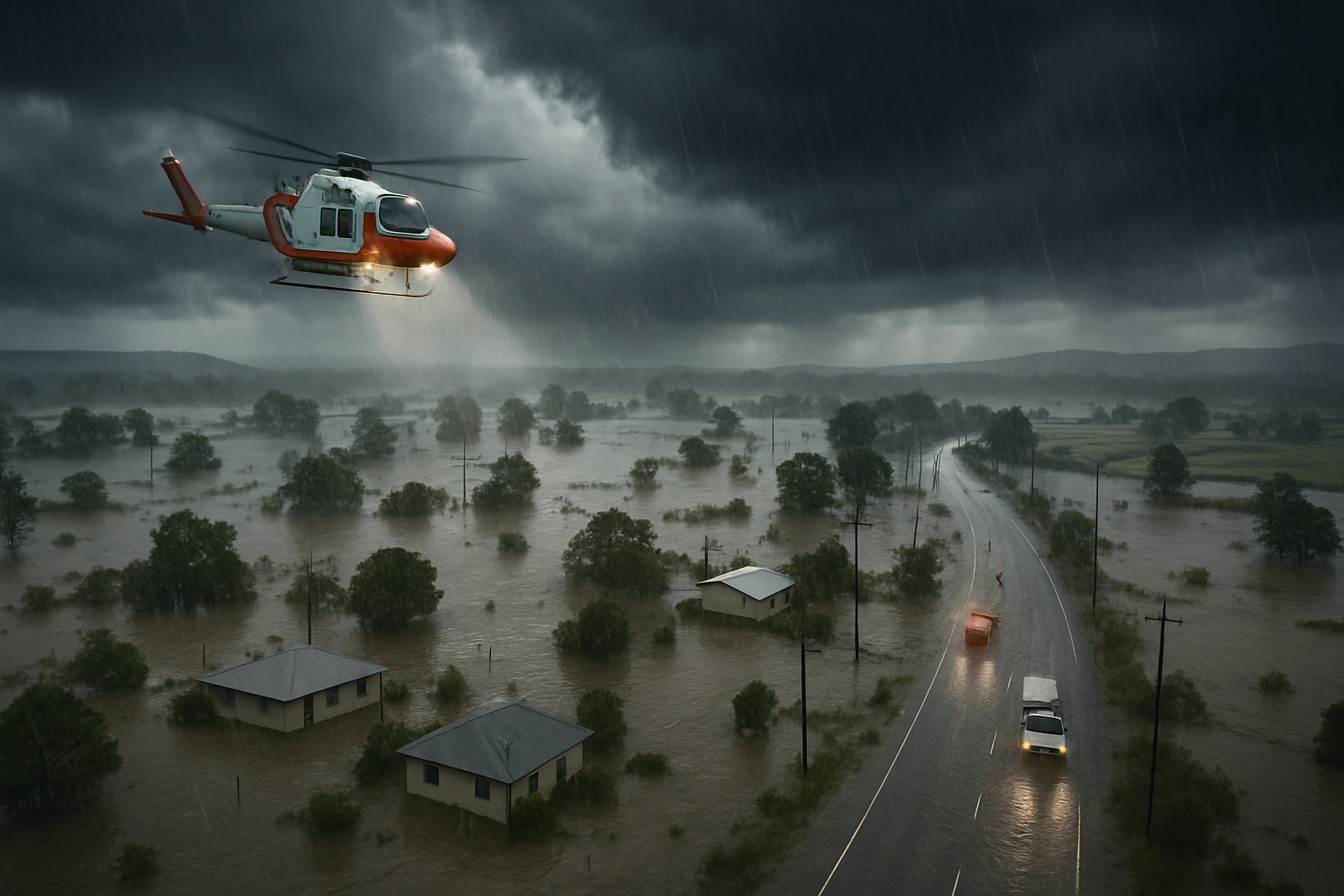
Severe weather conditions across Australia have forced flight diversions, triggered emergency warnings, and left hundreds of passengers stranded as at least four states brace for extreme rainfall that could be the heaviest in more than a decade.
The crisis began when Air India Flight AI302 from Delhi to Sydney was diverted to Canberra Airport on February 26 due to adverse weather conditions in Sydney. The aircraft, carrying hundreds of passengers, landed at approximately 8:00 PM but passengers were unable to disembark for hours, with some reports suggesting they remained on the tarmac until after midnight.
According to an Air India spokesperson, the flight was originally scheduled to touch down in Sydney at 7:00 PM but was redirected due to dangerous weather conditions affecting Sydney's main airport. Flight tracking data shows the aircraft circled over New South Wales before making the emergency diversion to the capital.
Adelaide Braces for Major Deluge
Meanwhile, South Australia's capital Adelaide is preparing for what authorities are calling a "major soaking" after experiencing one of its driest summers on record. The Bureau of Meteorology has issued severe weather warnings for multiple regions including the West Coast, Lower Eyre Peninsula, Eastern Eyre Peninsula, North West Pastoral, and parts of North East Pastoral regions.
The expected deluge comes at a particularly concerning time, as the city has just endured one of its driest summer periods ever recorded. Meteorologists warn that thunderstorms are likely to affect Adelaide and surrounding areas from today through Sunday, driven by a slow-moving pressure system in central Australia that is beginning to track toward the east coast.
"The expected drenching comes after one of the city's driest summers on record," weather officials noted, highlighting the stark contrast between the recent drought conditions and the incoming severe weather system.
Nationwide Weather Emergency
The weather crisis extends far beyond Adelaide, with at least four states facing extreme weather conditions. According to the Australian Broadcasting Corporation, some areas are expected to receive the heaviest rainfall seen in more than a decade, creating potentially life-threatening conditions across multiple regions.
Emergency services are reporting widespread impacts, with some towns already cut off by flooding and cars being swept away in rapidly rising waters. The severe weather system represents a significant challenge for emergency responders who are dealing with multiple incidents across vast geographical areas.
The timing of these events is particularly problematic, as the combination of extremely dry conditions from the recent summer drought and sudden heavy rainfall creates ideal conditions for flash flooding and infrastructure damage. Parched ground that has become hardened by drought conditions is often unable to absorb sudden heavy rainfall, leading to rapid runoff and dangerous flood conditions.
Transportation Networks Under Strain
The aviation sector is bearing the brunt of the weather disruption, with Sydney's airport experiencing conditions severe enough to force international flight diversions. The Air India incident highlights the broader challenges facing Australia's transportation networks as extreme weather becomes increasingly frequent and unpredictable.
Beyond aviation, road networks across affected states are experiencing closures and dangerous conditions. Emergency services are advising against non-essential travel in affected areas, with particular warnings about the risk of vehicles becoming trapped in rapidly rising floodwaters.
The weather system's slow-moving nature means that affected areas may experience prolonged periods of dangerous conditions, extending the timeline for recovery and potentially stranding communities for extended periods.
Climate Context and Historical Precedent
This weather emergency occurs within the broader context of Australia's increasingly volatile climate patterns. The country has experienced a series of extreme weather events in recent years, from devastating bushfires to record-breaking floods, highlighting the growing challenges posed by climate variability.
The current crisis follows a pattern of extreme weather events that have tested Australia's emergency response capabilities and infrastructure resilience. Historical records show that the combination of prolonged drought followed by intense rainfall events has become more frequent, creating a recurring cycle of emergency conditions.
Emergency services have developed protocols for managing these complex weather scenarios, but the scale and intensity of current conditions are pushing response capabilities to their limits. The simultaneous nature of multiple weather emergencies across different states requires careful coordination and resource allocation.
Emergency Response and Public Safety
State and federal emergency services are coordinating responses across affected regions, with particular focus on areas that may become isolated by flooding. Emergency shelters are being prepared in anticipation of potential evacuations, while emergency supplies are being pre-positioned in vulnerable communities.
Public safety officials are emphasizing the importance of following evacuation orders and avoiding travel through flood-affected areas. The danger posed by rapidly changing water levels cannot be overstated, as seemingly passable roads can become death traps within minutes as water levels rise.
The agricultural sector is also bracing for significant impacts, with farmers in affected regions taking precautionary measures to protect livestock and equipment. The contrast between recent drought conditions and impending floods presents unique challenges for rural communities already stressed by extreme weather variability.
Looking Ahead
Meteorologists indicate that the weather system responsible for current conditions is expected to continue affecting eastern Australia for several days. The slow-moving nature of the system means that cumulative rainfall totals could reach dangerous levels even in areas not typically prone to severe flooding.
Recovery efforts will likely extend well beyond the immediate weather event, as communities assess damage to infrastructure and work to restore normal operations. The experience of previous extreme weather events suggests that full recovery could take weeks or months in the most severely affected areas.
As Australia continues to grapple with the realities of climate variability, events like these underscore the importance of robust emergency preparedness, resilient infrastructure, and community awareness of extreme weather risks. The current crisis serves as another reminder of the need for adaptive strategies in managing an increasingly unpredictable climate.