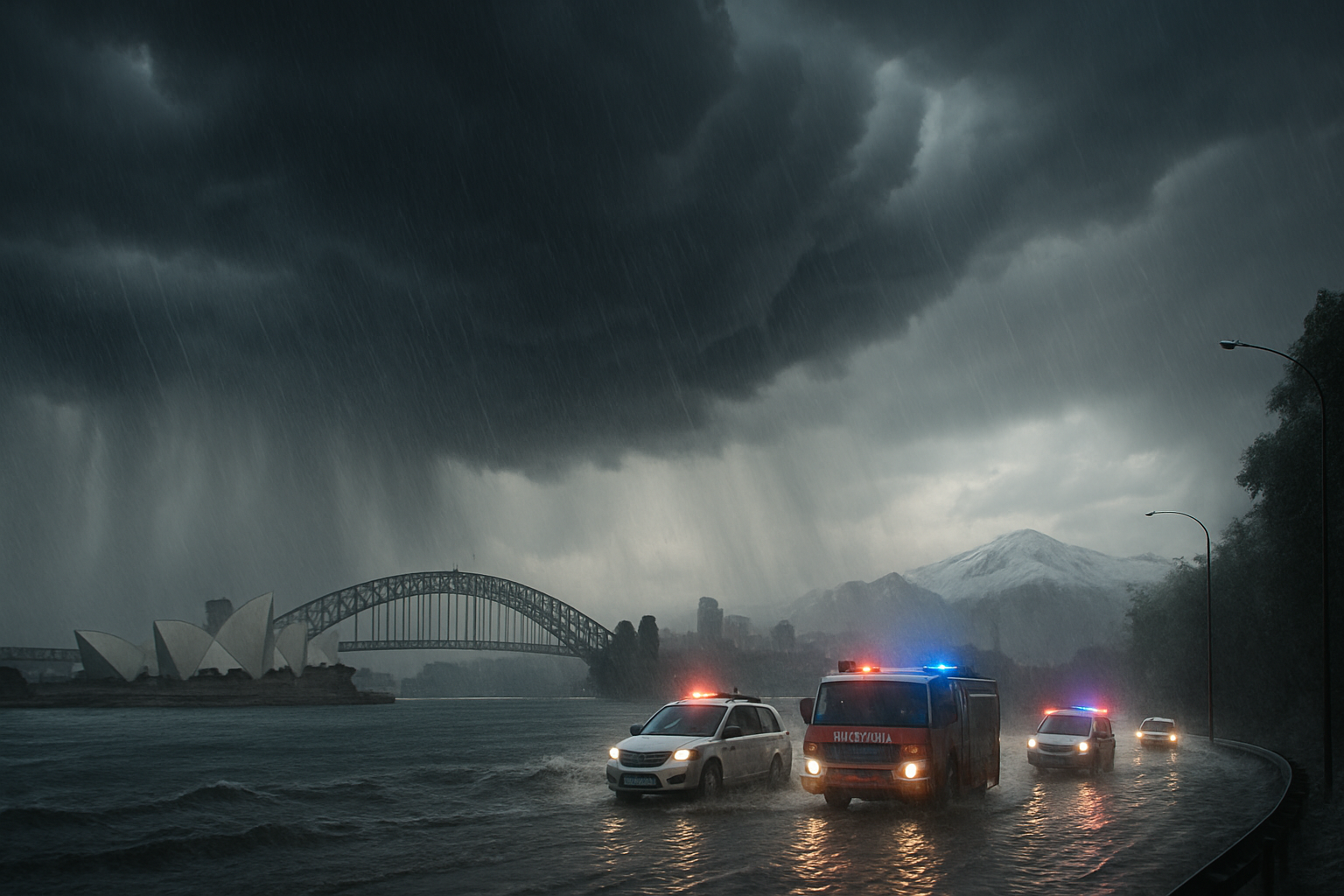
Australia is grappling with a dangerous multi-state weather emergency as severe storms tear through Sydney while unprecedented March snowfall blankets parts of New South Wales and Victoria, marking an extraordinary convergence of extreme weather conditions that has emergency services stretched to their limits.
The tempest that downed trees, knocked out power and halted trains across Sydney is expected to be followed by "possible blizzard" conditions and damaging surf, according to the Bureau of Meteorology. The wild storm system has created hazardous conditions throughout the greater Sydney region, with emergency crews responding to hundreds of incidents involving fallen trees and power outages affecting thousands of residents.
Snow Arrives Early Across Multiple States
In a rare weather phenomenon for this time of year, snow has fallen for the first time in 2026 across NSW and Victoria, creating treacherous driving conditions and forcing road closures in alpine regions. The unexpected snowfall comes as part of a complex weather system that has brought both tropical storm conditions to coastal areas and winter-like conditions to inland regions.
The Bureau of Meteorology has issued severe weather warnings for multiple states, with forecasters describing the current system as one of the most challenging multi-faceted weather events of the year. The combination of severe storms in urban areas and snow in traditionally warmer regions has created unprecedented logistical challenges for emergency services.
Emergency Services Under Pressure
State Emergency Services across NSW and Victoria have reported being overwhelmed by the volume of calls for assistance. The storms have brought down power lines across Sydney's metropolitan area, with some suburbs experiencing extended blackouts. Train services have been severely disrupted, with several lines suspended due to fallen trees and debris on tracks.
Fire and rescue services have responded to numerous incidents involving trees falling on homes and vehicles, while paramedics have treated several people injured by flying debris. The combination of high winds, heavy rain, and sudden temperature drops has created what emergency officials describe as "extremely dangerous" conditions.

Infrastructure Strain and Transportation Chaos
The severe weather has exposed critical vulnerabilities in Australia's infrastructure systems, with transportation networks, power grids, and communication systems operating beyond their intended design parameters. Sydney Airport has experienced significant delays and cancellations, while major highways have been closed due to dangerous conditions.
The unusual nature of experiencing both tropical storm conditions and snow simultaneously has challenged traditional emergency response protocols. Many systems designed for sequential weather events are struggling to cope with the compound nature of this crisis.
Climate Context and Rising Concerns
This extreme weather event occurs during what scientists describe as an unprecedented period of global climate volatility. The current conditions demonstrate the "climate volatility paradox" where sustained global warming enables both extreme heat records and devastating regional weather events through disrupted atmospheric patterns.
"We're seeing infrastructure designed for historical weather patterns operating beyond their intended capacity. This is becoming the new reality."
— Bureau of Meteorology Spokesperson
The emergency builds upon months of extreme weather across Australia throughout 2026, including record-breaking rainfall in Queensland and severe flooding in Victoria. Emergency services note a concerning shift from isolated regional disasters to multiple simultaneous incidents requiring different specialized responses.
Regional Impact Across the Tasman
The weather system's impact extends beyond Australia, with New Zealand's upper North Island also experiencing severe storm damage. Crews are assessing widespread damage after the latest storm, with the Far North and Whangārei regions remaining in a state of emergency. The international scope of the weather system underscores the regional nature of the current atmospheric disruption.
Economic and Social Consequences
The economic implications extend far beyond immediate emergency response costs. Transportation disruptions are affecting supply chains and commerce across multiple states, while agricultural sectors face potential crop damage during critical growing seasons. Tourism and business operations are experiencing significant disruptions with recovery requirements extending well beyond the immediate weather event.
Mental health services report increased demand as communities deal with repeated extreme weather trauma. Families face displacement and property damage, while vulnerable populations require extended emergency support.
Looking Ahead: Adaptation Imperatives
Climate adaptation experts describe this multi-state emergency as a critical test of Australia's infrastructure resilience and emergency preparedness systems. The event highlights the urgent need for comprehensive climate adaptation strategies that address permanent climate volatility rather than treating extreme weather as exceptional events.
The Bureau of Meteorology warns that additional weather systems are developing, with authorities maintaining high alert levels across multiple states. Current conditions may represent a preview of routine circumstances expected in the 2030s without significant climate adaptation investment.
Emergency Response Evolution
The Australian Fire and Emergency Services Council (AFAC) has identified this event as representing "compound disasters" where multiple emergency types occur concurrently rather than sequentially. This fundamental shift is challenging traditional resource allocation and mutual aid mechanisms that were designed for isolated regional events.
Enhanced emergency protocols are being implemented across affected states, including early warning systems, infrastructure resilience measures, and emergency coordination across vast geographical areas. The success of these responses will provide crucial lessons for building resilience in an increasingly uncertain climate future.
As recovery efforts begin, the focus shifts to "building back better" with climate-resilient infrastructure designed for future rather than historical weather patterns. This weather emergency serves as a stark reminder of the urgent transformation required to adapt Australian society from stable climate patterns to a permanent climate volatility era.