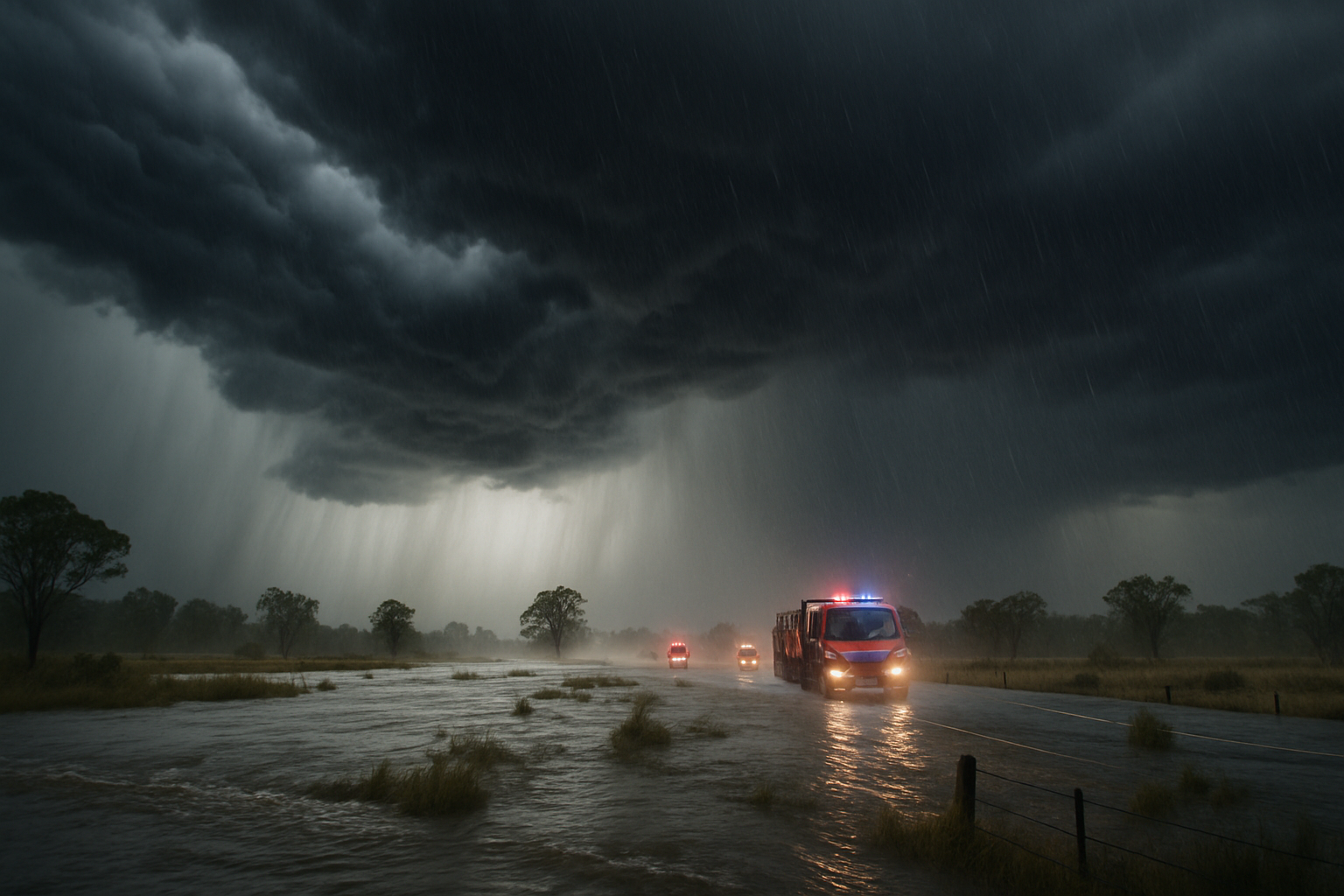
Australia's weather bureau has issued severe warnings across multiple states as twin tropical low-pressure systems bring torrential rainfall to Queensland and catastrophic flooding threats to the Northern Territory, creating what meteorologists describe as a complex and dangerous weather pattern.
The Bureau of Meteorology reports that South-east Queensland is bracing for a three-day period of intense rainfall as a slow-moving tropical low continues its destructive path across the state's northern regions. Meanwhile, Katherine in the Northern Territory faces immediate flood disaster conditions as the same weather system threatens to overwhelm the region's flood defenses.
Queensland's Unprecedented Rainfall Warning
Far North Queensland has already experienced the devastating impact of this weather system, recording 300mm of rainfall in a single 24-hour period as the slow-moving trough crossed the state. The Daintree region bore the brunt of the deluge, receiving between 300 to 400mm of rain in just one day, including more than 200mm in a six-hour period.
Weather officials warn that South-east Queensland residents should prepare for similar conditions as the system tracks southward. The Sydney Morning Herald reports that the region is "in line for three days of drenching" as the tropical low maintains its intensity while moving through populated areas.
This rainfall event comes at a critical time for Queensland, which has experienced variable weather conditions throughout 2026. The state's agricultural sector, already dealing with the impacts of previous extreme weather events, faces additional challenges from this extended period of heavy precipitation.
Northern Territory Flood Emergency
Katherine in the Northern Territory confronts what authorities describe as a "flood disaster" as the twin tropical low-pressure systems converge on the region. Emergency services are on high alert as river levels rise rapidly, threatening communities and infrastructure throughout the area.
The Northern Territory's emergency response framework has been activated to coordinate flood mitigation efforts and potential evacuation procedures. Local authorities are working closely with the Bureau of Meteorology to monitor river levels and provide timely warnings to affected communities.
Historical flood data for the Katherine region indicates that significant rainfall events can have long-lasting impacts on transportation networks, agricultural operations, and essential services. The current weather pattern presents similar risks to those experienced during previous major flooding events in the territory.
Cross-Border Weather System Impacts
The severe weather conditions are not confined to Australian territory. New Zealand's MetService has issued heavy rain watches for several areas, with warnings that rainfall amounts could approach or exceed warning criteria in localized areas. The lower South Island faces particular risks as fronts move through the region.
MetService issued warnings on Saturday morning as a slow-moving front threatens to bring heavy rain to Fiordland and far southern Westland. These conditions reflect the broader meteorological pattern affecting the entire Tasman region, demonstrating the interconnected nature of weather systems across the Pacific.
Historical Context and Climate Patterns
The current weather emergency occurs within the context of Australia's increasingly volatile climate patterns. Previous analysis from Planet News archives reveals that Australia has experienced a series of extreme weather events throughout early 2026, including "apocalyptic rain" conditions in February that created dangerous flash flooding across New South Wales.
Emergency services have been managing diverse hazards ranging from bushfire risks to major flooding simultaneously across vast geographical areas, placing significant strain on response capabilities. The Bureau of Meteorology has consistently warned that traditional seasonal patterns are becoming less reliable for planning and preparedness purposes.
"Australia continues to experience weather patterns that challenge our traditional understanding of seasonal variations and regional climate behavior."
— Bureau of Meteorology Spokesperson
Emergency Response and Preparedness
Australian emergency services are coordinating response efforts across multiple states as the weather system develops. Queensland's emergency management framework has been activated to provide support to communities in the path of the intense rainfall, while Northern Territory authorities focus on flood response and community safety measures.
The complexity of managing simultaneous weather emergencies across different states highlights the challenges facing Australia's emergency response capabilities. Traditional resource allocation models are being tested as multiple regions require assistance simultaneously, rather than the sequential pattern of disasters that historically allowed for resource sharing between states.
Community preparedness messaging emphasizes the importance of monitoring official weather warnings, maintaining emergency supply kits, and having evacuation plans ready. Residents in affected areas are advised to avoid unnecessary travel and to stay informed through official channels including the Bureau of Meteorology's website and mobile applications.
Infrastructure Vulnerabilities and Adaptation
The current weather crisis exposes ongoing vulnerabilities in Australia's infrastructure systems, which were designed for historical climate patterns rather than the increasingly volatile conditions experienced in recent years. Transportation networks, power grids, and communication systems face significant challenges when operating under extreme weather conditions.
Queensland's experience with previous extreme weather events has demonstrated that infrastructure hardening and climate adaptation strategies are essential for maintaining community resilience. The state has invested in flood mitigation infrastructure and improved early warning systems, but the scale and intensity of current weather patterns continue to test these preparations.
Northern Territory's remote geography and sparse population distribution create additional challenges for emergency response and infrastructure maintenance during extreme weather events. The territory's experience with previous flooding events provides valuable insights for current response efforts, but each weather system presents unique challenges requiring adaptive management approaches.
Agricultural and Economic Implications
Australia's agricultural sector faces significant impacts from the current weather pattern, with both drought-affected areas receiving beneficial rainfall and flood-prone regions confronting crop damage risks. The timing of these weather events during key growing seasons creates complex challenges for farming operations across affected states.
Queensland's agricultural diversity means that different crops and livestock operations face varying impacts from extended periods of heavy rainfall. While some drought-affected areas may benefit from increased soil moisture, flooding risks threaten crops in low-lying areas and create challenges for livestock management.
The Northern Territory's pastoral industry, concentrated around Katherine and surrounding regions, faces direct threats from flooding conditions. Cattle stations and agricultural operations require emergency planning for livestock protection and property preservation during extreme weather events.
Future Weather Outlook and Warnings
Meteorological analysis suggests that the current weather pattern may persist for several days, with the slow-moving nature of the tropical low systems creating extended periods of hazardous conditions. The Bureau of Meteorology continues to monitor the systems' development and track their movement across affected regions.
Climate scientists emphasize that Australia's experience with compound extreme weather events reflects broader global patterns of climate volatility. The simultaneous occurrence of flooding risks in multiple states demonstrates the need for enhanced coordination between emergency services and improved infrastructure resilience.
Long-term weather outlooks indicate that Australia should prepare for continued climate volatility throughout 2026, with the potential for additional extreme weather events as natural climate cycles interact with underlying warming trends. This context emphasizes the importance of sustained investment in climate adaptation and emergency preparedness capabilities.
Community Response and Resilience
Australian communities have demonstrated remarkable resilience in responding to extreme weather events, with neighbor-to-neighbor assistance and volunteer mobilization providing essential support during emergencies. The current weather crisis again highlights the importance of community networks in maintaining safety and providing mutual aid during challenging conditions.
Local knowledge and traditional weather patterns continue to inform community preparedness, even as climate volatility challenges historical precedents. Indigenous weather knowledge and land management practices provide valuable insights for understanding and adapting to changing environmental conditions across Australia.
The psychological and social impacts of repeated extreme weather events require ongoing attention from communities and support services. Mental health resources and community support networks play crucial roles in helping residents cope with the stress and uncertainty associated with frequent weather emergencies.
As Australia faces this latest weather challenge, the coordination between meteorological services, emergency responders, and communities will be critical for minimizing impacts and maintaining public safety. The nation's experience with previous extreme weather events provides a foundation for response efforts, while each new event offers opportunities to refine and improve preparedness strategies for an uncertain climate future.