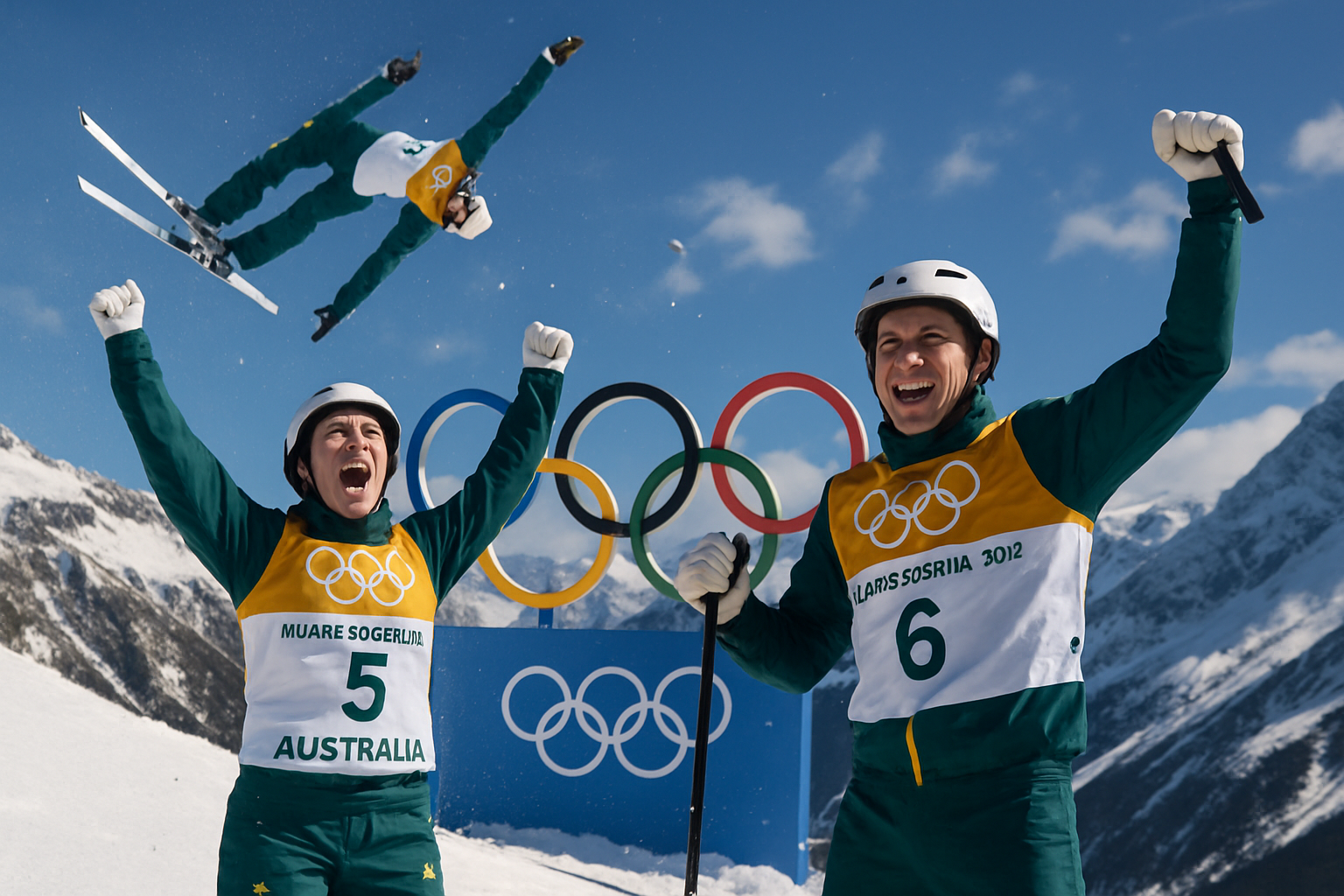
Australia has achieved its most remarkable Winter Olympics performance in history at Milano-Cortina 2026, with freestyle skier Danielle Scott breaking through to win silver in the aerials competition in her fourth Games, ending a 12-year medal drought and cementing the nation's emergence as a legitimate winter sports contender.
Scott's emotional victory represents the culmination of years of persistence and dedication, transforming Australia from a winter sports afterthought into a nation challenging traditional powerhouses across multiple disciplines. The 30-year-old's breakthrough performance has sparked celebrations across the country and positioned Australia ahead of traditional winter nations in several medal categories despite fielding fewer total athletes.
Scott's Journey to Olympic Glory
Danielle Scott's path to Olympic success exemplifies the determination that has characterized Australia's winter sports revolution. Competing in her fourth Olympic Games, Scott finally achieved the medal that had eluded her throughout her career, delivering when it mattered most on the sport's biggest stage.
The aerial skiing competition, held at the spectacular Alpine venues of Milano-Cortina 2026, saw Scott execute flawless routines that showcased the technical mastery and fearless approach that have made Australian athletes increasingly competitive in winter disciplines traditionally dominated by Northern Hemisphere nations.
"This means everything to me and to Australian winter sports. We've been building toward this moment for years, and to finally break through at the Olympics is incredibly special."
— Danielle Scott, Australian Aerial Skiing Silver Medalist
Scott's victory comes after a strategic decision by her family to deliberately stay away from the competition to minimize pressure—a choice that proved pivotal in her ability to perform under the intense Olympic spotlight. Her post-victory statement, "Thanks for not coming," became an instant sensation, highlighting the unique psychological approach that contributed to her success.
Australia's Winter Sports Revolution
Scott's silver medal is part of a broader Australian winter sports breakthrough that has redefined the nation's Olympic capabilities. Australia has already secured multiple gold medals at Milano-Cortina 2026, including historic victories from Cooper Woods in men's moguls, Jakara Anthony in dual moguls, and Josie Baff in snowboard cross.
This unprecedented success has established Australia as the world's premier moguls skiing nation, with the systematic development of winter sports programs challenging traditional hierarchies that have dominated Olympic competition for decades. The nation's performance demonstrates that geographic location and climate no longer limit Olympic aspirations in the modern era.
The transformation represents years of strategic investment in winter sports infrastructure, coaching, and athlete development programs. Australian athletes have increasingly shown they can compete with and defeat the world's best, regardless of their home training conditions.
Missing Champion's Inspiring Legacy
The Australian team's success carries particular emotional weight due to the absence of Laura Peel, the injured champion who was unable to compete at Milano-Cortina 2026. Peel's influence on the current generation of Australian winter sports athletes cannot be overstated, and her teammates never forgot her contribution to their journey.
The team's tribute to Peel during their celebrations highlighted the close-knit nature of Australia's winter sports community and the shared commitment that has driven their remarkable Olympic breakthrough. Her absence made the team's success even more poignant, demonstrating how individual setbacks can inspire collective achievement.
Technical Excellence in Aerial Competition
Scott's aerial skiing performance showcased the technical sophistication that has become a hallmark of Australian winter sports athletes. The aerials discipline requires perfect execution of complex aerial maneuvers, combining elements of gymnastics, skiing technique, and precise timing—skills that Australian athletes have mastered through innovative training methods.
The competition format, which combines technical difficulty with execution quality, has proven particularly suited to Australian athletes who have developed training programs that emphasize both physical preparation and mental resilience. This approach has translated into consistent high-level performances on the sport's biggest stages.
Breaking Traditional Winter Sports Barriers
Australia's winter sports success at Milano-Cortina 2026 represents a fundamental shift in global winter athletics. Traditional winter sports powerhouses from Europe and North America are facing unprecedented challenges from nations like Australia, which have developed innovative approaches to athlete development and competition preparation.
The success demonstrates that winter sports excellence is no longer limited by geography or climate. Australian athletes have proven that with proper training facilities, coaching expertise, and athlete dedication, any nation can compete at the highest levels of winter Olympic competition.
"What Australia has accomplished here changes everything we thought we knew about winter sports development. They've shown that excellence transcends traditional boundaries."
— International Winter Sports Expert
Revolutionary Olympic Hosting Context
Australia's breakthrough success is occurring within the context of Milano-Cortina 2026's revolutionary hosting model. The Games span over 400 kilometers across seven venues, representing the most geographically dispersed Winter Olympics in history. This innovative approach has created unique competition conditions that have contributed to breakthrough performances from athletes worldwide.
The dual-city hosting model has proven successful in maintaining competitive excellence while demonstrating sustainable Olympic practices. Technology integration, including Alibaba Qwen AI systems and OMEGA AI analysis, has enhanced both competitive and spectator experiences throughout the aerials and other competitions.
Impact on Global Winter Sports
Scott's silver medal and Australia's overall winter sports success are contributing to the democratization of Olympic competition across all disciplines. The Milano-Cortina 2026 Games have featured breakthrough performances from athletes representing six continents, challenging traditional winter sports hierarchies.
This global expansion is evident in historic participations from Saudi Arabia, Caribbean bobsled teams, and record delegations from nations like Latvia. Australia's success serves as inspiration for other non-traditional winter sports nations to invest in athlete development and compete at the highest levels.
Looking Forward
Australia's historic Winter Olympics performance at Milano-Cortina 2026 has established new expectations for the nation's winter sports programs. With multiple athletes positioned for future success and systematic development programs in place, Australia appears poised to remain a significant force in international winter competition.
Scott's aerial skiing silver medal will be remembered as a pivotal moment in Australian Olympic history—the breakthrough that transformed the nation from winter sports underdog to legitimate contender. Her achievement, combined with the broader team success, demonstrates that Olympic dreams truly have no geographic limits.
As the Milano-Cortina 2026 Games continue through February 22, Australia's winter sports revolution stands as one of the most compelling stories of these revolutionary Olympics, proving that determination, innovation, and systematic development can overcome any traditional barrier to Olympic success.