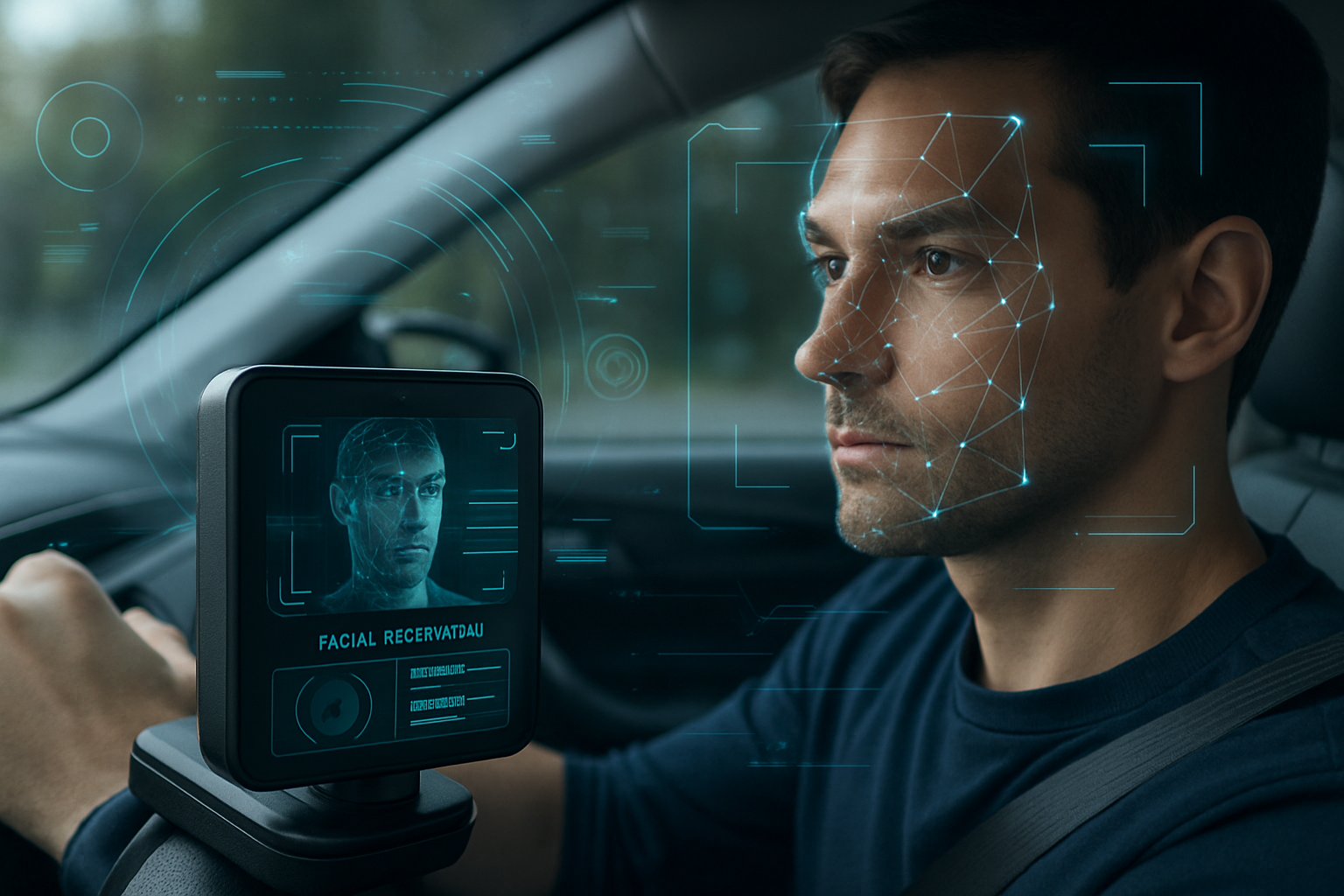
Australian researchers have developed revolutionary artificial intelligence technology that could fundamentally transform road safety enforcement by detecting risky driving behaviors through facial analysis, offering a sophisticated alternative to traditional breathalyzers and potentially saving thousands of lives annually.
The groundbreaking system, developed by researchers at Edith Cowan University (ECU), uses advanced 3D facial analysis to simultaneously detect three major causes of road accidents: blood alcohol concentration, driver fatigue, and dangerous emotional states such as anger. The technology represents a significant leap forward in non-invasive safety monitoring, achieving remarkable accuracy rates of nearly 90% for alcohol detection and 95% for drowsiness identification.
Technological Breakthrough in Driver Monitoring
According to ECU's official statement released Wednesday, the AI system employs a single deep learning model capable of analyzing multiple risk factors through sophisticated facial recognition algorithms. The technology can determine the level of intoxication and detect signs of drowsiness with unprecedented precision, while also identifying emotional states that contribute to aggressive driving behaviors.
The system's advanced capabilities extend beyond simple detection, utilizing complex neural networks to analyze micro-expressions, eye movement patterns, and facial muscle tension that indicate impairment or dangerous emotional states. This multi-dimensional approach represents a significant advancement over traditional single-purpose detection methods currently used in law enforcement.
Global Context of Road Safety Crisis
The Australian innovation arrives during a critical period of global transportation safety challenges. Recent investigations have documented alarming patterns of preventable traffic deaths worldwide, with Armenia recording 3,261 road fatalities over a decade, Egypt experiencing fatal multi-vehicle collisions killing 18 fishermen near Port Said, and numerous European nations struggling with infrastructure vulnerabilities amid extreme weather conditions.
Motorcyclists represent 41% of traffic fatalities globally despite constituting a much smaller percentage of road users, highlighting the urgent need for advanced detection systems that can identify impaired operators before accidents occur. The economic impact extends far beyond immediate human costs, with each traffic death typically costing society hundreds of thousands of dollars in lost productivity, medical expenses, and legal proceedings.
Technical Innovation and Implementation
The ECU system's sophisticated approach combines real-time facial analysis with machine learning algorithms that have been trained on extensive datasets of facial patterns associated with various forms of impairment. The technology can operate in diverse lighting conditions and environmental settings, making it suitable for deployment across different geographical regions and climatic conditions.
Unlike traditional breathalyzer testing, which requires physical interaction and can be circumvented or avoided, the facial analysis system operates continuously and non-invasively. This capability addresses a critical gap in current enforcement methods, potentially identifying impaired drivers before they reach checkpoints or cause accidents.
International Success Models and Comparisons
The Australian development aligns with successful road safety initiatives worldwide, including Sweden's Vision Zero approach that has dramatically reduced traffic fatalities through comprehensive system design, the Netherlands' Safe System methodology that accounts for human error in infrastructure planning, and Australia's own speed management programs that have achieved significant reductions in urban fatalities.
However, the AI-powered facial detection system offers capabilities that traditional approaches cannot match, providing real-time monitoring that could be integrated into vehicles themselves rather than relying solely on enforcement checkpoints or post-incident investigation.
Privacy and Ethical Considerations
The deployment of facial analysis technology for safety purposes raises important questions about privacy rights and data protection. While the system offers unprecedented safety benefits, its implementation will require careful consideration of civil liberties, data storage protocols, and potential misuse by authorities.
Legal frameworks governing AI-powered surveillance and detection systems remain in development across most jurisdictions, with recent regulatory intensification in Europe including Spain's criminal executive liability framework for technology companies and comprehensive AI governance initiatives being established through international cooperation.
Integration with Existing Safety Infrastructure
The Australian system's design allows for integration with existing traffic management and law enforcement infrastructure. The technology could be deployed at strategic monitoring points, integrated into vehicle systems, or used by law enforcement agencies as a rapid assessment tool during routine traffic stops.
Advanced Driver Assistance Systems (ADAS), autonomous emergency braking, and intelligent transportation networks could incorporate the facial analysis technology to create comprehensive safety ecosystems that proactively prevent accidents rather than merely responding to them after they occur.
Economic and Social Impact Potential
The economic implications of successful deployment extend far beyond immediate cost savings from accident prevention. Countries implementing comprehensive prevention-focused safety strategies report improved community resilience, reduced social service demands, and enhanced international competitiveness through lower insurance costs and reduced healthcare burdens.
The technology's ability to operate continuously without requiring physical testing equipment could significantly reduce enforcement costs while improving detection rates. This efficiency gain could enable broader deployment of safety monitoring across geographic areas that currently receive limited attention due to resource constraints.
Future Development and Deployment Timeline
While ECU researchers have not announced specific deployment timelines, the technology's development occurs during a period of unprecedented global investment in transportation safety infrastructure. Countries worldwide are implementing comprehensive approaches that balance technological innovation with human factors training, climate adaptation requirements, and international cooperation frameworks.
The system's continued development will likely focus on expanding detection capabilities to identify additional risk factors, improving accuracy rates, and adapting to diverse demographic and environmental conditions across different global markets.
Challenges and Limitations
Despite its promising capabilities, the facial analysis system faces several implementation challenges. Varying lighting conditions, demographic differences in facial features, and the need for extensive calibration across different populations could affect accuracy rates. Additionally, the technology requires sophisticated computational infrastructure that may be costly to deploy at scale.
Environmental factors such as extreme weather conditions, which have increasingly disrupted transportation networks globally, could also impact the system's effectiveness. The technology will need to demonstrate reliability across the full range of operating conditions encountered in real-world deployment scenarios.
International Cooperation Opportunities
The Australian innovation provides opportunities for enhanced international cooperation in road safety technology development. Successful models of technology sharing, such as Sweden's Vision Zero methodology and Canada's comprehensive safety research programs, suggest that collaborative approaches could accelerate global adoption while ensuring cultural and regulatory compliance.
International standardization of AI-powered safety detection systems could enable broader deployment while maintaining consistent accuracy and privacy standards across different jurisdictions. This coordination could prove essential for addressing cross-border transportation safety challenges and ensuring equitable access to advanced safety technologies.
Broader Implications for AI Safety Technology
The ECU development represents part of a broader trend toward AI-enhanced public safety systems that operate through sophisticated pattern recognition rather than invasive physical testing. Similar approaches are being explored for healthcare diagnostics, security screening, and educational assessment, suggesting that facial analysis technology could have applications far beyond road safety.
However, the success of these systems depends on maintaining public trust through transparent deployment, robust privacy protections, and demonstrated effectiveness in real-world conditions. The Australian road safety application could serve as a crucial test case for broader AI safety technology acceptance.
The revolutionary facial analysis system developed by Australian researchers represents a potentially transformative advancement in road safety technology. With its impressive accuracy rates and non-invasive monitoring capabilities, the system offers hope for significantly reducing the global toll of traffic-related fatalities and injuries. Success in deployment and international adoption will depend on careful attention to privacy concerns, continued technological refinement, and comprehensive integration with existing safety infrastructure. As countries worldwide grapple with persistent transportation safety challenges, innovative solutions like the ECU system provide crucial tools for protecting lives while advancing toward more intelligent and responsive transportation systems.