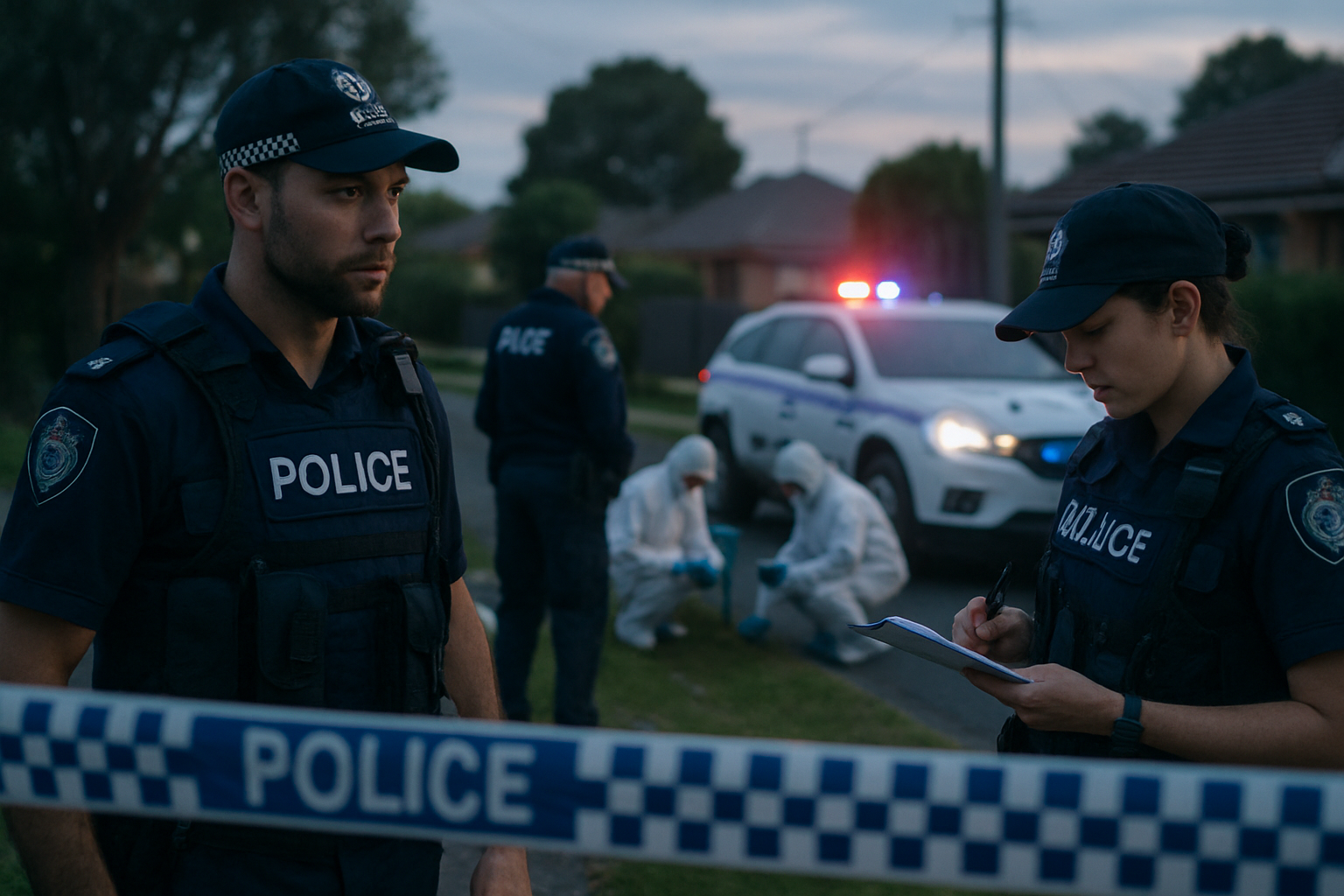
Australian law enforcement faces mounting challenges as violent crime escalates across the nation, with the alleged abduction of a rapper's bodyguard and multiple workplace deaths demonstrating the sophisticated and brazen nature of contemporary criminal activity targeting both organized crime networks and everyday workers.
Emilio Chalhoub, employed as security for rapper Ay Huncho, was allegedly bundled into a vehicle and beaten in what authorities describe as the latest targeted attack on the Alameddine crime family network. The incident represents a significant escalation in the ongoing criminal conflicts that have plagued Sydney's western suburbs throughout 2026.
Coordinated Abduction Operation
Five men have been arrested following the alleged late-night abduction from Chalhoub's family home in Guildford. Police report that the victim was forced into his own Ford Ranger outside his residence around 11:30 PM, in what investigators describe as a coordinated operation targeting the bodyguard specifically due to his connections to figures linked to the Alameddine crime network.
The Ford Ranger was later discovered partially burnt-out in Villawood, indicating the sophisticated planning and execution typical of organized criminal operations. NSW Police swooped on the alleged perpetrators shortly after the incident, demonstrating the rapid response capabilities developed in response to escalating criminal activity.
"This represents a concerning escalation in targeted violence against individuals connected to organized crime networks, but also demonstrates our enhanced capacity for rapid response and investigation."
— NSW Police Spokesperson
Workplace Safety Crisis Deepens
Concurrent with the organized crime violence, Australia faces a mounting workplace safety crisis highlighted by another fatal incident at Karreman Quarries in Sheldon, Queensland. A worker died from injuries sustained in a forklift incident at the site located approximately 30 kilometers from Brisbane, marking yet another workplace tragedy in what has become a pattern of industrial accidents.
Emergency services were called to the West Mount Cotton Road facility at approximately 2:20 PM following reports of critical injuries. Despite immediate medical attention, the worker succumbed to his injuries, prompting an investigation by Resources, Safety and Health Queensland (RSHQ).
The incident represents the second workplace fatality in less than a week, underscoring systemic safety failures across Australian industrial sites. The mounting death toll has prompted urgent calls for enhanced workplace safety protocols and more stringent enforcement of existing regulations.
Pattern of Criminal Sophistication
The Alameddine network targeting follows a documented pattern of sophisticated criminal operations that have characterized Australia's crime landscape throughout 2026. Previous incidents include the high-profile kidnapping and murder cases, terrorist plot arrests, and systematic targeting of individuals connected to various criminal organizations.
Law enforcement sources indicate that criminal networks have demonstrated "state-like capabilities" including advanced surveillance, encrypted communications, and coordinated operations that exceed traditional law enforcement resources. The targeting of Chalhoub represents the calculated nature of these operations, with criminals conducting detailed reconnaissance before executing planned attacks.
Enhanced Police Response
In response to escalating crime, NSW Police have implemented unprecedented measures including the armed response command with over 250 specialist officers and the permanent establishment of Operation Shelter, originally developed as an anti-hate crime unit. These specialized units represent the adaptation of law enforcement to meet increasingly sophisticated criminal threats.
The rapid arrests in the Chalhoub case demonstrate the effectiveness of enhanced police capabilities, though authorities acknowledge that criminal networks continue to evolve their methods and operational sophistication.
Historical Context of Violence
The current incidents occur against the backdrop of Australia's documented crime wave spanning multiple months in 2026. Previous cases have included the Dezi Freeman manhunt that concluded after 216 days, multiple terrorist plots targeting religious and government institutions, and systematic attacks on community infrastructure.
The Alameddine crime family has been specifically targeted in multiple incidents throughout this period, indicating ongoing territorial disputes and power struggles within organized criminal networks. The targeting of associated individuals like Chalhoub represents an expansion of these conflicts beyond primary figures to their support networks.
Workplace Safety Under Scrutiny
The Queensland workplace death adds to concerning statistics regarding industrial safety across Australia. The forklift incident follows multiple similar cases involving heavy machinery and industrial equipment, raising questions about training protocols, safety enforcement, and corporate responsibility for worker protection.
RSHQ has launched a comprehensive investigation into the circumstances surrounding the death, examining safety protocols, equipment maintenance, and training procedures at the Karreman Quarries facility. The investigation will determine whether criminal charges are appropriate and what systemic changes may be required to prevent similar tragedies.
"Every workplace death is preventable, and we are committed to thorough investigation and appropriate accountability measures to protect Australian workers."
— RSHQ Spokesperson
Community Impact and Response
The escalating violence has profound implications for community safety and public confidence in law enforcement capabilities. Families in areas affected by organized crime have altered their daily routines, while businesses have implemented enhanced security protocols in response to the increasing boldness of criminal operations.
The targeting of bodyguards and security personnel represents a particularly concerning development, as it demonstrates criminal willingness to escalate violence against those employed specifically for protection. This escalation threatens to undermine the effectiveness of personal security measures and could lead to an arms race between criminal organizations and protective services.
Mental Health and Social Consequences
Mental health services report increased demand from communities affected by criminal violence, with particular concern for children witnessing or hearing about violent incidents in their neighborhoods. The psychological impact extends beyond direct victims to affect broader social cohesion and community resilience.
Educational institutions have implemented additional counseling services and safety protocols, while community leaders emphasize the importance of maintaining normal activities while implementing reasonable security precautions.
Legal and Judicial System Pressure
Australian courts face unprecedented pressure processing complex criminal cases involving sophisticated organizations, workplace safety violations, and violent crime. The legal system must balance rapid processing of serious cases with maintaining due process protections and ensuring fair trials.
Legal experts emphasize that successful prosecution of organized crime requires sustained investment in specialized investigative capabilities, forensic technology, and international cooperation frameworks. The complexity of modern criminal networks demands enhanced judicial resources and expertise.
Prevention and Long-term Solutions
Addressing the current crime wave requires comprehensive approaches beyond reactive law enforcement. Community engagement, economic development, and early intervention programs provide sustainable alternatives to purely enforcement-based strategies.
Workplace safety improvements require systematic reforms including enhanced training programs, stricter enforcement of existing regulations, and corporate accountability measures that ensure adequate investment in worker protection. The intersection of organized crime and workplace safety demands coordinated responses addressing both immediate threats and underlying conditions.
International Cooperation
The sophistication of criminal networks operating across jurisdictional boundaries necessitates enhanced international cooperation. Australian law enforcement agencies continue developing partnerships with international counterparts to address transnational organized crime and share best practices for investigating complex criminal organizations.
Technology integration, including digital forensics capabilities and AI-assisted analysis, represents essential tools for addressing criminal networks that exploit technological advantages and jurisdictional limitations.
Looking Forward
The current wave of criminal activity represents a critical test of Australian democratic institutions' capacity to maintain public safety while preserving civil liberties and rule of law. Success requires sustained political commitment, adequate resource allocation, and comprehensive strategies addressing both immediate threats and underlying social conditions.
The resolution of cases like the Chalhoub abduction and prevention of workplace deaths will influence public confidence in institutional capacity to address contemporary criminal challenges. Enhanced coordination between law enforcement, workplace safety regulators, and community organizations provides the foundation for effective responses to evolving threats.
As Australia continues confronting sophisticated criminal networks and persistent safety challenges, the coming months will prove decisive in determining whether enhanced law enforcement capabilities and reformed safety protocols can effectively address the scale and complexity of current threats while maintaining the democratic principles essential to Australian society.