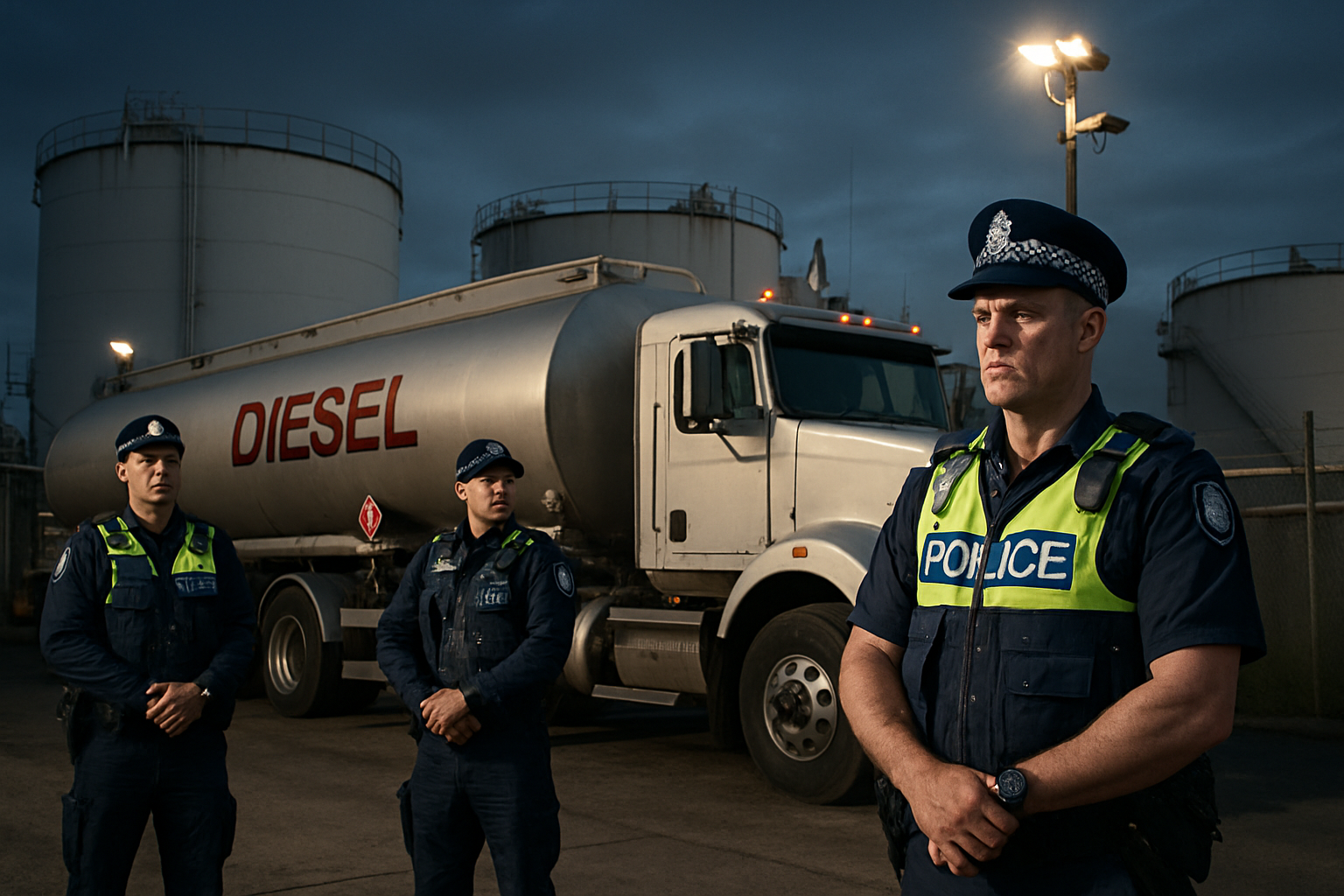
A sophisticated diesel theft operation worth over $1.1 million has been exposed in Queensland, reflecting a broader surge in organized fuel crime across Australia and New Zealand as criminal networks exploit vulnerabilities in energy infrastructure amid the worst global fuel crisis since the 1970s.
Queensland police have charged a 48-year-old man with allegedly stealing diesel fuel worth $1.1 million over a 12-month period between December 2024 and December 2025. The operation involved the systematic use of stolen fuel cards to access unmanned diesel depots across Brisbane and Ipswich, targeting facilities in the suburbs of Parkinson, Bundamba, and Karawatha.
Sophisticated Criminal Networks Target Energy Infrastructure
The Queensland case represents just the tip of an iceberg of increasingly sophisticated fuel theft operations that have emerged as Australia grapples with unprecedented energy security challenges. The timing of these crimes coincides with a global fuel crisis that has seen Australian petrol prices surge past $2.50 per liter, with some regional areas approaching the $3 threshold.
In New Zealand, police are investigating the theft of over 3,000 liters of diesel from a business in the Manawatū town of Marton, highlighting how these criminal operations have spread across the Tasman. The scale and coordination of these thefts suggest organized criminal networks are specifically targeting energy resources as fuel becomes an increasingly valuable commodity.
According to security experts, these operations demonstrate criminal organizations with state-like capabilities, including advanced surveillance systems, encrypted communications, and compartmentalized structures that span international boundaries. The technology adoption pace by these criminal networks consistently exceeds law enforcement countermeasures, creating persistent vulnerabilities in critical infrastructure.
Global Fuel Crisis Creates Criminal Opportunities
The surge in fuel theft occurs against the backdrop of the most severe worldwide energy crisis since the 1970s oil shocks. The crisis stems from Iran's Revolutionary Guard declaration that the Strait of Hormuz is "unsafe for shipping," effectively blocking 40% of global oil transit through the 21-mile chokepoint.
"This represents the most severe energy security crisis in decades, with single-chokepoint vulnerabilities exposed on a global scale."
— Samuel Ciszuk, Energy Security Analyst
The global crisis has triggered unprecedented government emergency responses, with the International Energy Agency authorizing the largest strategic petroleum reserve release in its 50-year history – 400 million barrels from 32 countries. Australia has been particularly vulnerable due to its limited domestic refining capacity and heavy dependence on fuel imports.
Regional Queensland communities including Texas township and Robinvale have experienced complete fuel depletion, with major suppliers favoring bulk distributors over independent stations, creating acute shortages in rural areas. This supply disruption has created ideal conditions for criminal exploitation of fuel distribution networks.
Law Enforcement Response and Challenges
The Australian Competition and Consumer Commission (ACCC) has been monitoring fuel companies for price gouging as the crisis deepens, while state authorities coordinate emergency responses. NSW Energy Minister Penny Sharpe has been chairing crisis talks bringing together transport, agriculture, mining, and consumer groups to address the shortages.
However, the sophistication of modern fuel theft operations presents significant challenges for law enforcement. The Queensland case involved the systematic exploitation of unmanned fuel depots over an extended period, suggesting criminals had detailed knowledge of security protocols and supply chain vulnerabilities.
Courts worldwide are experiencing unprecedented strain from criminal networks that possess advanced technological capabilities. These organizations demonstrate the ability to exploit jurisdictional boundaries and regulatory frameworks designed for different eras, requiring enhanced international cooperation and specialized enforcement capabilities.
Economic and Security Implications
The economic impact of fuel theft extends beyond direct losses to companies. The Reserve Bank of Australia has warned that fuel cost inflation creates a "triple whammy" affecting households at the bowser, checkout, and through mortgage increases as interest rates rise to combat broader inflationary pressures.
Small businesses in regional areas face mounting operational challenges as transport costs escalate. The tourism sector is under pressure as domestic travel prospects diminish and families reconsider holiday plans. Financial counseling services report increased demand, reflecting the compound impact of fuel costs, mortgage increases, and broader cost-of-living pressures.
The vulnerability of Australia's energy infrastructure has exposed dangerous over-dependence on strategic chokepoints in volatile geopolitical regions. Energy security experts emphasize that strategic petroleum reserves provide only temporary buffers against sustained supply disruptions, requiring fundamental restructuring of energy architecture to reduce geopolitical volatility risks.
International Patterns and Responses
The Australian fuel theft cases reflect broader patterns of sophisticated criminal activity documented across multiple countries. Recent investigations have revealed criminal networks with compartmentalized international structures, professional-grade concealment capabilities, and financial operations that exploit legitimate banking systems.
International cooperation has become essential for addressing these transnational threats. The Shield of the Americas coalition and enhanced European law enforcement coordination represent new models for intelligence sharing and coordinated operational responses against criminal organizations that operate without respect for national boundaries.
Expert analysis suggests that criminal organizations are increasingly adopting technologies and operational methods that rival state intelligence capabilities. This arms race between criminal innovation and institutional adaptation requires sustained investment in specialized law enforcement capabilities, enhanced international cooperation, and comprehensive prevention strategies.
Long-term Security Transformation
The fuel crisis and associated criminal exploitation have created what UN Secretary-General António Guterres describes as "the greatest test of multilateral cooperation in the modern era." The events of 2026 are establishing new paradigms for energy security planning that will influence international stability mechanisms for decades.
Recovery from the current crisis depends on military and diplomatic resolution of Middle East tensions, unlike weather-related disruptions that follow predictable patterns. Success in containing the crisis could provide frameworks for future nuclear and energy security management, while failure might accelerate military solutions that reshape geopolitical relationships for generations.
For Australia, the crisis represents a watershed moment that exposes fundamental vulnerabilities in energy security planning. The intersection of geopolitical tensions, criminal exploitation, and infrastructure vulnerabilities demands comprehensive policy transformation addressing both immediate security needs and long-term energy independence strategies.
As investigations continue into the Queensland diesel theft and related cases across the region, law enforcement agencies are adapting their approaches to counter increasingly sophisticated criminal networks. The success of these efforts will determine not only the immediate security of energy infrastructure but also the broader resilience of democratic institutions facing unprecedented challenges in an interconnected yet politically fragmented world.