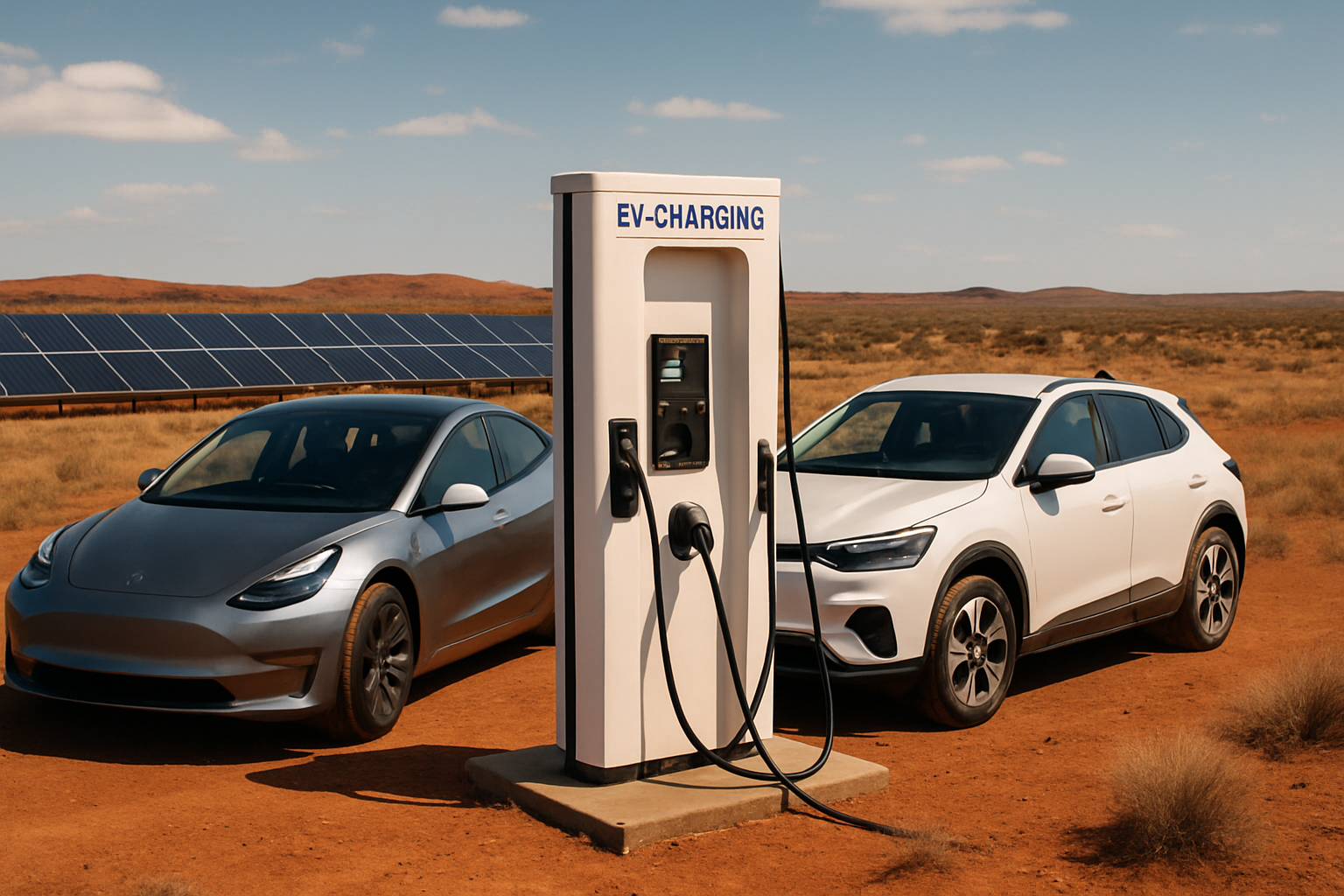
Despite electric vehicles becoming more affordable than ever—with some models now priced below a Toyota Corolla—Australian drivers remain hesitant to make the switch, citing infrastructure concerns and charging accessibility as primary barriers to widespread adoption.
The electric vehicle market in Australia has reached a critical inflection point in February 2026. While price has historically been the primary deterrent for Australian consumers, the arrival of competitively priced EVs has failed to trigger the mass adoption many industry experts predicted. Instead, a complex web of infrastructure challenges and geographic realities continues to impede the transition to electric mobility.
The Price Barrier Myth Exposed
Recent market analysis reveals that several electric vehicle models are now available in Australia at prices comparable to or below popular internal combustion engine vehicles. The price parity milestone, long anticipated as the tipping point for EV adoption, has been achieved across multiple vehicle categories. Yet consumer uptake remains surprisingly sluggish, suggesting that cost alone was never the complete picture.
This pricing breakthrough comes amid a global electric vehicle transformation. Historical context from early 2026 shows the industry grappling with supply chain challenges, including China's dominance in critical materials production (60% of global production and 90% of refining capacity for lithium, cobalt, and rare earth elements). Memory chip shortages have also created sixfold price increases affecting vehicle control systems, though these haven't prevented the achievement of price competitiveness in Australia.
Urban-Rural Divide: The Infrastructure Reality
The most significant barrier to Australian EV adoption mirrors patterns observed globally. German research documented in early 2026 revealed stark urban-rural disparities in EV adoption, with homeowners and rural residents having clear advantages through home charging access, while city dwellers face substantial barriers despite expressing higher interest in electric vehicles.
In Australia, this divide is particularly pronounced due to the country's unique geographic challenges. Rural and regional Australians, who might benefit most from the lower operating costs of electric vehicles, face the greatest infrastructure challenges. Charging networks remain concentrated in major urban centers, leaving vast stretches of the country without adequate charging infrastructure.
"The tyranny of distance that has shaped Australian development for two centuries continues to influence our energy transition. Without a comprehensive charging network that serves both urban apartments and rural communities, we're asking consumers to take a leap of faith that many aren't ready to make."
— Transport Infrastructure Expert
The Apartment Dweller Dilemma
Urban Australians living in apartments face a different but equally challenging set of barriers. Unlike homeowners who can install private charging infrastructure, apartment residents must rely on public charging networks or workplace charging facilities. This dependency creates anxiety about charging accessibility and convenience that continues to deter adoption.
The situation reflects broader global trends observed in developed markets. European studies have consistently shown that access to home charging is among the strongest predictors of EV adoption, while those without private parking or charging options remain significantly less likely to purchase electric vehicles.
Workplace and Public Charging Networks
While Australia has made progress in expanding public charging infrastructure, the network remains inadequate for supporting mass EV adoption. Unlike countries such as Austria, which doubled its electric vehicle infrastructure in early 2026 with Wien Energie's ambitious program adding 1,000 additional public charging stations, Australia's expansion has been more gradual and geographically uneven.
The development of workplace charging facilities has emerged as a crucial middle ground, particularly for urban apartment dwellers. However, uptake remains inconsistent across industries and regions, creating another layer of uncertainty for potential EV buyers.
Range Anxiety in the Australian Context
Range anxiety—the fear of running out of battery power without access to charging—takes on particular significance in the Australian context. The country's vast distances between major centers create unique challenges that don't exist in more densely populated markets.
Recent extreme weather testing from Austria provides relevant insights. Comprehensive testing of 24 electric vehicles in Norway under conditions reaching -31°C showed significant range losses in winter conditions, though modern EVs remained viable for cold-climate driving with proper thermal management systems. While Australia doesn't face the same extreme cold challenges, the principle of environmental impact on range performance resonates with consumers concerned about performance in Australia's often harsh climate conditions.
The Technology Readiness Gap
Advanced technologies that could address some infrastructure concerns remain expensive and underdeveloped. Bidirectional charging technology, such as BMW's DC systems that allow EVs to function as home backup power sources, could transform vehicles into energy storage solutions. However, current implementations remain expensive and lack cost-effectiveness for widespread adoption.
Vehicle-to-grid (V2G) capabilities could potentially stabilize electrical grids by providing distributed storage, charging during off-peak renewable generation and discharging during high demand periods. Yet these technologies require sophisticated integration with existing electrical infrastructure that hasn't been widely implemented in Australia.
Government Policy and Market Responses
The Australian government's approach to EV incentives has been more conservative compared to international examples. Unlike Canada's $9.7 billion automotive strategy under Prime Minister Mark Carney, which shifted from mandates to consumer rebates, Australia has relied more heavily on market forces to drive adoption.
This approach contrasts with more aggressive intervention seen elsewhere. Indonesia's PT PLN committed to 5,000 EV charging stations nationally, representing a comprehensive infrastructure investment that Australia has yet to match in scale relative to its geographic challenges.
State-Level Initiatives
Different Australian states have taken varying approaches to supporting EV adoption, creating a patchwork of policies and incentives. Some states have introduced registration fee exemptions, stamp duty reductions, or direct rebates, while others have been more conservative in their support.
This inconsistent policy environment adds another layer of complexity for consumers and manufacturers alike, potentially slowing adoption by creating confusion and uncertainty about the total cost of ownership across different jurisdictions.
Commercial Vehicle Challenges
Commercial vehicles face unique infrastructure demands requiring high-capacity charging stations along freight corridors. Tesla's announcement of large-scale Tesla Semi production in early 2026 marked a significant milestone for commercial electric vehicle adoption globally, but Australia's freight industry faces particular challenges due to the long distances between major centers and the lack of heavy-duty charging infrastructure.
The development of charging infrastructure for commercial vehicles requires different technical specifications and significantly higher capital investment than passenger vehicle charging networks, creating additional barriers for fleet adoption in Australia.
Supply Chain and Economic Factors
Beyond infrastructure concerns, Australian EV adoption continues to face supply chain challenges that have affected global markets. The automotive industry has experienced critical materials supply chain disruptions, with China's dominant position in key materials creating both supply and pricing vulnerabilities.
Memory chip shortages have created sixfold price increases affecting vehicle control systems, though these impacts have been absorbed by manufacturers rather than directly passed to consumers. However, these supply chain tensions contribute to delivery delays and model availability issues that further complicate the adoption decision for Australian consumers.
Cultural and Behavioral Factors
Australian car culture, with its emphasis on long-distance road trips and outdoor adventures, creates unique psychological barriers to EV adoption. The fear of being stranded without charging facilities resonates particularly strongly in a country where "outback adventures" remain part of the national identity.
This cultural factor intersects with practical infrastructure concerns to create a powerful psychological barrier that goes beyond rational cost-benefit analysis. Even consumers who rarely venture beyond urban centers may be reluctant to purchase vehicles they perceive as limiting their theoretical freedom to travel.
The Path Forward
Addressing Australia's EV adoption barriers requires a comprehensive approach that goes beyond price competitiveness. The success of electric vehicle adoption in Australia will depend on coordinated development across multiple areas: vehicle production, charging infrastructure, grid integration, and supply chain security.
International examples provide templates for success. The convergence of transportation and energy systems creates opportunities for integrated transformation, but requires sustained investment, international cooperation, and innovative technical solutions tailored to Australian conditions.
Infrastructure Investment Priorities
Successful EV adoption in Australia will require strategic infrastructure investment that addresses both urban and rural needs. Fast-charging networks along major highways, comprehensive urban charging solutions for apartment dwellers, and workplace charging programs represent essential components of a comprehensive strategy.
The integration of renewable energy with charging infrastructure could address both environmental and economic concerns, particularly in regional areas where solar resources are abundant. This approach could create distributed energy systems that enhance rather than strain existing electrical infrastructure.
Conclusion: Beyond the Price Point
While achieving price parity with internal combustion vehicles represents a significant milestone, Australia's electric vehicle adoption story illustrates that cost was never the only barrier. Infrastructure concerns, range anxiety, cultural factors, and policy uncertainty continue to shape consumer decisions in ways that pure economics cannot address.
The transformation to electric mobility in Australia requires a sophisticated understanding of these multifaceted challenges and coordinated responses that address infrastructure, policy, and cultural factors simultaneously. Only through such comprehensive approaches can Australia move beyond the current adoption plateau and realize the full potential of electric vehicle technology.
The global transition to electric vehicles continues to accelerate, with technological innovations, policy frameworks, and infrastructure development creating momentum worldwide. Australia's unique geographic and cultural context requires tailored solutions, but the fundamental trends toward electrification remain compelling as the technology matures and supporting infrastructure develops.