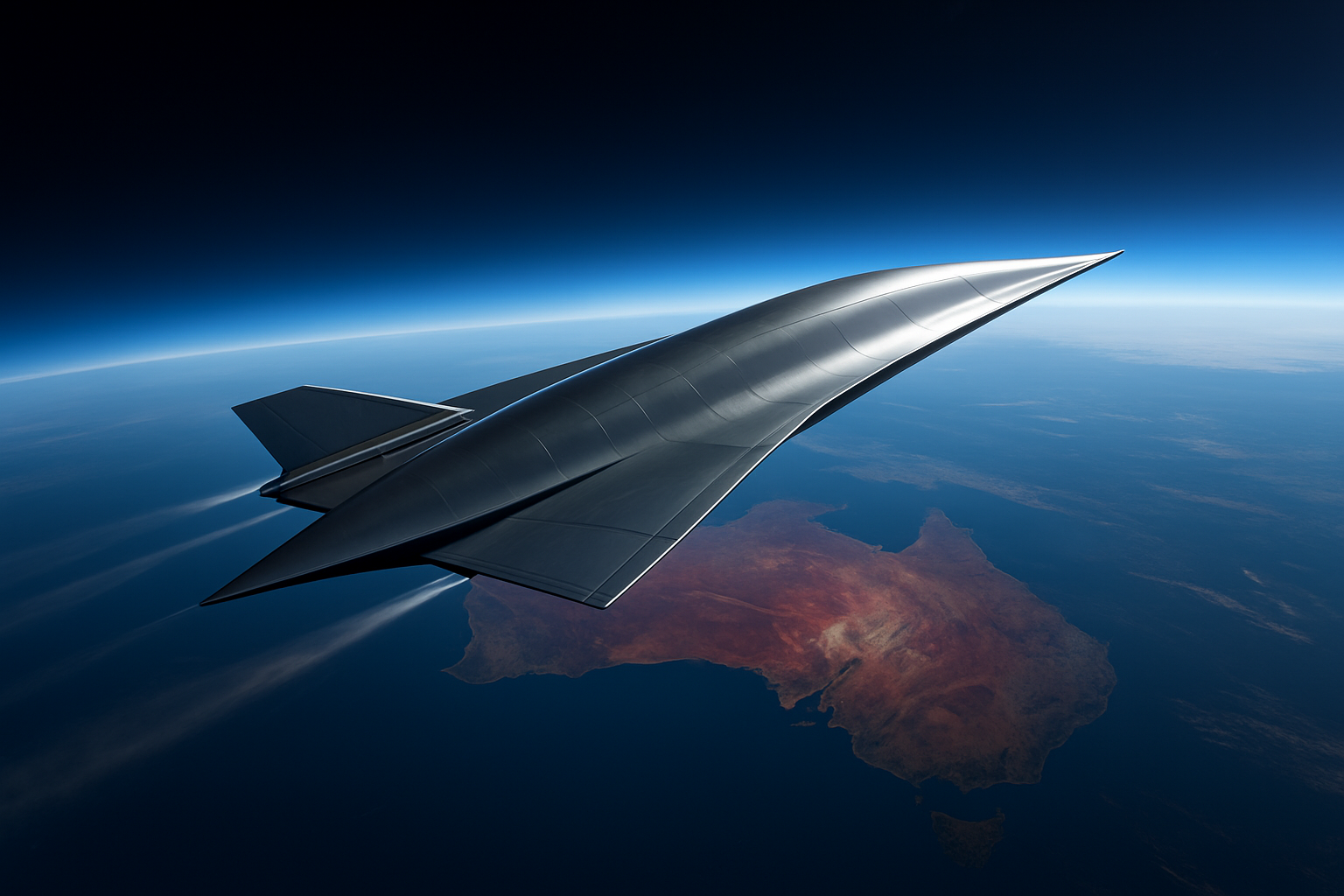
Australia has achieved a groundbreaking milestone in aerospace technology with the successful test flight of a domestically-built hypersonic aircraft that reached five times the speed of sound, marking a transformative moment for the future of air travel and positioning the nation as a leader in next-generation aviation.
The historic test flight, conducted on February 28, 2026, saw the Australian-made hypersonic vehicle achieve Mach 5 velocity in what scientists are describing as a breakthrough that could revolutionize commercial aviation and military aerospace capabilities. This achievement places Australia among an elite group of nations capable of developing and testing hypersonic flight technologies.
Technical Achievement and Specifications
Reaching five times the speed of sound represents a velocity of approximately 6,125 kilometers per hour (3,806 mph), a speed that dramatically reduces travel times and opens new possibilities for both civilian and defense applications. The test demonstrates Australia's growing expertise in advanced propulsion systems, aerodynamic design, and the complex engineering challenges associated with sustained hypersonic flight.
Hypersonic flight presents unique technical challenges including extreme heat generation, atmospheric pressure variations, and the need for specialized materials capable of withstanding the intense conditions encountered at such velocities. The successful test indicates that Australian engineers have overcome these significant obstacles.
Strategic Aerospace Context
This achievement occurs within a broader global context of rapidly advancing aerospace technology. The timing coincides with other significant developments in the sector, including NASA's recent setbacks with the $72 million Lunar Trailblazer mission failure in February 2026, which suffered a critical pointing software error just one day after launch.
While space missions face ongoing technical challenges, Australia's hypersonic success demonstrates the nation's commitment to atmospheric flight innovation. The test comes as international space cooperation intensifies, with programs like SpaceX's continued ISS missions, China's advancing Shenlong reusable spacecraft program, and enhanced multinational collaboration in aerospace research.
Global Hypersonic Competition
Australia's achievement positions it strategically within the international hypersonic race. Other nations, including the United States, Russia, and China, have been developing similar capabilities, making this a critical area of technological competition with both commercial and defense implications.
The successful test represents years of research and development investment, likely building on Australia's existing aerospace infrastructure and partnerships. This includes collaboration with international partners while maintaining domestic technological sovereignty in this strategically important sector.
Future Air Travel Implications
Scientists involved in the project emphasize that this technology could "forge the future of air travel," potentially enabling dramatically reduced flight times for commercial passengers. Hypersonic passenger aircraft could theoretically reduce intercontinental travel times from hours to minutes, fundamentally changing global mobility and economic relationships.
However, significant challenges remain before hypersonic technology becomes commercially viable, including safety certification, cost reduction, environmental impact mitigation, and the development of supporting infrastructure such as specialized airports and maintenance facilities.
Defense and Security Applications
Beyond civilian applications, hypersonic technology has significant defense implications. The capability demonstrates Australia's advancing military aerospace technology, particularly relevant given ongoing regional security considerations and the nation's AUKUS defense partnership with the United States and United Kingdom.
This achievement complements Australia's broader defense modernization, including the historic $30 billion AUKUS nuclear submarine program at Adelaide's Osborne shipyard, which aims to establish Australia as the seventh nation capable of nuclear submarine construction.
Economic and Industrial Impact
The successful test represents substantial economic potential for Australia's aerospace sector. Developing hypersonic capabilities requires advanced manufacturing, specialized materials science, and high-tech employment, potentially creating thousands of skilled jobs and establishing new export opportunities.
The achievement occurs during an unprecedented global infrastructure investment surge exceeding $570 billion, with nations prioritizing technological advancement and strategic capabilities development. Australia's hypersonic success positions the nation to participate in and potentially lead aspects of this technological transformation.
International Recognition and Next Steps
The international aerospace community will be closely monitoring Australia's progress, particularly given the strategic importance of hypersonic technology for both commercial aviation and defense applications. The successful test likely attracts interest from potential international partners and customers.
While specific details about the aircraft's design, testing parameters, and future development timeline remain limited, the achievement represents a significant milestone in Australia's technological capabilities. The success sets the foundation for continued development toward operational hypersonic systems.
Broader Technological Context
This aerospace breakthrough occurs alongside other significant Australian technological achievements, including recent advances in renewable energy systems, mining automation, and biotechnology research. The hypersonic test demonstrates Australia's capacity for world-leading innovation across multiple high-tech sectors.
The timing also coincides with ongoing discussions about space-based infrastructure development, with some analysts suggesting that hypersonic atmospheric flight technology could complement space-based transportation systems as part of integrated future mobility solutions.
As Australia continues developing this groundbreaking technology, the successful test flight marks a pivotal moment in the nation's aerospace capabilities and its contribution to the global evolution of high-speed transportation. The achievement positions Australia as a key player in shaping the future of both commercial aviation and advanced aerospace technology, with implications that extend far beyond the test flight itself.