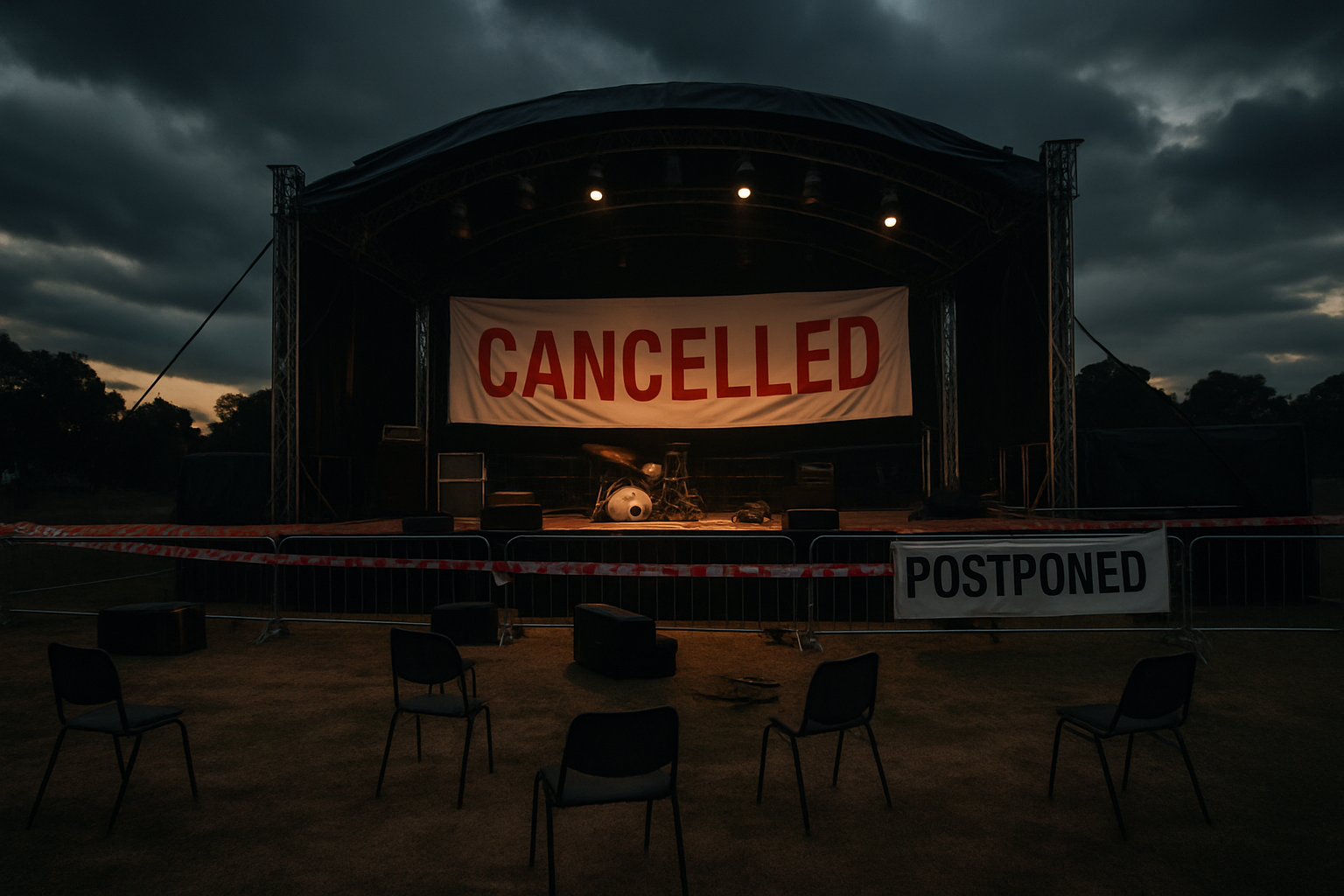
Another major Australian music festival has announced its cancellation despite achieving 90% ticket sales, underscoring the deepening crisis gripping the nation's live music industry as operational challenges override commercial success.
The Queensland event's cancellation, announced Thursday March 27, 2026, represents the latest in a devastating wave of festival failures that has swept across Australia since early 2025, fundamentally reshaping the country's cultural landscape and raising serious questions about the future of live music events.
"We have heard the message," the festival organizers stated in their cancellation announcement, acknowledging the systematic pressures that have made even commercially successful events financially unviable.
Systematic Industry Collapse
The cancellation comes amid what industry analysts describe as the most severe crisis in Australian festival history, with dozens of events cancelled since early 2025 despite strong consumer demand. The Rolling Loud hip hop festival's last-minute cancellation of Sydney and Melbourne shows just one week before scheduled dates in February 2026 exemplified the scale of the crisis.
Industry experts have identified multiple interconnected factors driving this unprecedented wave of cancellations:
- Operational costs have skyrocketed, with venue fees, artist booking expenses, and security requirements reaching unsustainable levels
- Insurance premiums have increased by 200-300%, making comprehensive coverage financially prohibitive for many organizers
- Extreme weather volatility requires expensive contingency planning and additional safety measures
- Complex regulatory compliance burdens have grown substantially
- Australia's geographic isolation increases touring costs for international acts
- Limited population centers restrict potential audience sizes for recovery
Economic Impact Extends Beyond Music
The festival crisis is generating severe economic consequences across Australia's tourism and hospitality sectors. Local economies that depend on festival tourism are experiencing significant booking drops, with hotels, restaurants, and transport services reporting substantial revenue losses.
Regional communities face particular hardship, as many festivals served as major economic drivers providing year-round business sustainability. The cancellations eliminate thousands of temporary employment opportunities across sound engineering, lighting, security, catering, and other festival-dependent industries.
The ripple effects extend to local support acts who are losing crucial performance opportunities and income streams, while international artists are questioning the reliability of Australia's festival circuit, creating a negative cycle that makes securing marquee acts increasingly difficult.
Industry Adaptation Attempts
Some organizers are attempting to adapt to the challenging environment by reducing event sizes, transitioning to indoor venues, or implementing smaller-scale formats. However, these adaptations require significant upfront investment that many struggling organizers cannot afford.
Hybrid events incorporating livestreaming and virtual reality elements represent another emerging approach, though the technology and production requirements demand substantial resources that remain beyond reach for many independent festival operators.
The crisis has highlighted the stark difference between major commercial operators with substantial backing and smaller independent festivals lacking the financial resources to weather the current challenges.
Government Response Remains Limited
Despite industry calls for comprehensive support mechanisms, government response has been cautious. While some state governments have announced review processes, concrete financial assistance remains limited due to political sensitivity around public funding for commercial entertainment ventures.
Industry advocates are pushing for streamlined licensing processes, infrastructure investment, and emergency support frameworks, but progress has been slow. The political complexity of supporting commercial entertainment during broader economic pressures has constrained official responses.
Global Context and Comparisons
Australia's festival crisis occurs within a broader global entertainment industry transformation. The documented "February 2026 Cultural Renaissance" in other regions contrasts sharply with Australia's struggles, where streaming platforms and digital entertainment thrive while live events face mounting operational challenges.
The crisis reflects similar challenges faced internationally, including the post-pandemic operational changes, inflation pressures, evolving consumer behavior, enhanced safety requirements, and environmental compliance standards. However, Australia's unique geographic and regulatory environment has intensified these pressures.
Critical Juncture for Industry Future
Industry experts describe the current moment as a critical juncture that will determine whether Australia's festival landscape faces permanent contraction or temporary downturn. The survival of the sector depends on developing sustainable solutions to address the interconnected challenges of cost pressures, weather volatility, regulatory compliance, and market limitations.
The outcome will significantly impact Australia's status as a vibrant live music destination and cultural tourism draw. Success in navigating this crisis could provide a template for festival industries globally, while failure might accelerate the shift toward purely digital entertainment experiences.
Looking Ahead
The Queensland festival cancellation, despite its strong sales performance, demonstrates that commercial appeal alone cannot overcome the systemic challenges facing Australia's festival industry. The crisis requires comprehensive solutions addressing infrastructure costs, regulatory frameworks, insurance accessibility, and weather resilience.
As the industry grapples with these unprecedented challenges, the coming months will prove decisive in determining whether Australia can maintain its festival culture or faces a fundamental transformation toward alternative entertainment models. The stakes extend far beyond individual events, touching the heart of Australia's cultural identity and creative economy.
For thousands of music fans, artists, and industry workers, the ongoing cancellations represent not just disappointment but a fundamental shift in how live music culture operates in Australia. The resolution of this crisis will shape the entertainment landscape for years to come.