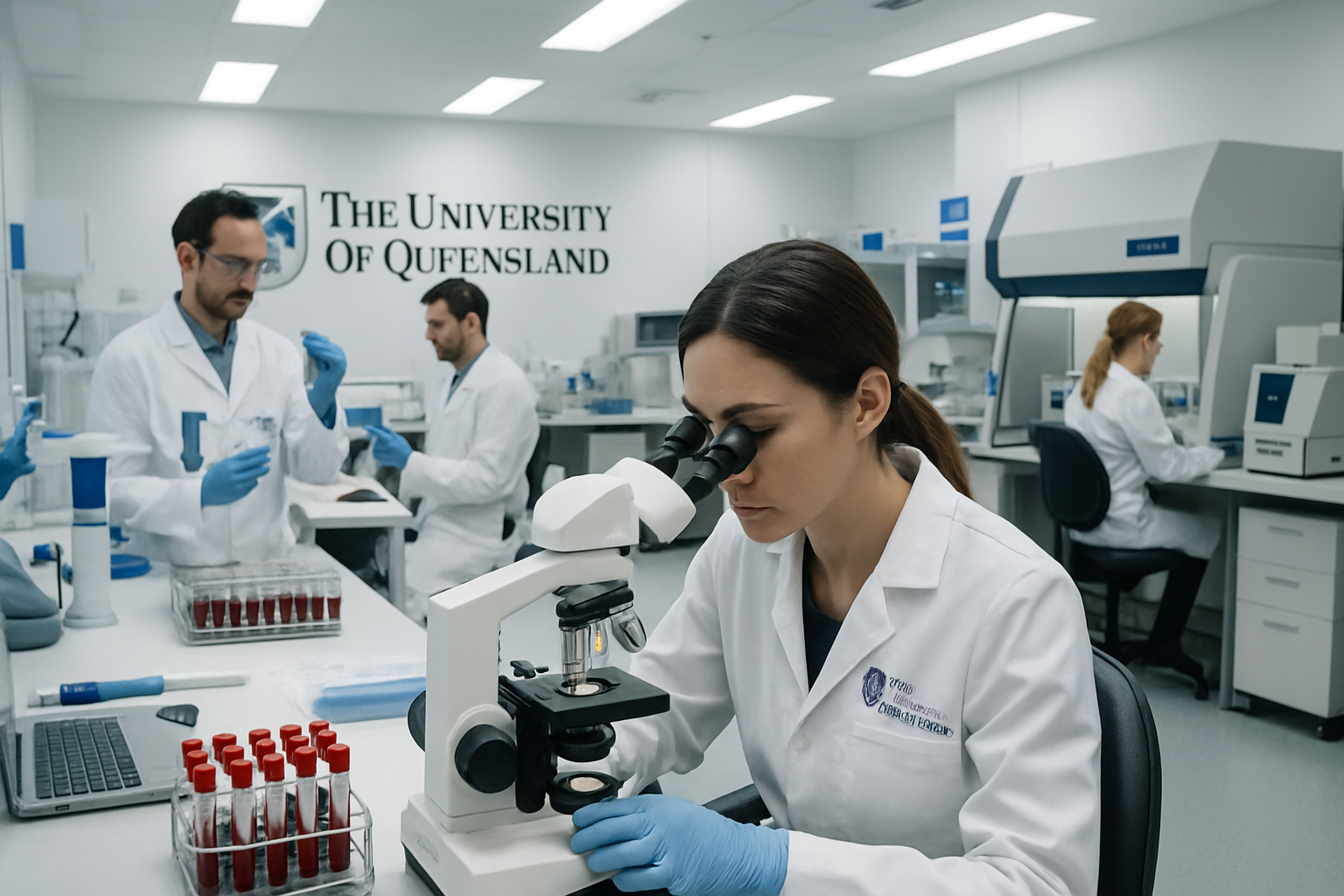
Australian researchers have achieved a revolutionary breakthrough in ovarian cancer detection, developing a screening test that successfully identified 100% of early-stage ovarian cancers in clinical trials, offering unprecedented hope for improving survival rates from one of medicine's most deadly diseases.
The groundbreaking research, conducted by scientists at the University of Queensland, represents a paradigm shift in the fight against ovarian cancer, which currently claims the lives of more than half of diagnosed women within five years. Unlike existing diagnostic methods that often detect the disease only after it has advanced to later stages, this innovative screening test promises to catch ovarian cancer at its earliest, most treatable phase.
Breakthrough Technology Using Microscopic Cellular Messengers
The revolutionary screening test is based on the analysis of microscopic bubbles called extracellular vesicles (EVs), which are naturally released by cells throughout the human body. These tiny cellular messengers carry protein and genetic information that can signal the presence of cancer long before traditional methods would detect any abnormalities.
"Extracellular vesicles function as cellular communication networks," explains the research team. "When cancer begins to develop, these vesicles carry distinctive molecular signatures that our technology can identify with unprecedented accuracy."
The University of Queensland scientists have developed sophisticated analytical methods to decode the complex information contained within these extracellular vesicles, creating what amounts to an early warning system for ovarian cancer development. This represents a fundamental advancement from reactive treatment approaches to proactive prevention strategies that align with the global "Therapeutic Revolution of 2026."
Addressing a Critical Medical Need
Ovarian cancer has long been considered a "silent killer" due to its tendency to remain asymptomatic until reaching advanced stages. Currently, less than half of women diagnosed with ovarian cancer survive beyond five years, primarily because the disease is typically discovered too late for optimal treatment intervention.
The absence of effective screening programs for ovarian cancer has been a persistent challenge in women's health. While other gynecological cancers such as cervical and breast cancer have established screening protocols that have dramatically improved survival rates, ovarian cancer has remained without reliable early detection methods—until now.
This Australian breakthrough could fundamentally alter the medical landscape for millions of women worldwide. When ovarian cancer is detected at its earliest stages, survival rates increase dramatically, making early detection the most critical factor in patient outcomes.
Context Within Global Cancer Research Revolution
The Australian ovarian cancer breakthrough emerges during an unprecedented period of medical innovation that researchers have termed the "Therapeutic Revolution of 2026." This revolutionary test joins a constellation of groundbreaking cancer detection and treatment advances that are reshaping oncology globally.
Recent parallel developments include Sweden's successful AI-assisted breast cancer detection trials, which demonstrated artificial intelligence's ability to identify more cancer cases during routine mammography screenings. Similarly, Hong Kong researchers have developed novel antibody therapies targeting metabolism-related liver cancers, while multiple countries have achieved significant advances in precision medicine approaches.
The convergence of these innovations reflects a fundamental shift toward prevention-first healthcare strategies that emphasize early intervention over reactive treatment. According to World Health Organization research, 38-40% of cancers are preventable through lifestyle modifications and early detection programs, making breakthroughs like the Australian ovarian cancer test economically and medically imperative.
Implementation Challenges and Future Prospects
While the 100% detection rate achieved in early trials represents a remarkable scientific achievement, several implementation challenges must be addressed before the technology becomes widely available to patients worldwide.
Regulatory approval processes will require extensive clinical validation involving larger patient populations across diverse demographic groups. Healthcare systems will need substantial investment in training programs to ensure medical professionals can effectively utilize the new technology. Laboratory infrastructure must be expanded to accommodate the sophisticated analytical equipment required for extracellular vesicle analysis.
Economic considerations include the initial costs of implementation versus the long-term savings achieved through early detection and improved treatment outcomes. Prevention-focused healthcare strategies consistently demonstrate superior cost-effectiveness compared to reactive treatment models, with countries implementing comprehensive prevention programs reporting better population health outcomes and reduced healthcare expenditures.
International Cooperation and Knowledge Sharing
The success of the Australian breakthrough reflects broader trends in international medical cooperation that are driving innovation despite challenges facing traditional multilateral health organizations. Bilateral partnerships and peer-to-peer knowledge sharing networks continue accelerating medical discoveries while ensuring broader accessibility to life-saving therapies.
The diversity of approaches—from Australian extracellular vesicle analysis to European AI-assisted diagnostics and Asian precision medicine advances—provides complementary models that strengthen the global healthcare ecosystem through shared learning and adaptation.
This collaborative approach ensures that breakthrough research translates into accessible, effective treatments for diverse populations regardless of geographic or economic constraints, avoiding the "wellness paradox" where technological solutions create healthcare inequality rather than improving outcomes universally.
Impact on Women's Health Globally
The implications of achieving 100% early-stage ovarian cancer detection extend far beyond medical statistics. For millions of women worldwide, this breakthrough represents the difference between a cancer diagnosis that carries hope for full recovery versus one that necessitates palliative care.
The technology's potential to transform ovarian cancer from a disease frequently detected too late into one caught at its most treatable stage could reshape women's healthcare planning and preventive medicine protocols globally. Regular screening using extracellular vesicle analysis could become as routine and life-saving as mammograms or Pap smears.
Healthcare advocates emphasize that successful implementation must prioritize equitable access, ensuring that breakthrough technologies benefit women across all socioeconomic and geographic boundaries. The goal is enhancing rather than replacing human-centered care approaches that maintain the fundamental clinical relationships essential for effective healthcare delivery.
Looking Toward a Cancer-Free Future
The Australian ovarian cancer detection breakthrough represents more than a single technological advance—it embodies a fundamental transformation in how medical science approaches cancer prevention and treatment. The achievement of 100% early-stage detection accuracy provides concrete evidence that cancer can transition from a crisis-management medical challenge to a preventable and manageable health condition.
As healthcare systems worldwide grapple with aging populations, climate-related health challenges, and emerging disease threats, innovations like the extracellular vesicle-based screening test provide roadmaps for resilient healthcare systems that prioritize wellness maintenance over disease treatment.
The success of this Australian research depends on sustained political commitment to healthcare innovation, comprehensive professional training programs, continued international cooperation, and unwavering dedication to ensuring that medical advances benefit all populations. The convergence of precision medicine, prevention-focused strategies, and international collaboration creates an unprecedented foundation for addressing 21st-century health challenges.
March 2026 may well be remembered as the month when ovarian cancer detection achieved a historic milestone, demonstrating that coordinated scientific innovation can achieve transformative improvements in human health through dedication to excellence, equity, and hope for a future where no woman dies from a disease that could have been detected and treated successfully.