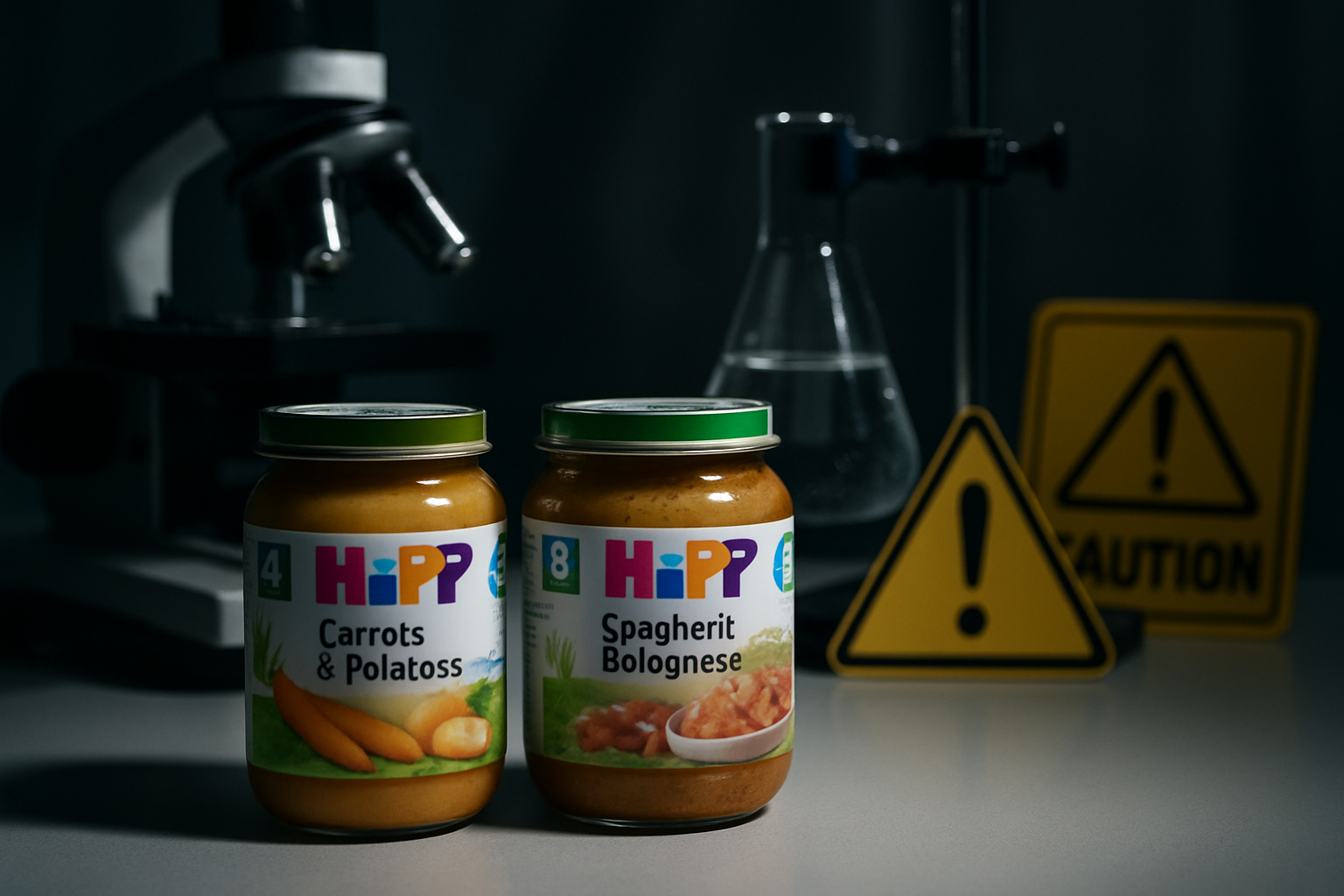
Austrian health authorities have confirmed the discovery of rat poison in baby food products manufactured by HiPP, marking a dangerous escalation in what officials describe as a suspected extortion plot targeting one of Europe's most trusted infant nutrition brands.
The Austrian Health Agency (AGES) announced the contamination discovery following comprehensive laboratory testing of HiPP baby food glass jars. According to official sources, the rat poison detection appears connected to an ongoing criminal investigation involving attempted extortion against the German-based manufacturer.
Scale of the Contamination
The contamination was detected in baby food glass jars distributed across Austrian retail networks, with authorities emphasizing that the toxic substance was deliberately introduced rather than resulting from manufacturing errors or natural contamination. The Austrian Health Agency has not disclosed the specific type or concentration of rat poison found, but confirmed the levels detected posed serious health risks to infants.
"This represents a criminal act targeting the most vulnerable members of our society," stated a spokesperson for the Austrian police investigation unit. "We are treating this with the highest priority and coordinating with international law enforcement agencies."
HiPP, renowned for its organic baby food products and rigorous quality standards, has cooperated fully with Austrian authorities. The company immediately initiated voluntary recalls of affected product batches and suspended distribution pending the investigation's completion.
Extortion Investigation Details
Law enforcement sources confirm that HiPP received threats demanding substantial financial payments to prevent further contamination incidents. The extortion scheme appears sophisticated, with perpetrators demonstrating detailed knowledge of the company's supply chain and distribution networks.
Austrian criminal investigators, working alongside German authorities and Europol, have launched a comprehensive manhunt for the individuals responsible. The investigation involves analyzing security footage from multiple retail locations, examining supply chain access points, and conducting forensic analysis of the contaminated products.
"We are dealing with individuals who showed complete disregard for infant safety to achieve their criminal objectives," explained Chief Inspector Maria Hofmann of the Austrian Federal Criminal Police Office. "The sophistication of this operation suggests careful planning and insider knowledge of food distribution systems."
European Food Safety Crisis Context
This incident occurs within the broader context of an unprecedented European food safety crisis that has plagued the continent throughout 2026. The ongoing crisis has already affected over 36 infants across the United Kingdom, France, Luxembourg, Greece, Austria, Belgium, and Malta through cereulide toxin contamination in various Nestlé and Danone baby food products.
The cereulide toxin crisis, caused by heat-stable toxins from Bacillus cereus bacteria that survive pasteurization, forced regulatory authorities to completely revise safety protocols and implement enhanced molecular testing procedures beyond conventional bacterial screening methods.
Climate change has emerged as a significant amplifying factor, with 2026 marking the 21st consecutive month of global temperatures exceeding 1.5°C above pre-industrial levels. These sustained temperature increases create optimal conditions for pathogen growth and fundamentally disrupt traditional food preservation methods that have protected consumers for generations.
"Climate change is functioning as a threat multiplier, enabling simultaneous pathogen co-circulation that overwhelms food safety systems designed for sequential rather than simultaneous challenges."
— Dr. Ali Younis, Cairo University Faculty of Sciences
Regulatory Response and Enhanced Protocols
The European Food Safety Authority (EFSA) has accelerated development of standardized international protocols and coordinated early warning systems specifically designed to address cross-border contamination prevention. These enhanced measures represent the most significant regulatory evolution in European food safety since the establishment of unified standards.
Austrian health authorities have implemented emergency inspection protocols for all imported baby food products, with particular emphasis on supply chain integrity verification. Random testing frequency has increased by 300% for infant nutrition products, with mandatory molecular testing now required for heat-stable toxin detection.
The contamination incident has prompted immediate policy discussions regarding criminal liability frameworks for food safety violations. Several European jurisdictions are considering legislation that would hold corporate executives personally liable for systematic safety failures, representing a fundamental shift from traditional regulatory approaches.
Consumer Confidence and Market Impact
Consumer confidence in multinational food corporations has declined measurably throughout 2026, with families increasingly shifting toward local sourcing and simplified supply chains that offer greater transparency and traceability. The HiPP contamination incident has accelerated this trend, particularly among parents seeking alternatives to established infant nutrition brands.
Economic implications include rising insurance costs for manufacturers and retailers, mandatory molecular testing infrastructure investments, and potential long-term market share losses especially within the trust-dependent infant formula sector. Industry analysts project the baby food market could experience permanent structural changes as parents prioritize supply chain transparency over convenience and brand recognition.
Social media platforms have emerged as powerful enforcement tools, with viral exposure of food safety violations accelerating regulatory responses and consumer awareness. Parent advocacy groups have created sophisticated information-sharing networks that can rapidly identify and publicize potential safety concerns across multiple countries simultaneously.
International Cooperation Requirements
Food safety experts emphasize that the Austrian incident demonstrates the urgent need for unprecedented international cooperation, as contamination increasingly crosses borders through multinational supply chains. The criminal nature of this case adds complexity requiring coordination between health authorities, law enforcement agencies, and regulatory bodies across multiple jurisdictions.
Despite World Health Organization funding constraints from major contributor withdrawals, bilateral partnerships and regional collaboration networks continue driving innovation in food safety through peer-to-peer knowledge sharing. The Austrian investigation has benefited from real-time intelligence sharing with German authorities and broader European security cooperation frameworks.
African Continental Free Trade Agreement initiatives are establishing agricultural standards that enable coordinated responses to food safety challenges that individual nations cannot address independently. These regional cooperation models provide templates for global food security coordination during an era of increasingly complex international supply chains.
Prevention-First Transformation
Industry experts identify 2026 as a critical transformation turning point requiring enhanced international coordination, climate-adaptive processing technologies, and prevention-focused approaches that integrate traditional dietary wisdom with modern safety science. The shift from reactive crisis management to proactive resilience building demonstrates superior cost-effectiveness while protecting vulnerable populations.
Countries implementing comprehensive prevention programs consistently report better public health outcomes, enhanced economic competitiveness, and reduced crisis intervention costs compared to traditional reactive approaches. Austria's rapid response to the HiPP contamination exemplifies evolved crisis management protocols that prioritize immediate public protection while building long-term system resilience.
The window for building resilient and equitable food systems continues narrowing as environmental pressures accelerate and population growth increases agricultural resource demands. Success requires sustained political commitment, adequate funding, comprehensive regulatory reforms, and unprecedented coordination addressing both immediate safety threats and long-term climate-related vulnerabilities.
Looking Ahead
The Austrian baby food contamination case represents more than an isolated criminal incident—it illuminates systemic vulnerabilities in global food safety infrastructure during an era of unprecedented environmental and social pressures. The deliberate targeting of infant nutrition products demonstrates how criminal actors can exploit supply chain complexities to threaten the most vulnerable populations.
Food safety authorities across Europe are using lessons from this investigation to strengthen preventive protocols, enhance supply chain monitoring, and improve coordination mechanisms for rapid response to emerging threats. The integration of advanced molecular testing with traditional safety protocols provides a foundation for more robust protection systems.
As the investigation continues, the case serves as a stark reminder that food safety has evolved into a global public good requiring collective protection rather than individual national management. The choices made regarding safety protocols, international cooperation frameworks, and prevention strategies during this critical climate action decade will prove decisive for global food security trajectories decades ahead.