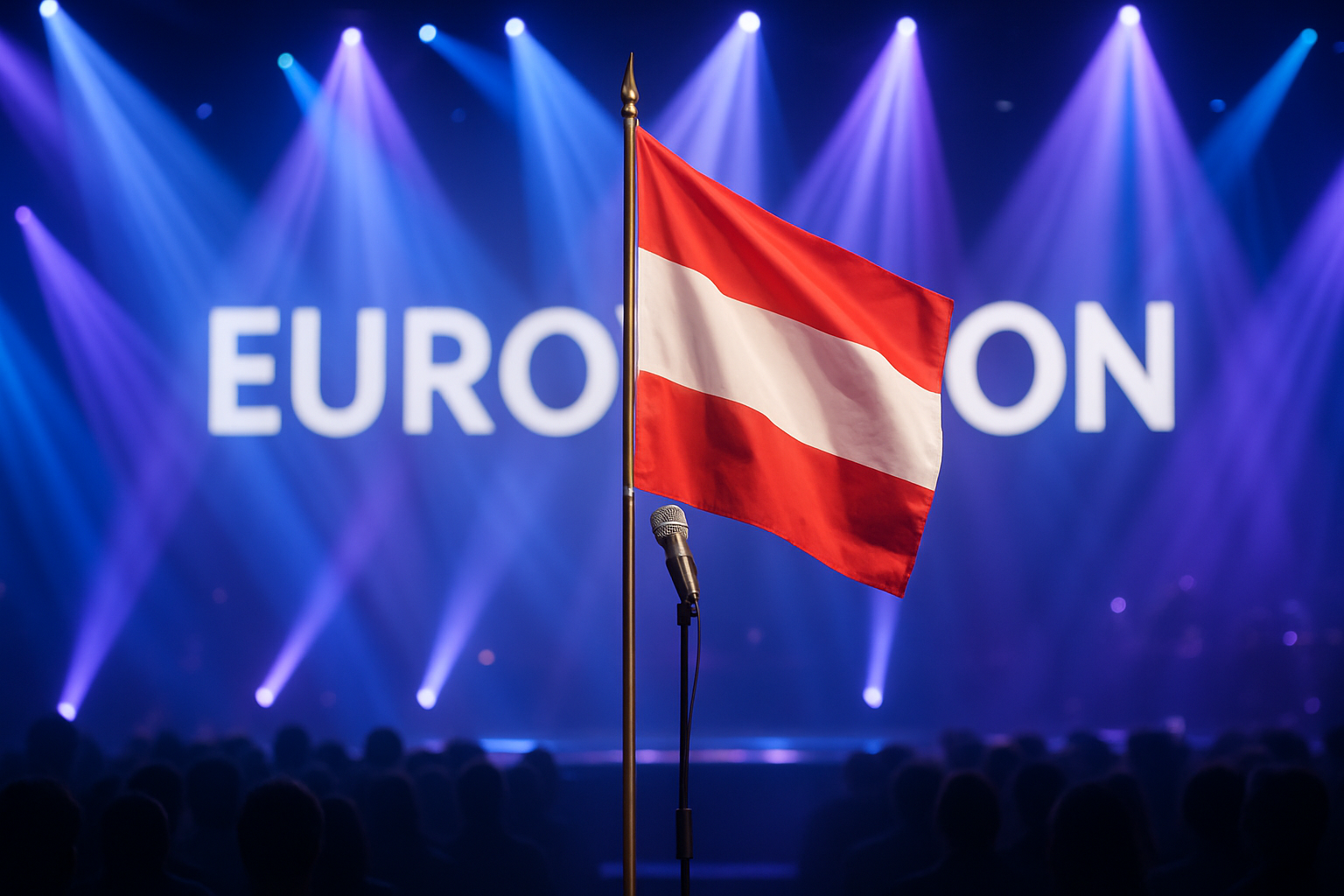
Austria's Eurovision Song Contest 2026 national selection has concluded with Cosmó emerging victorious through a decisive display of public voting power, winning by a margin of 2000 votes despite mathematical calculations suggesting such margins could theoretically be achieved by remarkably small numbers of viewers.
The Austrian broadcaster ORF confirmed Cosmó's victory in the national selection process, with the artist securing their place to represent Austria at Eurovision 2026 in Vienna this May. According to reports from Austrian media outlet Der Standard, Cosmó won with a 2000-vote advantage, though the selection process has raised intriguing questions about the mechanics of public participation in Eurovision national selections.
The Mathematics of Public Voting
A fascinating aspect of Cosmó's victory lies in the mathematical reality of the voting system. Reports indicate that, purely from a computational perspective, the 2000-vote margin that secured victory could theoretically have been generated by as few as 20 dedicated viewers. This calculation highlights the potentially outsized influence individual participants can have in national selection processes when overall voting numbers remain modest.
Despite these mathematical possibilities, ORF officials have stated they see "keine Auffälligkeiten" (no irregularities) in the voting pattern that led to Cosmó's selection. This official position suggests the broadcaster is satisfied with the integrity of the selection process, even as the numbers invite scrutiny about the scale of public participation in national Eurovision selections.
Eurovision 2026 in Context
Cosmó's victory comes as Eurovision 2026 returns to Vienna, building on Austria's successful hosting of the contest in 2015. The selection occurs during what cultural observers have termed the "February 2026 Cultural Renaissance," with Eurovision evolving into a comprehensive cultural diplomacy platform that extends far beyond entertainment.
Austria joins a diverse field of Eurovision 2026 representatives who have been selected through various national processes across Europe. The contest has witnessed a notable trend toward authentic cultural expression over manufactured Eurovision formulas, with countries increasingly prioritizing artists who represent genuine national musical identity.
"The power of public voting in Eurovision national selections demonstrates how democratic participation in cultural events can produce surprising results, even with relatively modest numbers of participants."
— Cultural Affairs Analyst
The Broader Eurovision Landscape
Austria's selection process reflects broader changes within Eurovision 2026, where multiple countries have experienced significant shifts in their approach to artist selection. Nordic countries continue to maintain their methodical excellence, with Sweden's Melodifestivalen and Norway's Melodi Grand Prix producing sophisticated competitions that balance public appeal with artistic merit.
The mathematical quirk of Austria's voting system is not unique within Eurovision national selections. Many countries have grappled with questions about the optimal balance between public voting, jury input, and the practical realities of ensuring broad-based participation while maintaining the integrity of democratic selection processes.
Cultural Diplomacy and Democratic Participation
Eurovision national selections serve multiple functions beyond simply choosing a representative. They function as exercises in cultural democracy, allowing citizens to participate directly in decisions about how their nation will be represented on the international stage. The Austrian selection, with its emphasis on public voting power, exemplifies this democratic character.
The selection process also demonstrates the evolution of cultural participation in the digital age. While traditional broadcast voting remains important, the integration of online and telephone voting systems has created new opportunities for public engagement, albeit with new questions about the relationship between participation levels and representative outcomes.
Vienna Preparations and International Context
As Austria prepares to host Eurovision 2026 in Vienna, the selection of Cosmó adds a layer of home-country representation to what promises to be a significant cultural event. Vienna's hosting builds on the successful 2015 Eurovision experience, with comprehensive cultural programming planned beyond the main competition.
The contest serves as a platform for European musical diversity and cultural diplomacy, with participating artists representing not just songs but broader narratives about national identity, artistic innovation, and international cooperation. Austria's selection process, with its emphasis on public participation, aligns with Eurovision's democratic ideals.
Questions of Scale and Representation
The revelation that Cosmó's victory margin could theoretically have been achieved by a small number of voters raises broader questions about democratic participation in cultural events. While ORF's assertion of no irregularities suggests confidence in the selection's legitimacy, the mathematics highlight the importance of robust participation in ensuring truly representative outcomes.
This dynamic reflects challenges faced by many democratic institutions, where the relationship between participation levels and representative outcomes requires careful consideration. In Eurovision national selections, this balance becomes particularly important as the chosen representative carries cultural and diplomatic significance beyond entertainment value.
Looking Ahead to Vienna
Cosmó's selection positions Austria strategically for Eurovision 2026, with a representative chosen through a process that emphasized public voice, even if the mathematics of that voice prove more complex than initially apparent. The artist now faces the challenge of preparing for the Eurovision stage while representing both Austrian musical identity and the democratic process that selected them.
As Eurovision 2026 approaches, Austria's experience with public voting power serves as a case study for the intersection of democratic participation, cultural representation, and the practical realities of staging national selections. The contest continues to evolve as a platform for authentic cultural expression and international cooperation.
The success of Eurovision 2026 in Vienna will depend not only on the performances themselves but on the contest's continued ability to serve as a meaningful platform for cultural diplomacy and artistic expression. Austria's selection process, with all its mathematical intricacies, contributes to this larger narrative of democratic participation in cultural events that resonate far beyond national borders.