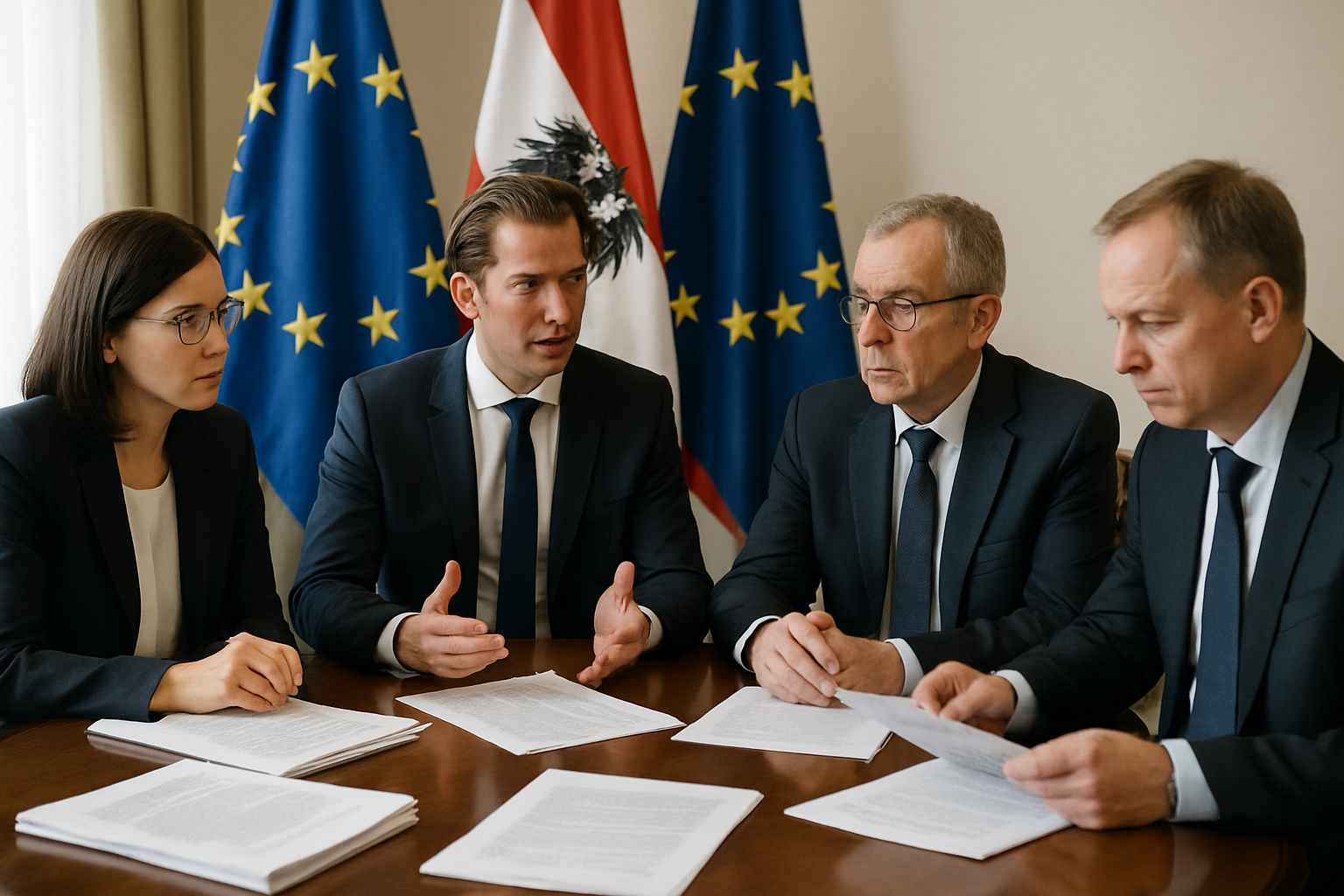
Austria's Equal Treatment Office (Gleichbehandlungsanwaltschaft) has delivered a sharp critique of the government's implementation of the EU "Women on Boards" directive, describing it as a "missed opportunity" for advancing gender equality in corporate Austria.
The criticism comes as the Justice Committee currently reviews the legal implementation of the European Union directive designed to increase women's representation in corporate leadership positions. According to the Equal Treatment Office, the current approach falls short of what could have been achieved for gender parity in Austrian businesses.
Call for Executive Board Quotas
The Equal Treatment Office's position centers on a fundamental expansion of the directive's scope beyond supervisory boards to include executive management positions. While the EU directive primarily focuses on non-executive board positions, Austrian equality advocates argue that real corporate transformation requires quotas for executive positions where day-to-day business decisions are made.
"From the perspective of the Equal Treatment Office, quotas are also needed in executive boards," the organization stated, emphasizing that supervisory board representation alone cannot drive meaningful change in corporate culture and decision-making processes.
Context of Austrian Gender Equality Progress
This criticism arrives against a backdrop of significant gender equality progress in Austria during 2026. The country achieved a historic milestone when women's enrollment in higher education surpassed men's for the first time, marking what officials called a "decisive factor for societal transformation."
However, workplace challenges persist. Austrian data reveals that 40% of women consider leaving their jobs due to inadequate salaries, highlighting ongoing economic inequality despite educational advances. The gender income gap, while improving dramatically from 31.4% for the 1975 birth cohort to 19.4% for the 2025 cohort, still represents one of Austria's most significant equality challenges.
"This represents the most significant reduction in Austrian history over 50 years through systematic policy interventions including parental leave, childcare support, and workplace flexibility measures."
— Gender Equality Research, 2026
European Directive Implementation Challenges
The "Women on Boards" directive represents a cornerstone of European Union efforts to address corporate gender imbalances. However, its implementation across member states has revealed varying levels of ambition and commitment to comprehensive gender equality measures.
Austria's Equal Treatment Office appears to be pushing for a more ambitious interpretation that would extend beyond the minimum requirements of the EU directive. This approach aligns with broader Austrian initiatives, including President Birgit Gerstorfer's recent demands for protection from violence, fair pensions, and expanded opportunities for women over 50.
Corporate Governance and Gender Representation
Research consistently demonstrates that companies with greater gender diversity in leadership positions show improved performance across multiple metrics. Italian research from the Free University of Bolzano and Stockholm School of Economics found that female CEOs increase the likelihood of hiring female managers by 21%, creating a cascading effect throughout organizational hierarchies.
The Equal Treatment Office's advocacy for executive board quotas reflects understanding that supervisory board representation, while important, may not translate into operational change without corresponding executive leadership diversity.
Broader European Context
Austria's debate occurs within a broader European context where gender equality initiatives are experiencing both unprecedented support and concerning backlash. International Women's Day 2026 saw remarkable governmental recognition across European nations, with Algeria, Lithuania, and other countries implementing comprehensive policy advances.
However, challenges remain significant. Denmark reveals male executives earning €100,393 monthly compared to women's €88,200, representing a gap of over €12,000 monthly. Italy shows potential GDP boosts of 11-12% from achieving gender employment parity, demonstrating the economic case for comprehensive equality measures.
Implementation and Political Dynamics
The Justice Committee's consideration of the directive implementation reflects broader Austrian political dynamics around gender equality policy. The Social Democratic Party (SPÖ) has faced pressure to implement wealth tax policies and comprehensive gender equality measures if gaining federal government control.
The Equal Treatment Office's criticism suggests frustration with incremental approaches when more transformative measures could be implemented. This aligns with the evolving paradigm from annual symbolic recognition to sustained daily commitment to gender equality that characterized International Women's Day 2026 globally.
Economic Arguments for Comprehensive Reform
The economic case for comprehensive corporate gender equality continues strengthening. Countries investing in comprehensive women's empowerment report stronger economic growth, increased innovation capacity, and more resilient community structures.
Luxembourg research identified 98 active companies with female leadership, while Japan showed female executives in mid-sized firms reaching 21.5% despite structural barriers persisting. These examples demonstrate both progress possibilities and remaining challenges in corporate gender representation.
Future Implications
The Equal Treatment Office's critique represents more than procedural disagreement; it reflects fundamental questions about Austria's commitment to comprehensive gender equality versus minimal compliance with European directives.
The outcome of this debate will influence not only Austrian corporate governance but also serve as a model for other European Union member states grappling with similar implementation decisions. As the Justice Committee continues its deliberations, the tension between ambitious transformation and pragmatic incrementalism remains at the center of Austria's approach to corporate gender equality.
The criticism underscores a broader challenge facing European policymakers: whether to implement EU directives at minimum compliance levels or use them as platforms for more comprehensive societal transformation. Austria's decision will contribute to the evolving landscape of European corporate governance and gender equality policy for years to come.