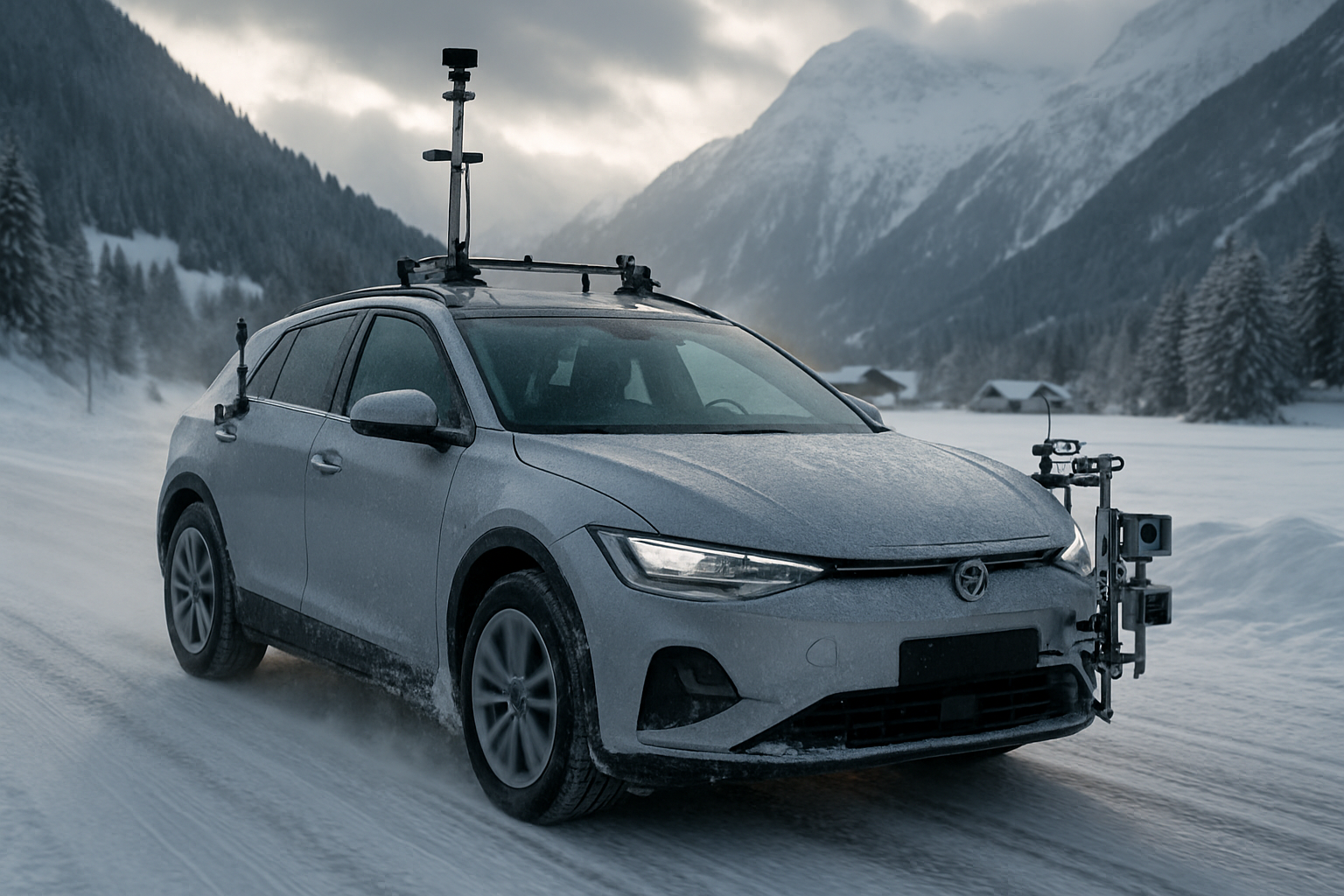
Austria's leading automotive association ÖAMTC has completed comprehensive winter testing of 24 electric vehicles under extreme conditions in Norway, revealing significant range losses in sub-zero temperatures while demonstrating that some EVs can still achieve impressive distances even at -31°C.
The extensive real-world testing program, conducted by the Österreichischer Automobil-, Motorrad- und Touring Club (ÖAMTC), represents one of the most comprehensive assessments of electric vehicle performance under harsh winter conditions to date. Testing was conducted in Norway's challenging Arctic environment, providing crucial data for consumers considering electric vehicles in cold climates.
Extreme Cold Testing Conditions
The Austrian automotive experts subjected the 24-vehicle fleet to temperatures plunging to -31°C (-23.8°F), conditions that push battery technology to its operational limits. These extreme temperatures are representative of the harshest winter conditions experienced across Northern and Central Europe, including the severe cold waves that have gripped the continent throughout February 2026.
The testing program comes during one of Europe's most challenging winters in decades, with countries from Estonia to Portugal experiencing unprecedented cold snaps and extreme weather events. Estonia recently recorded its coldest winter in 25 years, while even traditionally mild regions like Portugal have faced unusual snowfall and freezing conditions.
Range Performance Results
Despite the challenging conditions, ÖAMTC's testing revealed that electric vehicles can maintain substantial range even in extreme cold. The most impressive performer achieved over 520 kilometers of driving distance at -31°C, demonstrating that modern EV technology has evolved significantly in cold-weather capability.
However, the comprehensive testing also confirmed what EV owners have long experienced: significant range reduction in winter conditions. The extent of these losses varied considerably between different vehicle models and battery technologies, highlighting the importance of proper vehicle selection for cold-climate driving.
The range variations observed in the testing underscore the critical role of battery thermal management systems, with vehicles featuring advanced heating and insulation technologies performing notably better than those with basic battery management systems.
Charging Performance in Cold Weather
Beyond range testing, ÖAMTC evaluated charging performance under extreme conditions, finding encouraging results for rapid charging capabilities. The testing demonstrated that electric vehicles could charge from 10% to 80% capacity in approximately 30 minutes, even in the harsh Norwegian winter conditions.
This charging performance data addresses one of the key concerns for EV adoption in cold climates: whether vehicles can maintain practical charging speeds when temperatures drop significantly. The results suggest that modern DC fast-charging infrastructure remains viable even in extreme winter conditions, provided proper thermal management is maintained.
The successful charging performance becomes particularly relevant as European nations accelerate their electric vehicle infrastructure deployment. Countries like Estonia have invested heavily in charging networks, with Estonia recently opening continental Europe's largest battery storage facility to support grid stability during peak demand periods.
Technical Insights and Battery Management
The ÖAMTC testing provides valuable insights into the technological challenges facing electric vehicles in cold weather. Battery chemistry performance degrades in low temperatures, with lithium-ion cells experiencing reduced electrochemical activity and increased internal resistance when cold.
Modern electric vehicles employ sophisticated thermal management systems to maintain optimal battery operating temperatures, but these systems consume additional energy, contributing to reduced range in winter conditions. The most successful vehicles in the Austrian testing featured advanced pre-conditioning capabilities, allowing batteries to reach optimal temperature before driving.
Vehicle efficiency also suffers in winter conditions due to increased energy demands for cabin heating, defrosting, and maintaining battery temperature. Unlike internal combustion engines that generate waste heat useful for cabin warming, electric vehicles must dedicate battery power specifically for heating purposes.
Consumer Implications and Market Context
The Austrian testing results arrive at a critical moment for European electric vehicle adoption. The European Union has set ambitious targets for EV market penetration, while simultaneously facing supply chain challenges that threaten these goals. EU auditors have warned that climate objectives are threatened by Chinese dominance in critical materials, with China controlling 60% of global production and 90% of refining capacity for lithium, cobalt, and rare earth elements essential for battery production.
For consumers, the ÖAMTC findings provide practical guidance for electric vehicle selection and usage in cold climates. Vehicles that performed well in extreme cold testing offer greater confidence for year-round electric driving, while the results highlight the importance of realistic range planning during winter months.
The testing also reinforces the value of home charging access, particularly important during cold weather when public charging sessions may take longer and vehicles benefit from pre-conditioning while connected to grid power.
Infrastructure and Policy Considerations
The Austrian research occurs amid broader European efforts to build climate-resilient transportation infrastructure. Recent extreme weather events, including the severe cold waves affecting multiple European countries simultaneously, have highlighted the importance of robust, weather-resistant charging networks.
Countries across Europe are responding with significant infrastructure investments. Romania has committed to a €1 billion Battery Energy Storage System spanning 2,500 MW, while Nordic countries are leveraging their cold-weather expertise to develop advanced charging solutions optimized for harsh conditions.
The testing results may influence policy approaches to EV incentives and infrastructure deployment in cold-climate regions. Understanding real-world winter performance helps policymakers design more effective support programs and infrastructure requirements.
International Context and Climate Adaptation
The ÖAMTC testing program reflects broader international efforts to understand electric vehicle performance across diverse climate conditions. As global temperatures continue rising—with January 2026 marking the 18th consecutive month exceeding 1.5°C above pre-industrial levels—transportation systems must adapt to both extreme heat and cold events.
The research contributes valuable data to international electric vehicle development efforts, including the US-EU-Japan Critical Minerals Partnership involving 55 countries working to diversify battery supply chains away from Chinese dominance. Understanding performance limitations helps manufacturers prioritize research and development investments.
The timing of Austria's comprehensive testing coincides with accelerating global EV adoption, with major manufacturers announcing significant electric vehicle investments despite supply chain challenges and material cost volatility.
Looking Forward: Technology Evolution
The Austrian testing results provide a benchmark for measuring future technological improvements in cold-weather EV performance. Battery technology continues evolving rapidly, with next-generation chemistries promising better cold-weather performance and faster charging capabilities.
Thermal management system sophistication continues advancing, with manufacturers developing more efficient heating solutions and improved insulation technologies. These developments may significantly improve winter performance in future electric vehicle generations.
The comprehensive data from ÖAMTC's testing program will inform ongoing research into optimizing electric vehicle design for diverse climate conditions, supporting the global transition to sustainable transportation while maintaining practical utility for consumers worldwide.
As electric vehicle adoption accelerates globally, understanding real-world performance across all weather conditions becomes essential for consumer confidence and infrastructure planning. The Austrian automotive association's thorough approach to winter testing provides valuable insights for the industry's continued evolution toward climate-resilient electric mobility solutions.