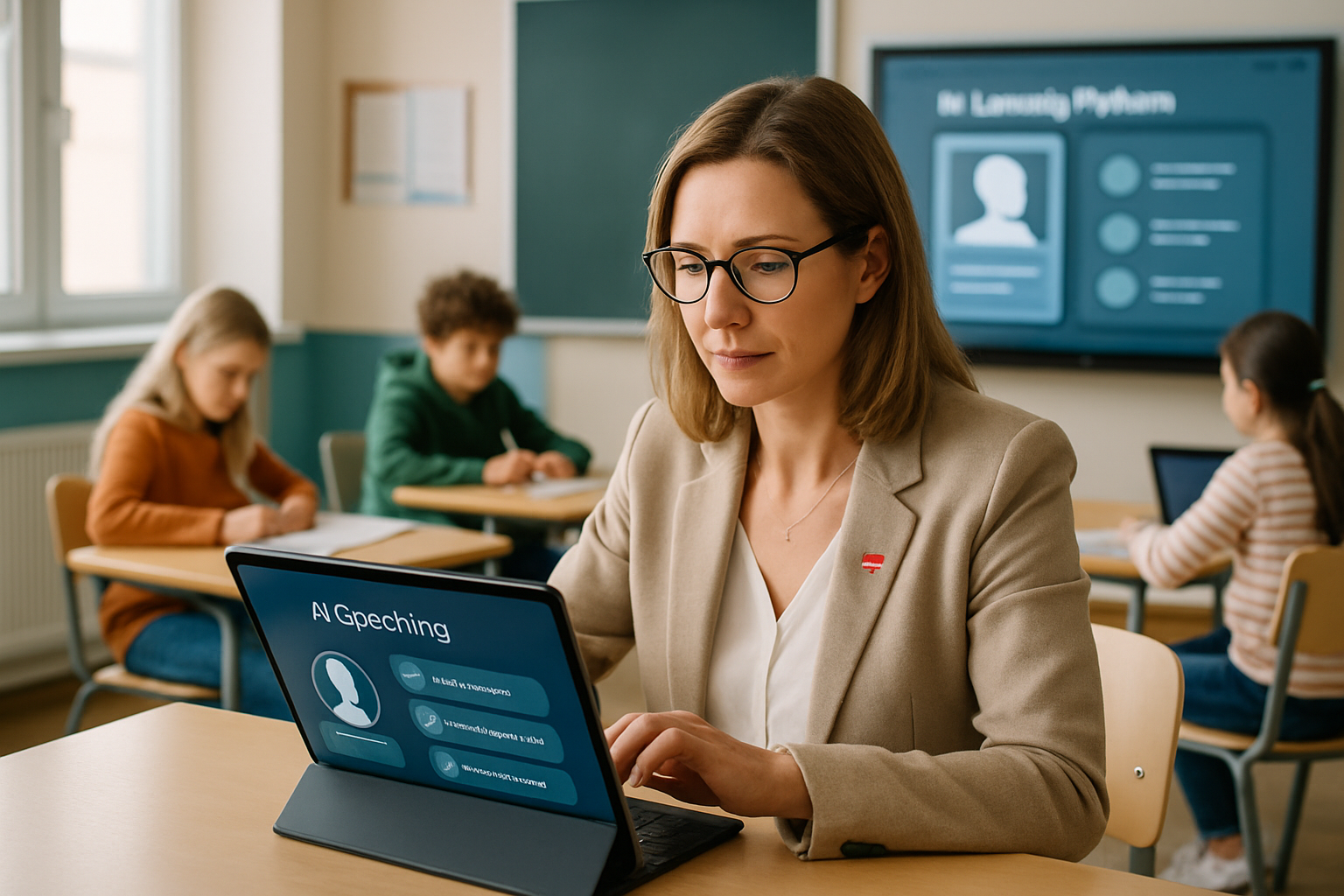
A groundbreaking initiative led by Austrian educator Florian Goldgruber is revolutionizing how teachers and students approach artificial intelligence integration in educational settings, positioning Austria at the forefront of Europe's educational technology transformation.
Goldgruber's comprehensive AI coaching program represents a sophisticated response to the rapid proliferation of artificial intelligence tools in classrooms worldwide. Rather than viewing AI as a threat to traditional education, his initiative focuses on developing "wichtige Grundkompetenzen zum Umgang und der sicheren Nutzung von KI" – essential core competencies for the handling and safe use of artificial intelligence.
The Austrian Model of AI Integration
The coaching program emerges at a critical juncture in global educational policy development. As documented in extensive research across 2026, educators worldwide are grappling with what experts term the "2026 Educational Technology Renaissance" – a coordinated international movement toward thoughtful digital tool integration with traditional educational values.
Unlike wholesale technological replacement approaches that have failed in other regions, Goldgruber's methodology emphasizes what researchers call "human-centered AI approaches" that enhance rather than replace fundamental teacher-student relationships. This philosophy aligns with successful international models, including Canada's AI teaching assistants that maintain critical thinking standards and Malaysia's pioneering AI-integrated Islamic schools that preserve cultural authenticity while embracing innovation.
The program's timing is particularly strategic given Austria's mixed implementation results with educational technology initiatives. Coalition-led education ministry policies, including mobile device restrictions and classical language curriculum revivals, have faced scrutiny for practical effectiveness. Goldgruber's approach offers a third path – neither technophobic nor uncritically embracing digital solutions.
Comprehensive Teacher Training Framework
The coaching initiative addresses critical gaps identified in educational AI adoption across Europe. Research from institutions including Masaryk University's IRTIS team reveals that simple solutions like blanket technology bans often create new problems while failing to address underlying educational challenges. Goldgruber's framework instead focuses on developing teacher competency and student digital literacy simultaneously.
Key components of the program include practical training on AI tools for lesson planning, assessment design, and personalized learning experiences. Teachers learn to leverage artificial intelligence for administrative efficiency while maintaining their essential roles as mentors, creativity developers, and critical thinking facilitators. This approach contrasts sharply with AI replacement models that have resulted in massive layoffs elsewhere in the technology sector.
The program also emphasizes ethical AI usage, addressing concerns raised by educational experts about over-dependence risks where students might lose independent thinking ability or authentic voice development. By teaching both educators and learners to critically evaluate AI suggestions while maintaining human judgment, Goldgruber's approach seeks to develop what researchers call "AI literacy" – the meta-skill of knowing when to rely on AI assistance versus independent work.
Student-Centered AI Education
Beyond teacher training, the coaching program directly engages students in understanding AI's potential and limitations. This component addresses documented challenges across European educational systems, including the productivity paradox identified by German researcher Dr. Frank Bäumer, who found that AI implementation often creates a "double workload effect" where students perform original responsibilities plus AI supervision and correction tasks.
Goldgruber's student-focused initiatives teach young people to maintain authentic voices while leveraging technological support – a crucial skill as research shows over 50% of teenagers worldwide now regularly use AI tools for homework assignments. The program emphasizes developing critical thinking about AI outputs rather than passive acceptance, positioning students as active collaborators rather than dependent users.
The coaching methodology recognizes that successful AI integration in education requires comprehensive understanding of both technological capabilities and human learning processes. Students learn to identify when AI enhancement serves educational goals versus when independent work develops irreplaceable human skills like creativity, empathy, and cultural understanding.
European Context and Global Implications
Austria's educational AI initiatives occur within broader European efforts to establish frameworks for responsible technology integration. Spain has implemented the world's first criminal executive liability framework for tech platforms, while France has conducted cybercrime raids on AI companies. These regulatory intensifications reflect growing recognition that AI development requires careful oversight to serve human welfare.
The UN has established an Independent International Scientific Panel with 40 experts to provide the first fully independent global AI impact assessment. Within this international context, Goldgruber's coaching program offers a practical template for educational systems seeking to balance innovation with educational wisdom.
European educational authorities are particularly attentive to maintaining cultural authenticity while embracing necessary technological advancement. Countries implementing comprehensive, culturally-sensitive AI reforms report improved community resilience, enhanced international competitiveness, and better preparation for 21st-century challenges.
Infrastructure Challenges and Solutions
The coaching program addresses practical implementation challenges, including the global memory crisis that has driven semiconductor prices to surge sixfold, affecting Samsung, SK Hynix, and Micron operations. These infrastructure bottlenecks, expected to continue until 2027 when new manufacturing facilities come online, have forced educational systems toward more efficient and thoughtful technology deployment.
Rather than viewing these constraints as obstacles, Goldgruber's approach leverages them as opportunities for hybrid methodologies that combine AI tools with traditional teaching methods. This balanced strategy ensures educational continuity regardless of technological availability while preventing over-dependence on digital infrastructure.
The program also addresses digital equity concerns by ensuring that AI integration enhances rather than replaces fundamental educational relationships. This approach prevents the creation of educational divides between technology-rich and resource-limited institutions.
Measuring Success and Outcomes
Early indicators from Goldgruber's coaching program show measurable improvements in both teacher confidence with AI tools and student engagement with learning processes. Teachers report feeling more capable of guiding students through the complexities of human-AI collaboration, while students demonstrate improved critical thinking about digital information sources.
The program's success metrics focus on educational outcomes rather than technological adoption rates. Key indicators include student development of independent thinking skills, teacher effectiveness in facilitating meaningful learning experiences, and maintenance of human creativity alongside technological proficiency.
These outcomes align with international research showing that the most successful educational AI implementations treat technology as amplification tools serving educational goals rather than ends in themselves. Countries and institutions that maintain focus on human development while thoughtfully integrating digital capabilities report superior long-term results.
Future Directions and Scalability
As Goldgruber's coaching program continues to demonstrate effectiveness, education policymakers across Europe are examining its potential for broader implementation. The initiative's emphasis on cultural sensitivity and local adaptation makes it particularly suitable for scaling across diverse educational contexts while respecting regional differences.
The program's approach to teacher professional development addresses one of the most critical factors in successful educational transformation – sustained political commitment to educator support that survives electoral cycles. By focusing on building internal capacity rather than depending on external technological solutions, the initiative creates sustainable foundations for long-term educational improvement.
Looking ahead, the coaching program positions Austria as a potential leader in demonstrating how smaller European nations can effectively navigate AI integration without compromising educational values or surrendering cultural authenticity. The model offers templates for comprehensive educational modernization that preserves human creativity and critical thinking while preparing students for an AI-integrated global economy.
Strategic Implications for Education Policy
February 2026 represents what researchers identify as a critical juncture in global educational policy development. The decisions made today regarding AI integration will influence learning outcomes for millions of students over the coming decade and determine educational systems' capacity to address complex challenges including climate change, technological disruption, and social cohesion.
Goldgruber's coaching program demonstrates that effective AI-age educational reform requires thoughtful technological tool adaptation serving specific cultural, economic, and social needs rather than standardized universal solutions. Success depends on maintaining human relationships' irreplaceable value while thoughtfully integrating technological enhancement tools.
The initiative's comprehensive approach – addressing teacher training, student education, ethical considerations, and practical implementation challenges – provides a template for other educational systems seeking to harness AI's benefits while preserving the essentially human aspects of teaching and learning that define authentic education.
As artificial intelligence continues to reshape societies worldwide, programs like Goldgruber's offer hope that technology can serve human flourishing rather than replacing the creativity, empathy, and wisdom that make education truly transformative.