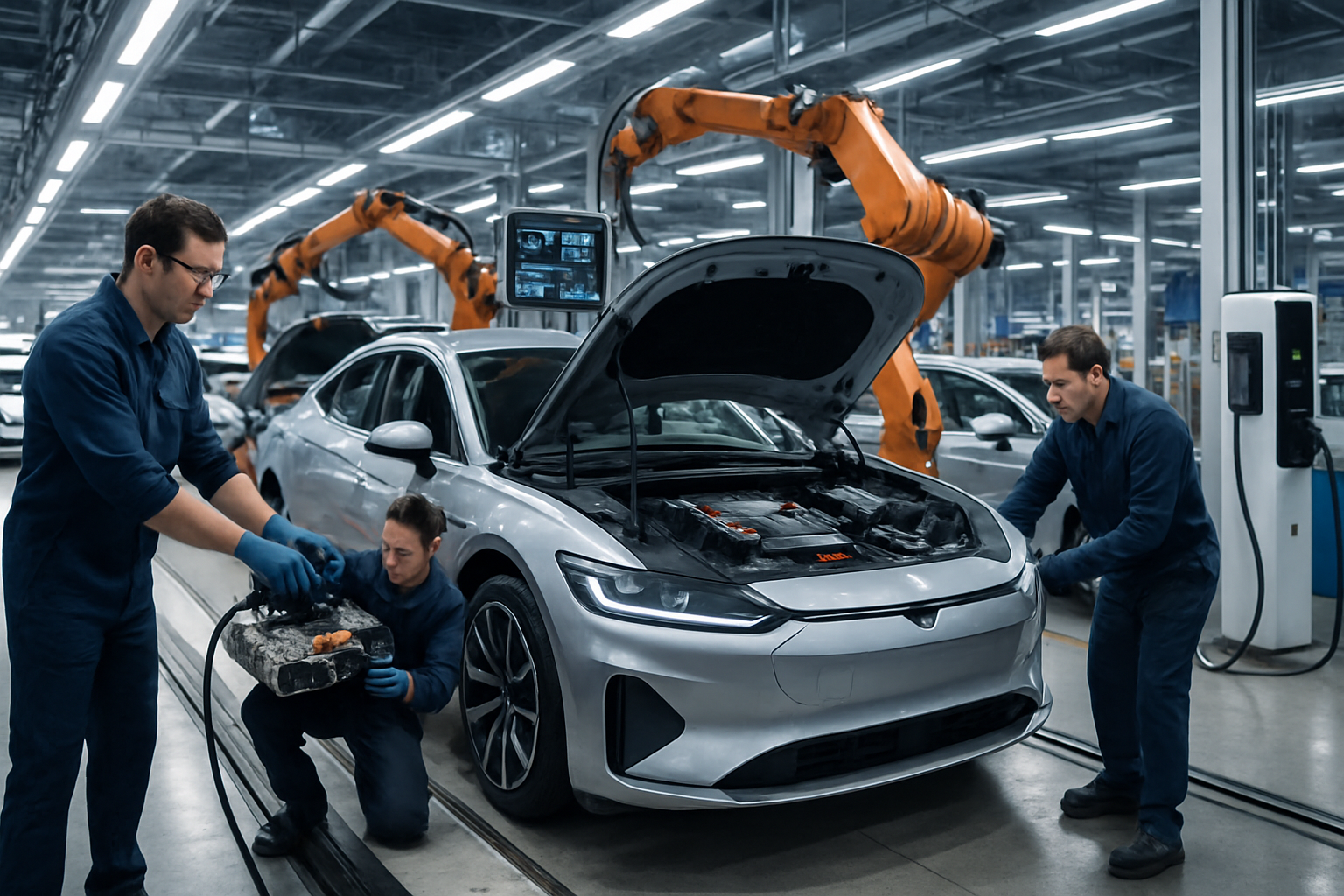
The global automotive industry is experiencing its most profound transformation in over a century, with electric vehicle adoption reaching unprecedented levels and traditional automakers fundamentally restructuring their operations to meet rapidly evolving consumer demands and environmental imperatives.
Recent developments in Denmark and Serbia highlight the seismic shifts reshaping the automotive landscape. Danish media reports indicate that two groundbreaking European electric vehicles are poised to enter the market at prices potentially below 150,000 kroner, promising to democratize electric mobility for mainstream consumers. Meanwhile, Mihailo Vesović, Deputy President of the Serbian Chamber of Commerce, declared that electric mobility will "take primacy" while predicting that consumers will purchase fewer vehicles overall—a fundamental shift in automotive market dynamics.
Affordable Electric Vehicles Transform Market Access
The promise of sub-150,000 kroner electric vehicles represents a critical breakthrough in making electric mobility accessible to average consumers. This price point could position these vehicles as genuine "people's cars," echoing the democratizing effect of the original Volkswagen Beetle or Ford Model T, but for the electric age.
According to my analysis of historical automotive market developments, this pricing strategy directly responds to one of the primary barriers to EV adoption: upfront costs. Recent data from multiple European markets shows that while total cost of ownership now favors electric vehicles due to lower maintenance costs and volatile fuel prices, the higher initial purchase price continues to deter many potential buyers.
"We are witnessing a fundamental shift where electric mobility will take primacy, fundamentally changing how consumers approach vehicle ownership."
— Mihailo Vesović, Deputy President, Serbian Chamber of Commerce
Industry Grapples with Supply Chain Challenges
The transformation occurs against a backdrop of unprecedented supply chain disruptions. Memory chip shortages continue to drive semiconductor prices to six times normal levels, affecting vehicle control systems across the industry. The situation isn't expected to stabilize until 2027 when new fabrication facilities come online.
China maintains strategic control over 60% of global critical materials production and 90% of refining capacity for lithium, cobalt, and rare earth elements—materials essential for electric vehicle batteries and motors. This dominance has prompted the US-EU-Japan Critical Minerals Partnership, involving 55 countries and seven African suppliers, to coordinate supply chain diversification efforts.
Battery Technology Breakthroughs Accelerate Adoption
Revolutionary advances in battery technology are eliminating traditional barriers to electric vehicle adoption. Chinese manufacturer BYD's Megawatt Flash Charging technology delivers 1,360 kW of power, enabling 400 kilometers of range in just five minutes of charging. Their Blade Battery 2.0 system functions effectively in temperatures as low as -30°C, addressing cold weather performance concerns that have historically limited EV adoption in northern climates.
Equally significant are recent battery longevity studies showing that Tesla Model S vehicles from 2012-2014 retain 85-92% of their battery capacity after 200,000+ miles of operation. Nissan Leaf models from 2011-2013 maintain 75-85% capacity retention after a decade of use, suggesting practical battery lifespans of 15-20 years. This data supports robust used electric vehicle markets and improves total cost of ownership calculations for consumers.
Regional Manufacturing Strategies Emerge
Automakers are increasingly adopting regional manufacturing strategies to reduce supply chain vulnerabilities and improve market responsiveness. This approach involves establishing electric vehicle production facilities closer to primary markets, reducing transportation costs and delivery times while enhancing flexibility to adapt to local preferences and regulatory requirements.
The shift toward regional production also reflects lessons learned from recent global disruptions, where companies with diversified, localized supply chains demonstrated greater resilience than those dependent on distant suppliers.
Infrastructure Investment Accelerates Globally
Supporting the electric vehicle transition, infrastructure investment has reached unprecedented levels. Austria has doubled its EV charging capacity with 1,000 additional stations, while Estonia leads European renewable electricity production at 88% with continental Europe's largest battery storage network serving 90,000 households.
Vehicle-to-grid technology is advancing rapidly, enabling electric vehicles to function as mobile energy storage systems. These vehicles can charge during off-peak renewable energy generation periods and discharge electricity during high-demand periods, supporting grid stability while providing additional economic value to EV owners.
Consumer Behavior Evolution Drives Market Changes
Vesović's observation about reduced vehicle purchasing reflects broader consumer behavior changes. Rather than owning multiple vehicles, families increasingly view electric vehicles as multipurpose transportation solutions. The reliability and lower maintenance requirements of electric powertrains support this trend toward vehicle consolidation.
Urban-rural adoption patterns reveal significant disparities, with homeowners and rural residents enjoying advantages through home charging access, while urban apartment dwellers face infrastructure barriers. This has prompted workplace charging initiatives and public-private partnerships to expand urban charging networks.
Climate Urgency Drives Transformation
The automotive transformation occurs during a critical period for climate action. January 2026 marked the 18th consecutive month of global temperatures exceeding 1.5°C above pre-industrial levels, demonstrating that human-induced climate change is overriding natural variability. Transportation electrification has become an economic necessity beyond environmental considerations, particularly as oil prices recently surged past $100 per barrel during Middle East tensions.
In the Caribbean, electric vehicle owners are saving $75 per $100 compared to gasoline costs, even accounting for electricity rate increases. This economic reality is driving adoption in markets previously considered challenging for electric vehicles.
Commercial Vehicle Electrification Accelerates
The transformation extends beyond passenger vehicles to commercial transportation. Tesla has announced large-scale Semi truck production milestones, while BMW plans to begin electric 3 Series production at its Munich facility in August 2026. These developments signal the automotive industry's commitment to comprehensive electrification across all vehicle segments.
Traditional Automakers Adapt or Struggle
Established automotive manufacturers face varying degrees of success in navigating the transition. Companies that have invested heavily in electric vehicle technology and manufacturing capabilities are positioning themselves advantageously, while those slow to adapt face increasing competitive pressure.
European automakers have intensified calls for Brussels to provide financial support for domestic electric vehicle manufacturing to compete with Chinese alternatives. This reflects the growing recognition that government policy plays a crucial role in supporting industrial transformation during periods of technological disruption.
Future Outlook and Strategic Implications
The automotive industry transformation represents one of the most significant industrial shifts in modern history, requiring coordination across energy systems, infrastructure development, materials supply chains, and regulatory frameworks. Success depends on sustained international cooperation, strategic investments in technology and infrastructure, and adaptive management approaches that respond to rapidly changing market conditions.
The convergence of technological advancement, environmental urgency, economic incentives, and evolving consumer preferences creates conditions for accelerated transformation. While challenges remain substantial—particularly regarding supply chain security and infrastructure development—the fundamental direction toward electric mobility appears irreversible.
As industry leaders like Vesović recognize, we are witnessing not merely the addition of electric options to existing automotive markets, but a fundamental restructuring of how societies approach personal mobility. The success of this transformation will determine whether the automotive industry can maintain its role as an economic engine while contributing to global sustainability goals during this decisive decade for climate action.