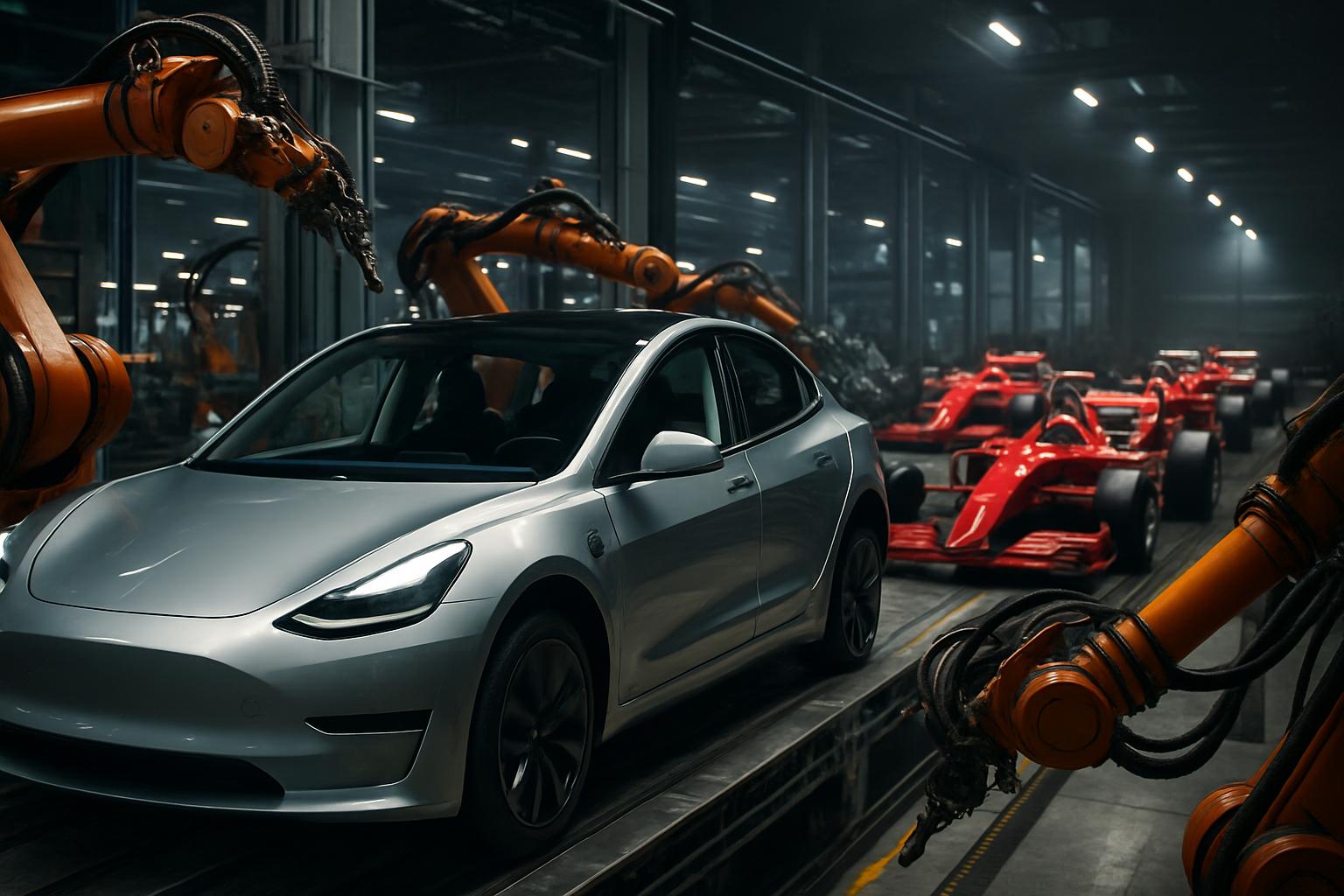
The global automotive industry's transformation reached a pivotal moment this week as Chinese electric vehicle giant BYD announced its exploration of prestigious motorsport participation, including Formula 1, while BMW unveiled its latest electric vehicle in emerging markets, signaling an accelerating shift toward electrification across all automotive sectors.
BYD, the world's largest electric vehicle manufacturer, is actively exploring entry into Formula 1 and the World Endurance Championship (WEC), marking a potentially historic move that could bring electric vehicle technology directly to the world's most prestigious racing series. The announcement underscores the company's confidence in its technological capabilities and represents a strategic push to elevate its global brand presence through motorsport participation.
BYD's Motorsport Ambitions Signal Industry Confidence
The Chinese automaker's interest in Formula 1 participation comes at a time when the company has achieved remarkable technological breakthroughs. BYD recently unveiled its revolutionary Megawatt Flash Charging system, capable of 1,360 kW maximum power and enabling vehicles to gain 400 kilometers of range in just five minutes. This technology represents a potential game-changer for electric vehicle adoption by eliminating the charging time disadvantage compared to conventional vehicles.
BYD's next-generation Blade Battery 2.0 technology has also demonstrated unprecedented charging speeds, achieving 10% to 70% charge in five minutes and 97% charge in nine minutes. The system functions effectively in extreme weather conditions down to -30°C, addressing a major barrier to electric vehicle adoption in cold climates. These technological achievements position BYD as a formidable force in the global automotive industry and provide the foundation for potential motorsport applications.
"BYD's exploration of Formula 1 represents more than just brand marketing—it signals the maturation of electric vehicle technology to the point where it can compete at the highest levels of automotive performance."
— Industry Analysis, Planet News Research Team
BMW Advances Electric Vehicle Presence in Emerging Markets
Simultaneously, BMW has launched its iX3 electric Sport Activity Vehicle in Mauritius, introducing the Neue Klasse platform technology to emerging markets. The BMW iX3, equipped with the sixth generation of BMW eDrive technology, offers an impressive range of up to 805 kilometers and features dual electric motors, demonstrating the company's commitment to bringing advanced electric vehicle technology to diverse global markets.
The vehicle's presentation at BMW's showroom in Pailles, Mauritius, represents a strategic expansion of electric vehicle infrastructure and availability in markets that are crucial for global automotive growth. This launch aligns with BMW's broader electrification strategy, which has already seen success with the BMW iX3 being named "Car of the Year" by Top Gear, validating the Neue Klasse electric vehicle philosophy.
Expanding Electric Vehicle Networks Across South Asia
The electric vehicle revolution is gaining momentum across South Asia, with significant infrastructure developments in Pakistan. Chery Master Pakistan has formally launched its nationwide dealership network, establishing eight operational dealerships across six major cities, with plans to expand to 20 dealerships by 2027. The network includes locations in Karachi, Lahore, Islamabad, Multan, Faisalabad, and Sialkot, creating a comprehensive support infrastructure for new energy vehicles.
This expansion represents part of the broader "HELLO CHERY" movement, which aims to bring cutting-edge electric vehicle technology closer to customers while strengthening service and support capabilities. The dealership network provides integrated sales, service, and parts support aligned with Chery's global operational standards, demonstrating the company's commitment to establishing a robust presence in the South Asian market.
Industry Transformation Amid Supply Chain Challenges
These developments occur within the context of broader automotive industry transformation, characterized by both opportunities and challenges. The industry continues to face supply chain constraints, including China's dominance in critical materials production (60% of global production and 90% of refining capacity) and ongoing memory chip shortages that have driven semiconductor prices up sixfold, affecting vehicle control systems.
Despite these challenges, the electric vehicle sector has demonstrated remarkable resilience and innovation. Recent studies of the oldest generation electric vehicles reveal that battery lifespans significantly exceed early industry predictions, with Tesla Model S vehicles from 2012-2014 showing 85-92% battery capacity retention after 200,000+ miles, and Nissan Leaf vehicles from 2011-2013 demonstrating 75-85% capacity retention after a decade of operation.
Regional Manufacturing and Strategic Positioning
The automotive industry's regional manufacturing strategies are evolving rapidly to address supply chain vulnerabilities and meet local market demands. Chinese manufacturers like BYD are leveraging their technological advantages and manufacturing scale to expand globally, while established manufacturers like BMW are adapting their premium electric vehicle strategies for emerging markets.
Recent developments also include significant infrastructure investments across multiple regions. Austria has doubled its electric vehicle charging infrastructure by adding 1,000 additional public charging stations, while Estonia maintains European leadership with 88% renewable electricity and the continent's largest battery storage capacity serving 90,000 households.
Technology Integration and Future Outlook
The convergence of advanced battery technology, charging infrastructure, and manufacturing capabilities is creating new possibilities for electric vehicle adoption across diverse market segments. Vehicle-to-grid technology is emerging as a crucial innovation, allowing electric vehicles to serve as mobile energy storage units that can charge during off-peak renewable energy generation and discharge during high demand periods.
The automotive industry's transformation represents one of the most significant industrial shifts in modern history, requiring coordination across energy systems, infrastructure development, materials supply chains, and regulatory frameworks. Success depends on integrating technological innovation with strategic geographic positioning and supply chain resilience during the acceleration of sustainable mobility transition.
As BYD explores motorsport participation and BMW expands its electric vehicle presence in emerging markets, these developments underscore the global nature of the electric vehicle revolution. The industry's ability to maintain innovation momentum while addressing supply chain challenges and infrastructure requirements will determine the pace and success of the transition to sustainable transportation systems worldwide.
Looking Ahead: Critical Inflection Point
The automotive industry finds itself at a critical inflection point where technological capabilities, market demand, and regulatory pressures are converging to accelerate electric vehicle adoption. BYD's potential Formula 1 entry would represent a symbolic milestone—demonstrating that electric vehicle technology has matured to the point where it can compete at the highest levels of automotive performance and spectacle.
Meanwhile, BMW's strategic expansion into emerging markets with advanced electric vehicles shows how established premium manufacturers are adapting to serve diverse global markets while maintaining their technological edge. The success of these initiatives will influence the broader automotive industry's approach to electric vehicle development, marketing, and global expansion strategies.
With January 2026 marking the 18th consecutive month of temperatures exceeding 1.5°C above pre-industrial levels, the urgency of transportation electrification continues to intensify. The automotive industry's response, exemplified by developments from companies like BYD and BMW, demonstrates both the challenges and opportunities inherent in this fundamental transformation of global mobility systems.