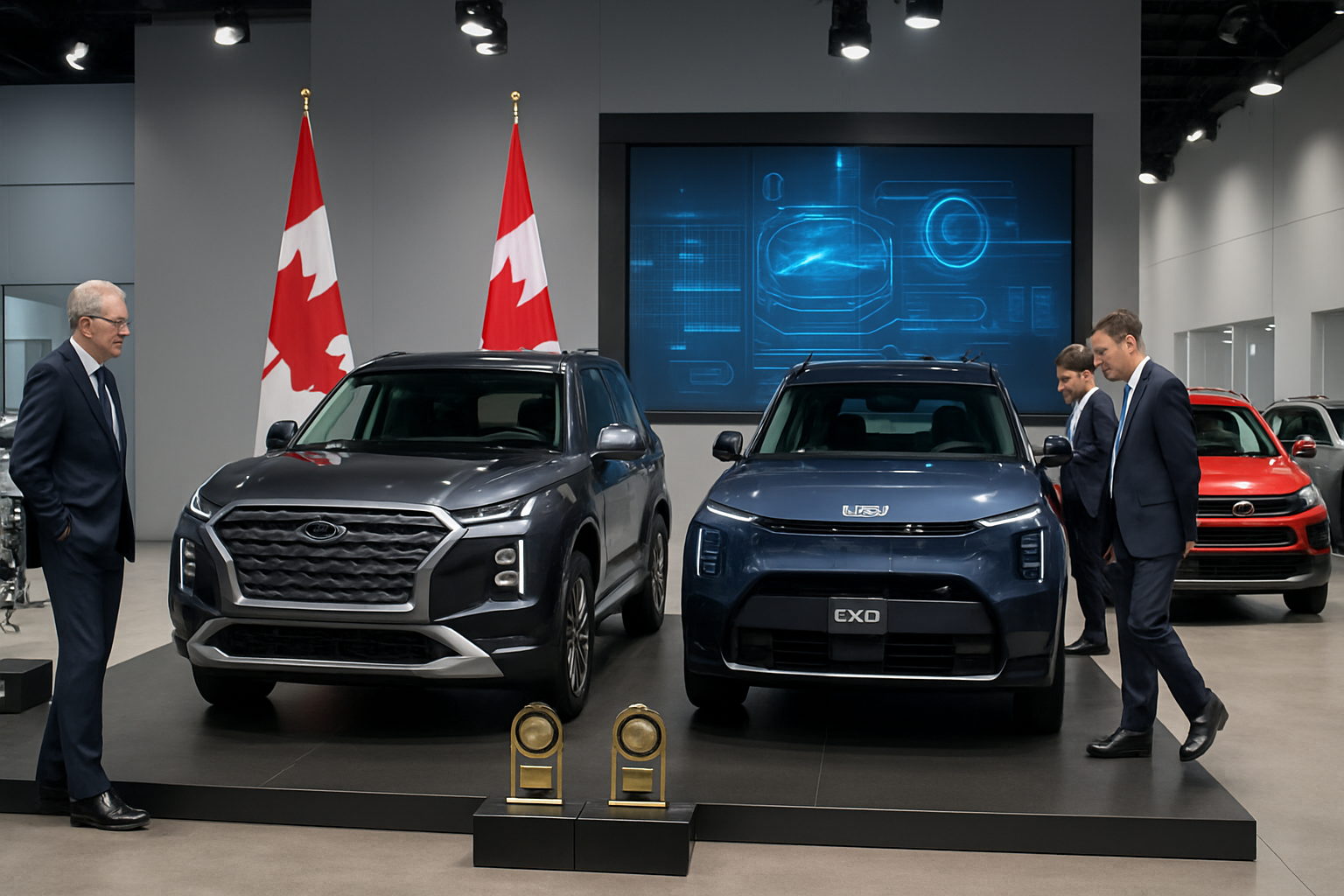
The automotive industry reached significant milestones in February 2026, with Korean manufacturers Hyundai and Kia capturing prestigious Canadian awards while General Motors surprised the market by developing a new generation of V8 engines amid the ongoing electric vehicle transition.
Korean Excellence Recognized in Canada
Hyundai Motor Co. and its affiliate Kia Corp. achieved international recognition when their vehicles were named among the four winners at the 2026 Canadian Car of the Year Awards (CCOTY), presented by the Automobile Journalists Association of Canada (AJAC). The Hyundai Palisade SUV and Kia EV9 electric SUV stood out in a competitive field, demonstrating the Korean automotive giants' growing influence in the North American market.
The Canadian Car of the Year Awards represent one of the most rigorous automotive evaluation processes in North America, with automotive journalists conducting extensive testing across diverse Canadian conditions. The recognition of both a traditional SUV and an electric vehicle from the same corporate family underscores Hyundai-Kia's successful dual-track strategy of maintaining excellence in conventional powertrains while leading the electric vehicle transition.
"This recognition validates our commitment to delivering vehicles that meet the specific needs of Canadian consumers while advancing our global electrification strategy."
— Hyundai Motor Company Representative
General Motors' Surprising V8 Revival
In a move that caught industry analysts off guard, General Motors announced the development of a new generation of V8 engines specifically designed for pick-ups, SUVs, and key sports vehicles in their portfolio. This strategic decision comes as the automotive industry accelerates toward electrification, positioning GM to serve markets where internal combustion engines remain preferred or necessary.
The new V8 generation represents GM's recognition that the transition to electric vehicles will be gradual and market-specific. While urban markets increasingly favor electric options, rural areas, commercial applications, and performance enthusiasts continue to demand the power, range, and infrastructure compatibility that traditional engines provide.
Industry experts note that GM's V8 development doesn't contradict their electrification commitments but rather demonstrates a pragmatic approach to serving diverse market segments during the transition period. The new engines are expected to incorporate advanced technologies for improved efficiency and reduced emissions while maintaining the performance characteristics that define the V8 experience.
Fiat's Technology and Safety Focus in Chile
Stellantis subsidiary Fiat unveiled significant updates to their Pulse and Fastback models in Chile, emphasizing technology integration and enhanced safety features. The updates reflect the increasingly competitive and demanding nature of the SUV segment, where consumers expect advanced connectivity and comprehensive safety systems as standard equipment.
The refreshed Fiat models incorporate improved design elements, enhanced connectivity features, and upgraded driver assistance systems. These improvements position the vehicles to compete more effectively in the Latin American market, where SUVs continue to gain market share and consumer expectations for technology features align with global standards.
The Chilean market update represents Fiat's broader strategy of localizing improvements to meet specific regional preferences while maintaining global quality standards. The emphasis on technology and safety reflects consumer priorities in emerging markets, where automotive purchases represent significant investments requiring long-term value and reliability.
Industry Context and Global Trends
These developments occur against the backdrop of unprecedented transformation in the global automotive industry. Electric vehicle adoption continues to accelerate, but the transition remains uneven across markets and applications. Recent memory indicates that Toyota recently unveiled the 2027 Highlander as a fully electric vehicle, while China implemented regulations requiring mechanical door handles for safety reasons.
The automotive sector faces complex challenges including supply chain constraints, particularly in critical materials where China maintains 60% of global production and 90% of refining capacity for essential components. Memory chip shortages have created additional pressures, with prices increasing sixfold and affecting vehicle control systems across the industry.
Despite these challenges, automotive manufacturers continue to invest heavily in both traditional and electric powertrains, recognizing that market demands vary significantly by geography, application, and consumer segment. The success of Korean manufacturers in Canadian awards, GM's V8 development, and Fiat's technology updates demonstrate the industry's adaptability in serving diverse market needs.
Market Implications and Future Outlook
The recognition of Hyundai and Kia vehicles in Canada reinforces the Korean automotive industry's emergence as a global leader in both traditional and electric vehicle segments. Their success demonstrates that automotive excellence increasingly comes from markets beyond traditional American, European, and Japanese centers of automotive innovation.
General Motors' V8 development signals that major automakers recognize the need for parallel strategies during the electrification transition. Rather than abandoning successful technologies, leading manufacturers are refining them to serve specific market segments while simultaneously developing electric alternatives.
Fiat's focus on technology and safety in emerging markets like Chile reflects the global standardization of automotive expectations. Consumers worldwide increasingly demand advanced features previously available only in premium segments, forcing manufacturers to democratize technology access across their product ranges.
Regional Competitive Dynamics
The automotive industry's geographic diversity becomes increasingly apparent through these developments. Korean manufacturers competing successfully in North America, American companies developing traditional engines while pursuing electrification, and European brands adapting to Latin American preferences demonstrate the global nature of modern automotive competition.
This geographic diversity provides resilience during market disruptions and allows manufacturers to leverage different market conditions and consumer preferences. Companies that successfully navigate this complexity by delivering appropriate products for specific markets while maintaining global standards position themselves for sustained success.
The February 2026 automotive developments underscore that industry transformation involves evolution rather than revolution, with successful companies adapting their strategies to serve diverse market needs while preparing for an increasingly electrified future.