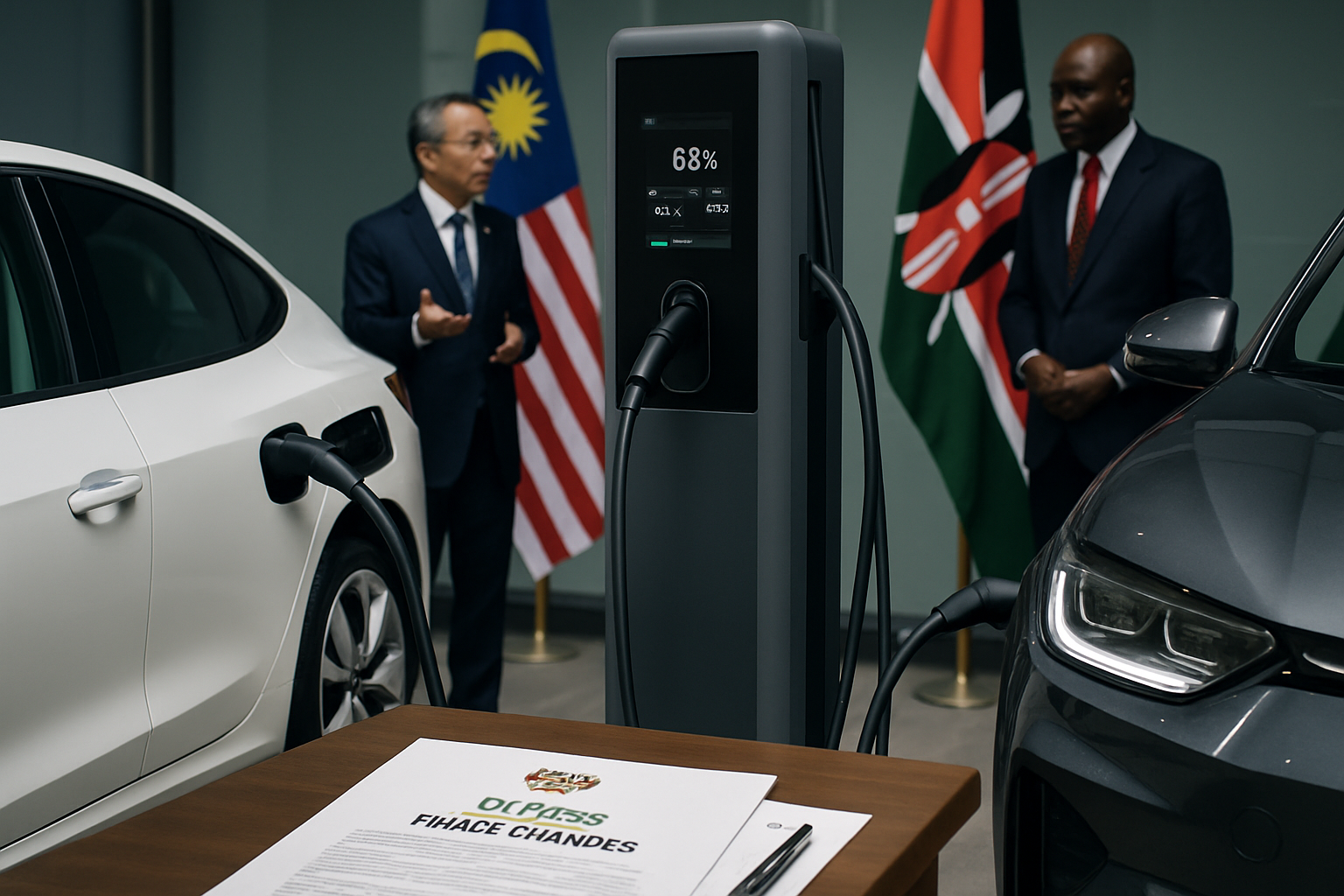
Three nations are spearheading a global transformation in automotive policy and technology as Malaysia explores diesel tax reductions, Kenya launches ambitious electric vehicle procurement programs, and Serbia addresses vehicle maintenance challenges amid the most significant transportation revolution in automotive history.
The automotive landscape is experiencing unprecedented change as governments worldwide grapple with the dual pressures of climate urgency and economic necessity. Recent developments across Malaysia, Kenya, and Serbia highlight the complex policy decisions facing nations as they navigate between traditional fuel dependency and electric vehicle adoption, all while managing the practical realities of their automotive sectors.
Malaysia's Diesel Tax Dilemma
Malaysia's Ministry of Transport (MOT) is actively exploring mechanisms to reduce road tax burdens for diesel vehicle owners, according to recent reports from Malaysiakini. The proposal comes as the nation confronts mounting pressure from fuel price volatility that has characterized the global energy crisis throughout 2026.
The initiative reflects Malaysia's recognition that immediate electric vehicle transition may not be feasible for all vehicle owners, particularly commercial operators who depend heavily on diesel-powered trucks and machinery. Industry observers note that Malaysia's approach represents a pragmatic acknowledgment of the transitional period required for comprehensive automotive electrification.
This policy consideration occurs within the context of unprecedented global fuel price surges, with Brent crude reaching $119.50 and WTI hitting $108.15 following Iran's Strait of Hormuz closure affecting 40% of global oil transit. Malaysian policymakers are seeking to balance economic relief for citizens while maintaining progress toward environmental goals.
Kenya's Electric Vehicle Ambitions
Kenya's Treasury has announced a multimillion-shilling tender for 600 electric government vehicles, marking one of Africa's most ambitious public sector electrification programs. The initiative builds upon the country's 2013 vehicle leasing program, which successfully shifted procurement costs to the private sector while modernizing the government fleet.
The Kenyan approach demonstrates sophisticated understanding of electric vehicle economics, leveraging the government's purchasing power to create market demand while establishing charging infrastructure. Treasury officials confirmed the program will utilize existing leasing frameworks, ensuring cost-effective implementation while supporting the nascent electric vehicle market.
Kenya's electric vehicle initiative aligns with broader African trends toward clean transportation, driven by both environmental considerations and energy security concerns. The program could establish Kenya as a regional leader in government fleet electrification, potentially influencing similar initiatives across East Africa.
Serbia's Automotive Maintenance Focus
Serbia's automotive sector is addressing practical vehicle maintenance challenges as summer approaches, with N1 Info emphasizing the importance of air conditioning system maintenance for optimal vehicle performance. The focus on preventive maintenance reflects broader automotive industry trends toward extending vehicle lifespans amid supply chain constraints and elevated new vehicle prices.
Serbian automotive experts stress that proper maintenance becomes increasingly critical as vehicles face more demanding operating conditions, including extreme weather events that have become more frequent due to climate change. The emphasis on air conditioning maintenance specifically addresses public health and safety concerns during increasingly severe summer heat waves.
The Serbian approach highlights the intersection between automotive maintenance and climate adaptation, recognizing that existing vehicle fleets must remain operational and safe while new technologies gradually penetrate the market.
Global Context: Revolutionary Battery Technology
These national developments occur amid revolutionary breakthroughs in battery technology that are fundamentally altering automotive economics. CATL's recent announcement of Megawatt Flash Charging technology, delivering 400km range in just 5 minutes, addresses the primary barrier to electric vehicle adoption: charging time anxiety.
Chinese battery manufacturer BYD's Blade Battery 2.0 technology now functions efficiently at temperatures as low as -30°C, eliminating cold weather performance degradation that previously limited electric vehicle adoption in northern climates. These technological advances make electric vehicles viable alternatives across diverse geographic and climatic conditions.
Battery longevity studies have exceeded industry predictions, with Tesla Model S vehicles from 2012-2014 retaining 85-92% capacity after 200,000+ miles, while Nissan Leaf vehicles from 2011-2013 maintain 75-85% retention after a decade of operation. This suggests practical battery lifespans of 15-20 years, fundamentally improving total cost of ownership calculations.
Supply Chain Challenges and Opportunities
The automotive transformation occurs amid significant supply chain challenges, including memory chip shortages that have driven semiconductor prices up sixfold, affecting vehicle control systems through 2027. China maintains strategic dominance with 60% of critical materials production and 90% of refining capacity for lithium, cobalt, and rare earth elements.
However, these constraints have paradoxically accelerated innovation in efficient algorithms and distributed processing systems. The US-EU-Japan Critical Minerals Partnership, encompassing 55 countries and 7 African suppliers, is coordinating supply chain diversification efforts, though this requires massive investment and years of development.
Regional manufacturing strategies are emerging to reduce vulnerabilities through local sourcing and enhanced flexibility, with automakers establishing production facilities closer to primary markets to improve responsiveness during the transition period.
Infrastructure Development Acceleration
Electric vehicle infrastructure development is accelerating globally, with Austria doubling its charging capacity by adding 1,000 stations, while Estonia leads with 88% renewable electricity and continental Europe's largest battery storage network serving 90,000 households. These infrastructure investments create the foundation necessary for widespread electric vehicle adoption.
Vehicle-to-grid technology is advancing rapidly, enabling electric vehicles to serve as mobile energy storage systems that charge during off-peak renewable generation and discharge during high demand periods. This capability transforms electric vehicles from simple transportation into integral components of sustainable energy systems.
Canada has returned electric vehicle incentives under Prime Minister Mark Carney's $9.7 billion automotive strategy, while New Zealand announced a $50 million investment to double its public charging network through partnerships with ChargeNet and Meridian Energy, deploying 2,574 new charging points nationwide.
Climate Urgency and Economic Necessity
The automotive transformation occurs amid unprecedented climate urgency, with January 2026 marking the 18th consecutive month of global temperatures exceeding 1.5°C above pre-industrial levels. This sustained warming demonstrates human-induced climate change overriding natural variability, emphasizing the critical importance of transportation electrification during the decisive climate action decade.
Economic factors now align with environmental imperatives, as fuel crisis conditions make electric vehicles an economic necessity rather than merely an environmental choice. European markets have achieved historic price parity where used electric vehicles are often cheaper than gasoline or diesel cars, representing a watershed moment in transportation economics.
Commercial vehicle electrification is accelerating, with Tesla announcing large-scale Semi truck production milestones and BMW preparing electric 3 Series production at its Munich facility beginning August 2026. Fleet operators are natural early adopters due to their focus on total cost of ownership calculations.
Regional Adaptation and Global Cooperation
The Malaysian, Kenyan, and Serbian examples demonstrate that successful automotive transformation requires region-specific approaches balancing technological advancement with local economic realities. Each nation's strategy reflects unique circumstances: Malaysia's transitional diesel policies, Kenya's ambitious electric procurement, and Serbia's practical maintenance focus.
International cooperation is increasingly essential, with technical assistance, knowledge sharing, and coordinated procurement addressing supply chain disruptions while maintaining quality control standards. Success factors include sustained political commitment transcending electoral cycles, transparent governance frameworks, comprehensive stakeholder engagement, and adaptive management responding to changing conditions.
The automotive industry represents one of the most significant industrial transformations in modern history, requiring coordination across energy systems, infrastructure development, materials supply chains, and regulatory frameworks. Success depends on sustained international cooperation and strategic investment recognizing that transportation electrification is essential infrastructure for both economic competitiveness and planetary sustainability.
Future Implications
The convergence of technological advancement, environmental urgency, economic incentives, and policy coordination creates unprecedented transformation opportunities during the decisive climate action decade. The choices made by nations like Malaysia, Kenya, and Serbia in managing this transition will influence global automotive development patterns for decades to come.
As the window for effective climate action narrows, technological innovation and international cooperation offer genuine hope for maintaining planetary habitability through comprehensive transportation transformation. The automotive revolution of 2026 represents a critical inflection point where crisis-driven demand converges with technological readiness, creating conditions for mass adoption acceleration that could define the future of global mobility.