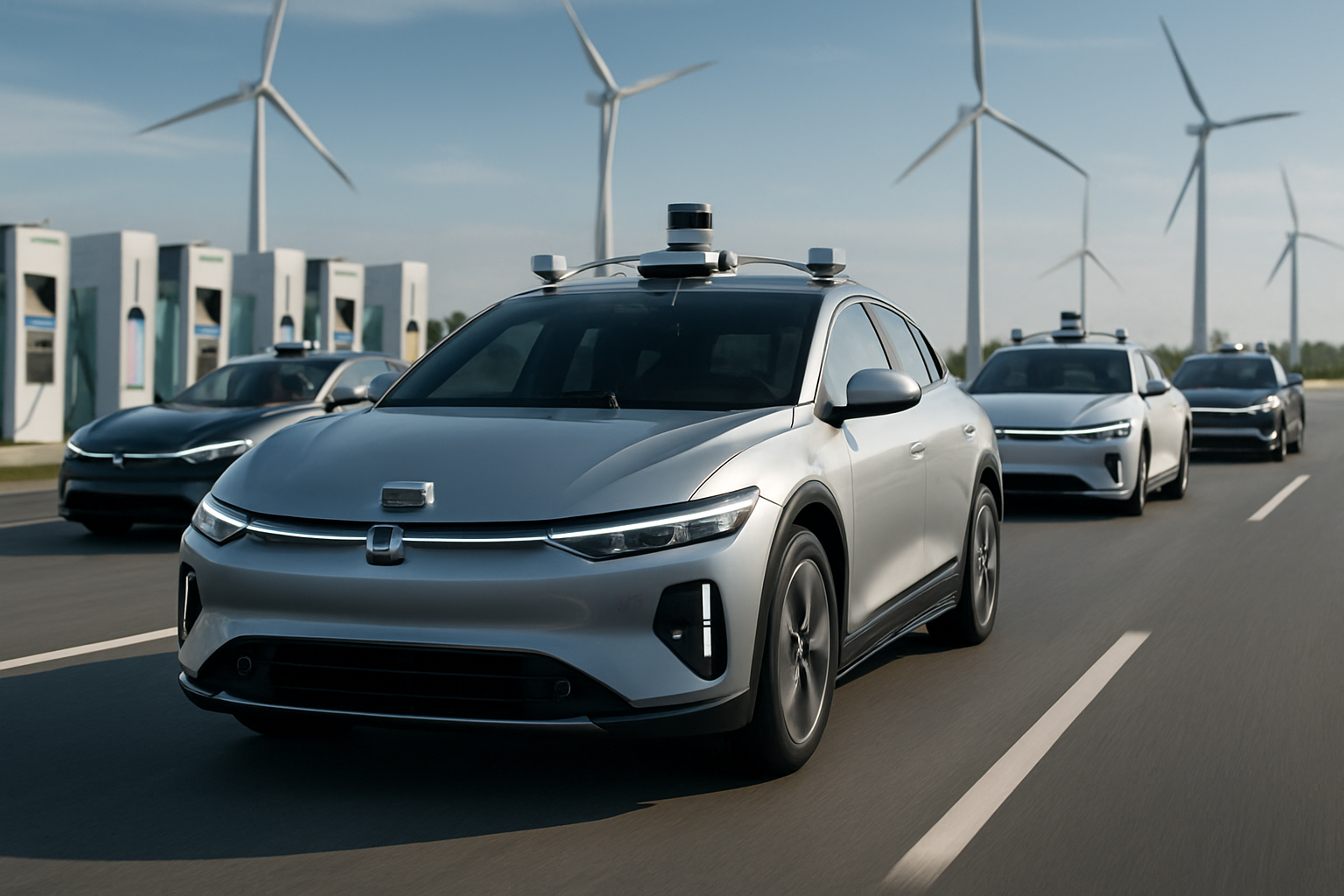
The global electric vehicle revolution reached new heights this week as major automakers unveiled groundbreaking models that promise to accelerate mass adoption through improved accessibility, enhanced range capabilities, and cutting-edge autonomous features.
Three significant developments from Greece, New Zealand, and Sweden reveal how the industry is addressing key barriers to EV adoption while positioning electric mobility as the dominant force in future transportation systems.
Hyundai's Compact Revolution
Hyundai Motor Europe's presentation of the IONIQ 3 represents a strategic pivot toward mass-market electric accessibility. The compact hatchback, featuring the company's innovative "Aero Hatch" design philosophy, is engineered to make electric mobility intuitive and comfortable for everyday consumer needs.
The IONIQ 3 marks Hyundai's smallest Ioniq-badged vehicle yet, directly competing with established models like the MG 4 while delivering an impressive range of up to 496 kilometers on a single charge. This positioning reflects the industry's recognition that widespread EV adoption requires affordable, practical options that don't compromise on performance or convenience.
"This vehicle represents our commitment to making electric mobility accessible to mainstream consumers without sacrificing the advanced technology and reliability that define the Ioniq brand."
— Hyundai Motor Europe Representative
The timing of this launch is particularly significant given the global energy crisis that has pushed oil prices above $119 per barrel, transforming electric vehicles from environmental choice to economic necessity for millions of consumers worldwide.
Volvo's Strategic Electric Expansion
From Sweden comes equally transformative news as Volvo Cars accelerates production of the EX60, an electric SUV positioned to become the company's next major commercial success. According to CEO Håkan Samuelsson, the EX60 is "crucial for the future" and expected to rapidly surpass the popular XC60 combustion model in sales figures.
The EX60 represents more than just another electric vehicle launch—it symbolizes the complete transformation of traditional automotive powerhouses. Volvo's aggressive production timeline and optimistic sales projections indicate confidence in both the technology and market readiness for premium electric SUVs.
This strategic direction aligns with broader industry trends where even luxury and performance-oriented manufacturers are prioritizing electric platforms over traditional powertrains. The success of the EX60 could establish new benchmarks for electric SUV capabilities and consumer acceptance in the premium segment.
Technological Convergence Driving Change
These vehicle launches occur within a broader context of revolutionary battery and charging technologies that are eliminating traditional EV limitations. Recent breakthroughs include BYD's Megawatt Flash Charging system, which delivers 400 kilometers of range in just five minutes, and advanced battery chemistry that maintains full functionality in temperatures as low as -30°C.
Battery longevity studies have also exceeded industry predictions, with Tesla Model S vehicles from 2012-2014 retaining 85-92% of their original capacity after 200,000+ miles, while Nissan Leaf models from the same period show 75-85% retention after a full decade of operation. These findings suggest practical EV lifespans of 15-20 years, fundamentally improving total cost of ownership calculations.

Infrastructure Investment Accelerates
Supporting this vehicle technology advancement is unprecedented global investment in charging infrastructure. Austria has doubled its EV charging capacity with 1,000 additional stations, while Estonia maintains European leadership with 88% renewable electricity and 90,000 household battery storage systems—the continent's largest distributed energy network.
New Zealand committed $50 million to doubling its public charging network through partnerships between ChargeNet and Meridian Energy, creating 2,574 new charging points nationwide. Indonesia has pledged 5,000 EV charging stations as part of its national electrification strategy.
These infrastructure investments address one of the primary barriers to EV adoption: charging accessibility. However, urban-rural disparities persist, with homeowners and rural residents maintaining advantages through home charging capabilities, while apartment dwellers in dense urban areas continue facing infrastructure barriers.
Supply Chain Challenges and Opportunities
The rapid expansion of electric vehicle production occurs amid significant supply chain challenges. China maintains strategic control over 60% of global critical materials production and 90% of refining capacity for lithium, cobalt, and rare earth elements essential to battery manufacturing.
Memory chip shortages continue driving semiconductor prices sixfold higher than normal levels, affecting vehicle control systems across the industry until new fabrication facilities come online in 2027. These constraints paradoxically benefit Chinese manufacturers with integrated supply chains and domestic production capabilities.
In response, the US-EU-Japan Critical Minerals Partnership, encompassing 55 countries and seven African suppliers, coordinates supply chain diversification efforts. However, these initiatives require massive investments and years of development, allowing Chinese technological leadership to continue in the near term.
Market Transformation and Consumer Behavior
Consumer behavior patterns reveal the fundamental shift occurring in transportation economics. Caribbean EV owners report saving $75 per $100 compared to gasoline costs despite electricity rate increases, demonstrating the economic advantages when supportive infrastructure exists.
Denmark achieved record-breaking EV sales that defied traditional seasonal patterns, while Asia-Pacific markets reached 11 million annual EV sales—nearly double the rest of the world combined. These figures highlight regional variations in adoption rates and the importance of supportive policy frameworks.
"Electric vehicles are transitioning from early-adopter technology to mainstream transportation solutions. The combination of improved technology, economic incentives, and climate urgency creates unprecedented acceleration conditions."
— Industry Analyst
Autonomous Integration and Future Mobility
The convergence of electric powertrains with autonomous driving technology represents the next phase of transportation evolution. Recent regulatory approvals, including Tesla's supervised self-driving software deployment in the Netherlands—the first comprehensive EU approval—establish frameworks for broader autonomous vehicle adoption.
Vehicle-to-grid technology enables electric vehicles to function as mobile energy storage systems, charging during off-peak renewable generation periods and discharging during high demand, supporting grid stability while providing additional economic benefits to owners.
Climate Context and Urgency
These developments unfold against the backdrop of accelerating climate change, with January 2026 marking the 18th consecutive month of global temperatures exceeding 1.5°C above pre-industrial levels. Human-induced climate change is now overriding natural variability, emphasizing the critical importance of transportation electrification during this decisive climate action decade.
The ongoing oil crisis, triggered by Iran's closure of the Strait of Hormuz affecting 40% of global oil transit, reinforces the strategic importance of reducing petroleum dependence through electric mobility solutions.
Looking Forward: Industry Transformation
The automotive industry is experiencing its most significant transformation in modern history, requiring unprecedented coordination across energy systems, infrastructure development, materials supply chains, and regulatory frameworks. Success depends on sustained international cooperation, strategic technology investments, and adaptive management responding to rapid market changes.
Commercial vehicle electrification continues accelerating with Tesla's large-scale Semi truck production and BMW's electric 3 Series beginning production at Munich facilities in August 2026. Fleet operators represent natural early adopters due to their focus on total cost of ownership rather than upfront purchase prices.
Regional manufacturing strategies are emerging to reduce supply chain vulnerabilities and enhance market responsiveness through production facilities closer to primary markets. This trend could benefit traditional automotive regions while creating opportunities for emerging technology hubs to participate in global supply chains through specialized expertise.
April 2026 represents a watershed moment where crisis-driven demand converges with technological readiness to create mass adoption acceleration conditions. The window for effective climate action is narrowing, but the convergence of technological innovation, economic incentives, and policy coordination offers genuine opportunities for achieving planetary habitability through comprehensive transportation transformation.
The success of vehicles like the Hyundai IONIQ 3 and Volvo EX60 will ultimately depend on their ability to demonstrate that electric mobility can exceed traditional vehicle performance while providing superior economic value throughout the ownership lifecycle. Early indicators suggest that 2026 may be remembered as the year electric vehicles transitioned from alternative technology to the dominant force shaping the future of global transportation.