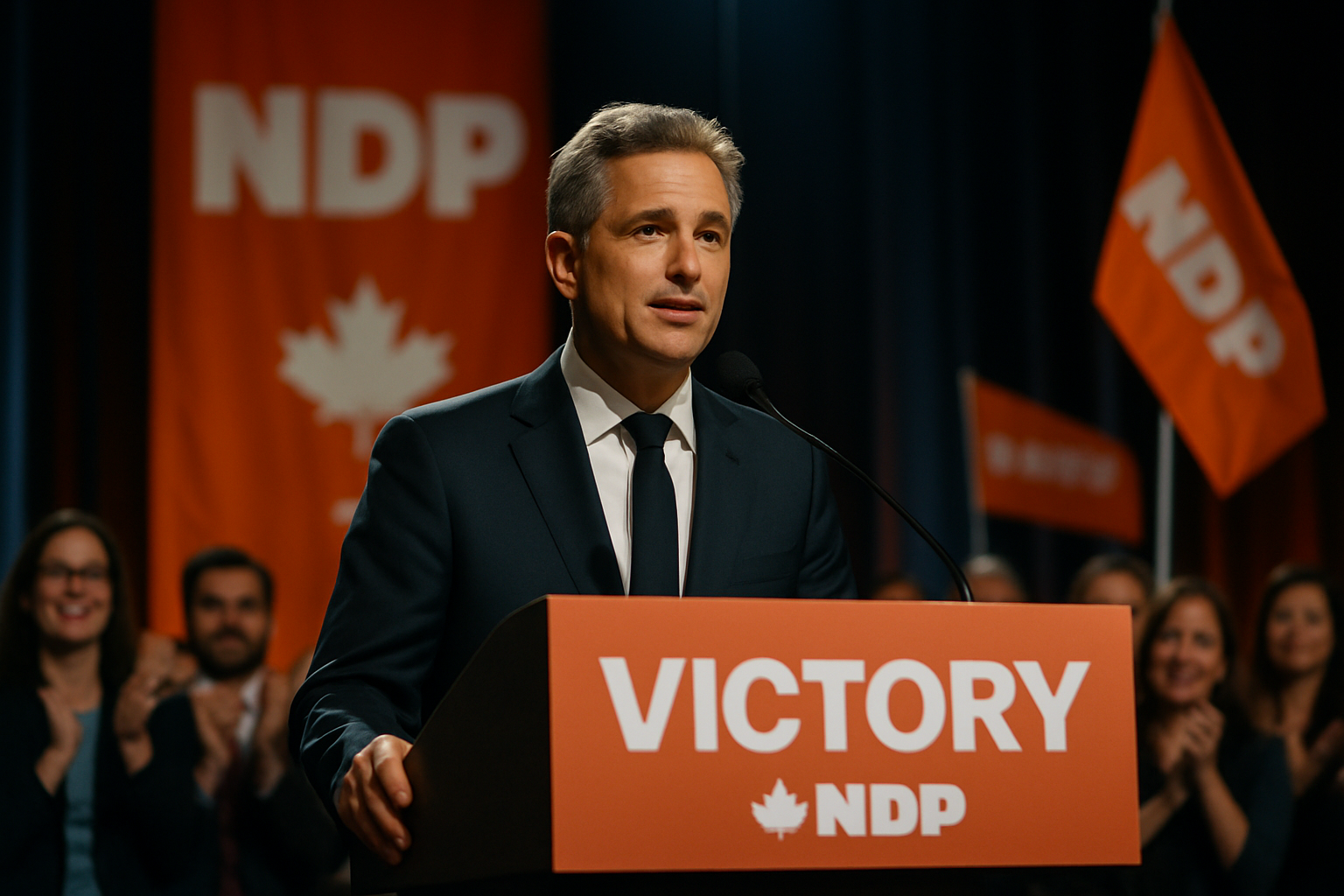
Filmmaker and activist Avi Lewis was elected as the new federal leader of Canada's New Democratic Party on March 29, 2026, taking the helm of a party facing its most significant crisis since formation, having lost official party status following a devastating electoral defeat.
Lewis, who was widely considered the front-runner throughout the leadership contest, secured victory at the party's national convention in Winnipeg, Manitoba. The 57-year-old journalist and environmental activist inherits a party grappling with record-low popular vote support and diminished influence in the House of Commons.
Leadership Victory Amid Party Crisis
The leadership convention, which began on March 28 under the welcoming presence of Manitoba Premier Wab Kinew, addressed what many delegates acknowledged as an existential crisis for the NDP. The party suffered its worst electoral performance in recent history, falling below the 12-seat threshold required for official party status in Parliament.
Lewis's victory comes at a time when the NDP's traditional role as a progressive voice in Canadian politics has been severely diminished. The party's loss of official status means reduced funding, fewer speaking opportunities in the House, and limited ability to participate in parliamentary committees – a dramatic fall for a party that once held the balance of power in minority government situations.
"We are not just rebuilding a party; we are rebuilding a movement for social and environmental justice in Canada."
— Avi Lewis, newly elected NDP leader
A Leader with Media and Environmental Credentials
Lewis brings a unique background to the NDP leadership, combining extensive experience in documentary filmmaking with grassroots environmental activism. As the son of former NDP leader Ed Broadbent's close ally Stephen Lewis and grandson of David Lewis, who led the party in the 1970s, Lewis represents both continuity with NDP tradition and a fresh approach to progressive politics.
His career as a filmmaker has included acclaimed documentaries on climate change and social justice issues, providing him with a platform that extends beyond traditional political circles. This media savvy may prove crucial as the party attempts to rebuild its public profile and reconnect with Canadian voters who have drifted toward other options.
Challenging Political Landscape
Lewis assumes leadership during one of the most challenging periods in recent Canadian political history. Prime Minister Mark Carney's Liberal government faces significant economic pressures and competence questions, while Conservative leader Pierre Poilievre maintains strong polling leads with his "common sense conservatism" message resonating with voters concerned about housing costs, inflation, and taxation.
The NDP's diminished status has limited its ability to capitalize on anti-Liberal sentiment, creating unusual political dynamics where traditional opposition roles have been constrained. Lewis will need to navigate this complex environment while rebuilding the party's credibility and relevance in federal politics.
Historical context from previous leadership transitions shows that Canadian political parties have faced similar existential challenges before. The NDP's ability to adapt and evolve has been tested repeatedly throughout its history, with varying degrees of success in maintaining its progressive coalition while appealing to broader Canadian concerns.
Federal-Provincial Political Tensions
Lewis's leadership begins against a backdrop of unprecedented federal-provincial tensions across Canada. Recent developments in Alberta, where UCP MLA Jason Stephan publicly called for a referendum on provincial separation, reflect deeper frustrations over energy policy, equalization payments, and federal regulatory oversight of resource development.
These tensions present both challenges and opportunities for the NDP under Lewis's leadership. While the party has traditionally advocated for stronger federal programs and environmental regulations, Lewis must find ways to address legitimate provincial grievances while preserving national unity and democratic governance.
Path Forward for Progressive Politics
The leadership selection represents a critical juncture for progressive politics in Canada. Lewis faces the formidable task of rebuilding the NDP's electoral coalition while distinguishing the party's platform from both Liberal climate initiatives and Conservative economic messaging.
Key challenges include re-establishing the party's credibility on economic issues, maintaining its environmental leadership while addressing working-class concerns, and developing a coherent vision that can compete effectively against both established parties. The party's recovery will depend on Lewis's ability to translate his media experience and activist credentials into effective political leadership.
Convention Atmosphere and Party Unity
Despite the party's electoral struggles, the Winnipeg convention demonstrated continued commitment from party activists and volunteers. Delegates expressed determination to rebuild while acknowledging the magnitude of challenges ahead.
Manitoba Premier Wab Kinew's welcoming remarks highlighted the important role that successful NDP provincial governments continue to play, providing models for progressive governance and policy innovation. These provincial successes offer Lewis examples of effective NDP leadership and policy implementation to draw upon as he develops federal strategies.
Looking Ahead to Electoral Renewal
Lewis's immediate priorities will include rebuilding party infrastructure, developing compelling policy alternatives, and re-establishing the NDP's relevance in federal political debates. The party's path back to official status requires not just organizational renewal but fundamental strategic rethinking about how progressive politics can succeed in contemporary Canada.
The success of Lewis's leadership will be measured not only by electoral recovery but by his ability to advance progressive causes and hold the government accountable despite the party's diminished parliamentary status. His background in media and environmental activism provides unique tools for building public awareness and political pressure outside traditional parliamentary channels.
As Canada faces economic uncertainty, climate challenges, and growing political polarization, Lewis's leadership of the NDP will test whether traditional progressive politics can adapt and thrive in an evolving political landscape. The stakes extend beyond party politics to fundamental questions about the future of social democratic governance in Canada and the role of progressive voices in shaping national policy direction.