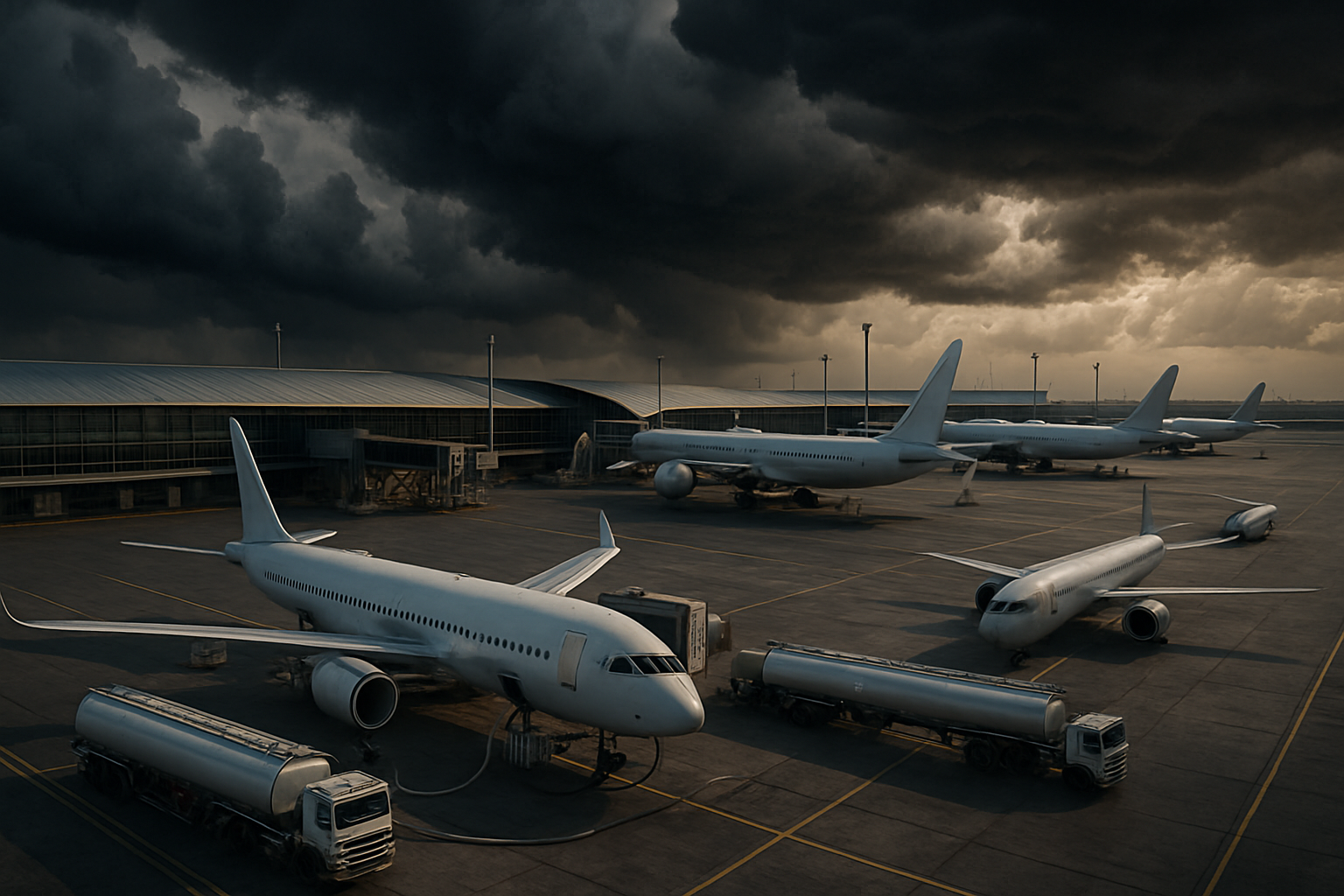
The global aviation industry is experiencing its most severe operational crisis since the COVID-19 pandemic, with mounting challenges from geopolitical conflicts, soaring fuel costs, and widespread flight cancellations threatening to reshape international air travel for years to come.
As Middle East tensions continue to disrupt critical flight corridors and fuel supply chains, the aviation sector finds itself caught in a perfect storm of interconnected crises that have already resulted in over 18,000 flight cancellations worldwide since March 2026.
Ryanair Issues Stark Summer Season Warning
Europe's largest airline by passenger numbers has sounded the alarm over potential fuel supply disruptions that could force the cancellation of summer flights. Ryanair CEO Michael O'Leary announced that the Irish carrier is conducting daily consultations with fuel suppliers across Europe to monitor the precarious situation.
"If this continues through to the end of April, we're looking at a risk to supplies in early June. If it runs into May, then we don't know what goes on,"
— Michael O'Leary, Ryanair CEO
The warning comes as jet fuel prices have surged by up to 122%, jumping from $85-90 per barrel to $150-200 per barrel due to the closure of the Strait of Hormuz, which handles 40% of global oil transit. This dramatic price increase has forced airlines worldwide to implement emergency fare surcharges and operational adjustments.
Philippines Responds with Fee Reductions
In a counter-move to support the struggling aviation sector, the Civil Aviation Authority of the Philippines (CAAP) has implemented significant reductions in passenger service charges and airline fees across all 44 CAAP-operated airports. The measure, which took effect immediately, represents a recognition of the mounting financial pressures facing both airlines and passengers.
The Philippines' initiative reflects a broader pattern of government intervention seen across the Asia-Pacific region, where countries are scrambling to maintain aviation connectivity amid unprecedented disruptions. Philippine carriers, including Philippine Airlines and Cebu Pacific, have been forced to suspend multiple Middle East routes due to airspace closures and security concerns.
Global Aviation Crisis Reaches Critical Point
The current crisis stems from the simultaneous closure of eight Middle Eastern countries' airspaces - Iran, Iraq, Israel, UAE, Qatar, Syria, Kuwait, and Bahrain - the most comprehensive regional aviation disruption in modern history. Dubai International Airport, the world's busiest with over 86 million passengers annually, remains completely shut down due to missile damage, eliminating a critical Europe-Asia hub connection.
Major carriers including Emirates, Etihad Airways, Air France-KLM, Wizz Air, and Bulgaria Air have suspended Middle East operations indefinitely, forcing complex rerouting strategies that include Caribbean stopovers for trans-Pacific routes and dramatically increased operational costs.
Fuel Crisis Drives Industry Transformation
The energy crisis has exposed the aviation industry's dangerous over-dependence on Middle Eastern fuel supplies and transit routes. Airlines are now implementing emergency protocols including enhanced fuel loading to avoid refueling in affected zones, complex alternative routing, and reduced passenger capacity to accommodate longer flight times.
Norwegian Airlines has deployed 125 additional flights across the Nordic region after SAS was forced to cancel over 1,000 flights due to unsustainable fuel costs. Air New Zealand has cut more than 1,000 flights, affecting 44,000 passengers, while implementing significant fare increases alongside other major carriers including Qantas and Air France-KLM.
Consumer Impact and Market Response
The crisis has had immediate and severe impacts on air travelers worldwide. Swedish traveler Emily Grosser exemplifies the extreme costs faced by passengers, paying $560 for alternative routing from Paris to Australia after her Dubai connection was cancelled. Travel agencies report this as the busiest crisis period since COVID-19, with "every phone call an emergency."
The financial markets have responded with alarm to the aviation crisis. Pakistan's KSE-100 experienced its largest single-day decline in history at -8.97%, while South Korea's KOSPI fell 12% triggering circuit breakers. The crisis has forced PayPal to postpone its $1.1 billion IPO due to market volatility.
Regional Winners and Losers
While the crisis has devastated traditional aviation hubs, some regions are positioning themselves as beneficiaries. Croatia and Spain are capturing redirected tourism demand as travelers seek safer European alternatives to Middle Eastern destinations. Croatia has deployed Europe's most extensive seasonal healthcare network with 62 tourist medical clinics for the 2026 season.
Conversely, destinations like New Zealand face significant threats to tourism recovery, as one-third of European travelers typically use Middle Eastern hubs for connectivity. The Caribbean faces a "perfect storm" with the combination of Middle East disruptions and Cuba's aviation isolation.
Government Interventions Accelerate
The International Energy Agency has authorized the largest strategic petroleum reserve release in its 50-year history - 400 million barrels from 32 countries, double the amount released during the 2022 Ukraine crisis. Japan is releasing 80 million barrels, its first such deployment since the 2011 Fukushima disaster.
European governments are implementing emergency measures to protect consumers from extreme fuel price increases. France has deployed 500 fuel station inspectors to prevent price manipulation, while countries like Romania and Hungary have introduced emergency price cap scenarios.
Long-term Industry Transformation
The crisis is accelerating fundamental changes in aviation planning and operations. Enhanced security screening, mandatory conflict insurance, and pre-approval for high-risk destinations are becoming standard requirements. The industry is also prioritizing route diversification to reduce dependence on Middle Eastern hubs, particularly given that Russian and Ukrainian airspace are already closed.
Travel insurance gaps have been starkly exposed, as standard policies exclude war-related cancellations, driving a shift toward comprehensive package tours over independent travel. This represents a fundamental change in how consumers approach international travel in an increasingly volatile world.
Recovery Timeline Remains Uncertain
Unlike weather-related disruptions with predictable timelines, the current crisis depends on military and diplomatic resolutions to ongoing conflicts. Airlines are conducting daily operational reviews but cannot make long-term scheduling decisions while multiple airspaces remain closed and fuel markets remain volatile.
Industry experts describe this as a template-setting moment for 21st-century crisis management in aviation. The recovery timeline could extend for weeks or months depending on geopolitical developments, with potential implications for the summer travel season that could affect millions of passengers worldwide.
"This is the most severe energy security crisis in decades, exposing single-chokepoint vulnerabilities that require fundamental restructuring of global energy architecture,"
— Samuel Ciszuk, Energy Analyst
A Watershed Moment for Aviation
The current crisis represents the greatest test of multilateral cooperation in modern aviation crisis management. The aviation industry's response to these unprecedented challenges will likely influence policy frameworks, emergency planning protocols, and international cooperation mechanisms for decades to come.
As the industry grapples with the most comprehensive operational disruption since World War II, the choices made now regarding route diversification, fuel security, and crisis management will determine whether aviation emerges stronger and more resilient or faces a prolonged period of fragmented, security-conscious operations that could fundamentally alter the nature of global connectivity.
The aviation sector's ability to adapt to these challenges while maintaining essential international transportation links will serve as a crucial test of the industry's resilience in an increasingly volatile geopolitical environment.