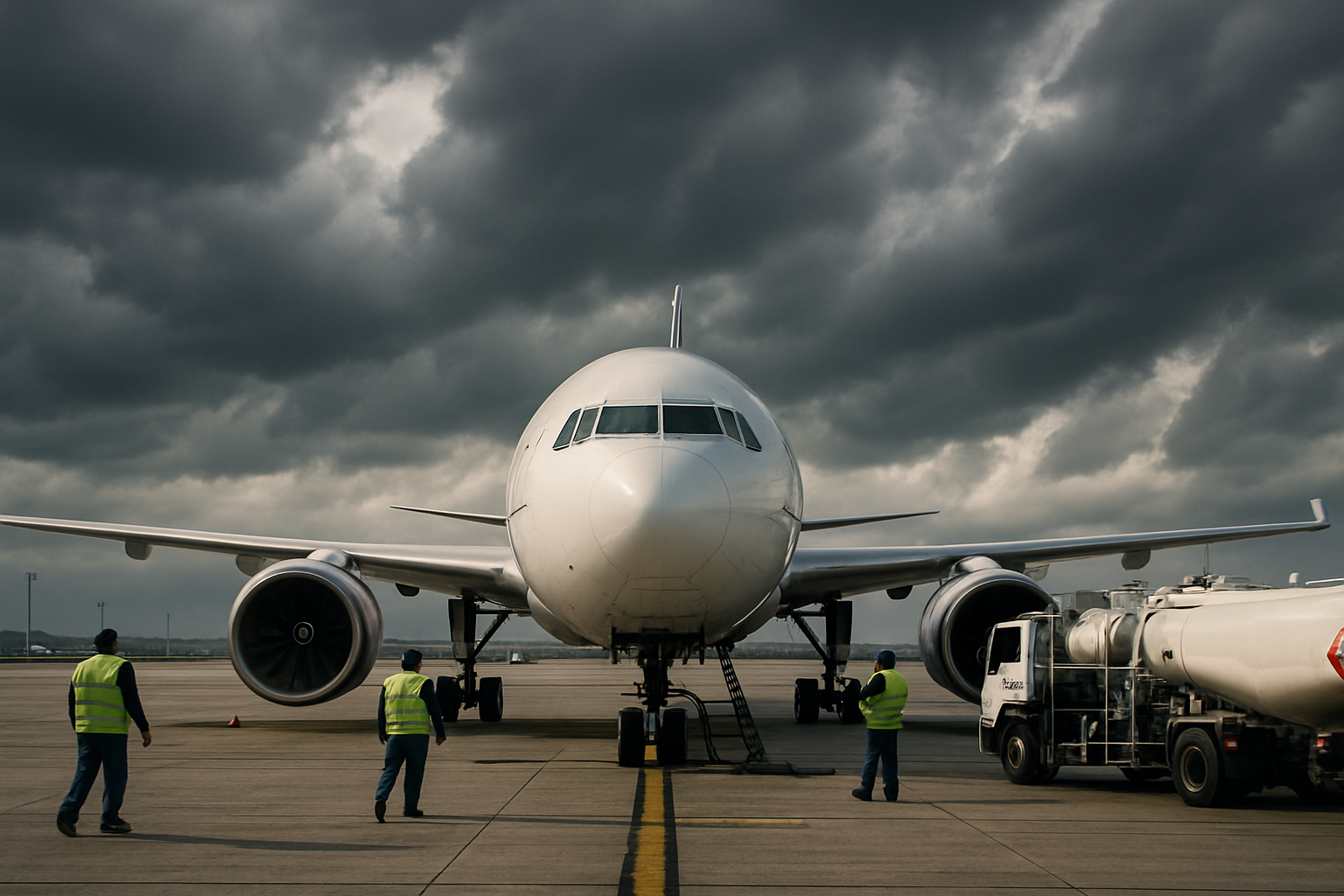
The global aviation industry faces its most severe operational crisis since the COVID-19 pandemic as airlines across Europe and Asia dramatically reduce flight schedules in response to soaring fuel costs and ongoing Middle East tensions.
Several major carriers have announced significant flight reductions, with Croatia experiencing particular disruption as airlines adjust their schedules to the popular tourist destination. The crisis stems from a perfect storm of geopolitical instability and energy market volatility that has sent jet fuel prices skyrocketing.
Strategic Flight Reductions Across Regions
In a significant move highlighting the industry's adaptability under pressure, Malaysia Airlines Group (MAG) announced plans to expand its network even as competitors scale back operations. The airline will launch new services between Kuala Lumpur and two Chinese cities - Shenzhen and Changsha - from July to September 2026, while also reviving direct flights to Fukuoka, Japan.
MAG President and CEO Nasaruddin Bakar emphasized the company's strategic positioning during the crisis, stating that while "the market is very fluid" due to Middle East conflicts, the airline sees this "crisis as an opportunity" to expand its network. The company has secured 36% of its fuel needs for the year and aims to increase this to 50% by the second quarter.
"Fuel prices are highly volatile, but we are ready. We are prepared to ensure that our products and assets continue to operate,"
— Nasaruddin Bakar, Malaysia Airlines Group CEO
Meanwhile, low-cost carrier AirAsia has taken a different approach, trimming capacity and implementing cost-cutting measures while raising fares to combat mounting fuel pressure. The move follows similar decisions by European carriers who have reduced services to Croatia and other destinations.
Fuel Crisis Reaches Critical Levels
The aviation industry is grappling with jet fuel costs that have surged from $85-90 per barrel to $150-200 per barrel - representing increases of up to 122%. This dramatic escalation stems from the ongoing closure of the Strait of Hormuz, which affects 40% of global oil transit, following Iran's Revolutionary Guard declaration that the waterway is "unsafe for shipping."
The fuel crisis has forced airlines to implement emergency fare increases across the board. Air France-KLM has added 50 euros to long-haul economy tickets and 200 euros to business class fares. Qantas, Air New Zealand, and SAS have all announced similar surcharges, citing operational necessity as fuel costs now represent 25-30% of total flight expenses.
The situation has been compounded by the complete shutdown of Dubai International Airport - the world's busiest with over 86 million passengers annually - due to missile damage sustained during regional conflicts. This has eliminated critical Europe-Asia hub connections, forcing airlines to implement complex rerouting strategies using Caribbean stopovers for trans-Pacific routes.
Industry-Wide Operational Adaptations
Airlines are implementing unprecedented operational changes to cope with the crisis. Norwegian Airlines deployed 125 additional flights across the Nordic region after SAS was forced to cancel over 1,000 flights due to unsustainable fuel costs. The low-cost carrier's rapid capacity deployment demonstrates the operational flexibility that has become crucial during these volatile times.
The crisis has exposed dangerous over-dependence on Middle Eastern hubs for Europe-Asia connectivity. With eight countries maintaining simultaneous airspace closures (Iran, Iraq, Israel, UAE, Qatar, Syria, Kuwait, and Bahrain), airlines are being forced to fundamentally reconsider their route planning and risk assessment procedures.
Enhanced security screening, mandatory conflict insurance, and pre-approval systems for high-risk destinations are becoming standard features of international travel. Airlines are also implementing enhanced fuel loading protocols to avoid refueling in affected zones and developing sophisticated rerouting algorithms for real-time operational adjustments.
Economic and Consumer Impact
The aviation crisis is having severe ripple effects across global markets and consumer travel patterns. Oil prices have surged past $100 per barrel for the first time since 2022, with Brent crude reaching a peak of $119.50 and WTI hitting a record single-day jump of 18.98% to $108.15.
Financial markets have crashed globally, with Pakistan's KSE-100 index experiencing its largest single-day decline in history at -8.97%. South Korea's KOSPI fell 12%, triggering circuit breakers, while the Korean won hit a 17-year low. The crisis has been so severe that PayPal postponed its $1.1 billion IPO indefinitely.
Individual travelers are bearing extreme costs for emergency rerouting. Swedish traveler Emily Grosser paid 6,000 SEK ($560) for alternative routing from Paris to Australia after her Dubai connection was cancelled, exemplifying the financial burden placed on passengers during the crisis.
Government Response and Strategic Reserves
The International Energy Agency (IEA) has announced the largest strategic petroleum reserve release in its 50-year history, deploying 400 million barrels from 32 countries - more than double the 182.7 million barrels released during the 2022 Ukraine crisis. Japan is releasing 80 million barrels, marking the first such deployment since the 2011 Fukushima disaster.
Central banks including the European Central Bank and Bank of Japan are coordinating emergency liquidity measures, though traditional monetary policy has limited effectiveness against these structural geopolitical disruptions.
Tourism Industry Transformation
The crisis is fundamentally reshaping global tourism patterns. European destinations, particularly Croatia and Spain, are benefiting as travelers seek safer alternatives to traditional Middle Eastern routes. Spain, with its capacity of 513.6 million tourist nights annually, is well-positioned to capture redirected demand.
However, the Caribbean faces a "perfect storm" of disruptions, with Middle East flight cancellations compounding existing challenges from Cuba's aviation isolation. New Zealand's tourism recovery is also threatened, as one-third of European travelers typically use Middle Eastern hubs to reach the country.
Travel insurance gaps have been exposed, with standard policies excluding war-related cancellations. This is driving a fundamental shift toward package tours with comprehensive coverage frameworks, rather than independent travel arrangements that leave individuals financially vulnerable.
Long-term Industry Implications
The March-April 2026 aviation crisis represents a template-setting moment for 21st-century crisis management in an increasingly volatile geopolitical environment. Unlike weather-related disruptions with predictable timelines, this crisis depends on military operations resolution and diplomatic normalization.
The industry is being forced to accelerate route diversification initiatives and enhance contingency planning to reduce dependence on strategic chokepoints. Quality-focused tourism strategies are replacing volume-based approaches, with authentic cultural experiences and comprehensive visitor services becoming key differentiators.
Recovery remains uncertain, with airlines conducting daily operational reviews but unable to make long-term scheduling decisions while multiple airspaces remain closed. The crisis outcome will influence aviation policy, emergency planning frameworks, and international cooperation mechanisms for decades to come.
As UN Secretary-General António Guterres noted, this represents "the greatest test of multilateral cooperation and crisis management in the modern era." The aviation industry's response to these unprecedented challenges will likely determine whether international travel maintains its role in global connectivity or evolves toward more regionalized, security-conscious patterns.