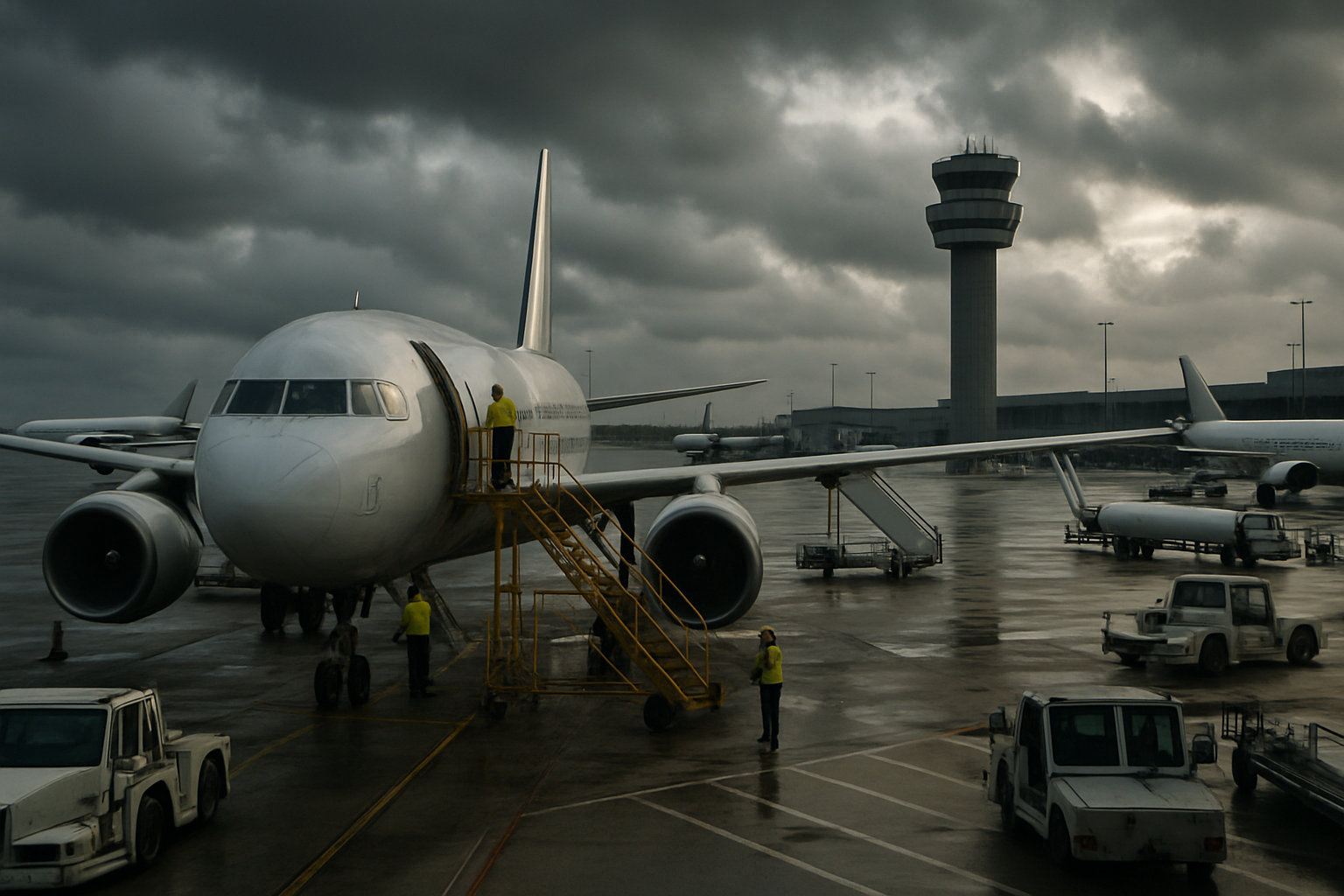
The global aviation industry is experiencing its most severe operational crisis since the COVID-19 pandemic, as a convergence of geopolitical tensions, safety incidents, and fuel shortages creates unprecedented challenges for airlines, airports, and travelers worldwide.
From the Baltic states blocking official flights to Moscow to major airlines cancelling hundreds of services due to rising fuel costs, the aviation sector in April 2026 is grappling with a complex web of interconnected problems that threaten to fundamentally reshape international air travel.
Airspace Restrictions Tighten Across Europe
The most visible manifestation of current tensions emerged when Estonia, Latvia, and Lithuania announced they would block Slovakia's Prime Minister Robert Fico from using their airspace to travel to Moscow for Russia's May 9 Victory Day parade. Estonian Foreign Minister Margus Tsahkna stated emphatically that "Fico will once again not receive permission to use Estonian airspace for a flight to Moscow to attend the 9 May parade, an event aimed at glorifying the aggressor."
This coordinated Baltic response represents a significant escalation in aviation-related diplomatic tensions. Latvia and Lithuania had previously denied similar requests in 2025, establishing a clear precedent that no country should be permitted to use their airspace to strengthen ties with Russia while Moscow continues its conflict in Ukraine.
The airspace restrictions highlight how aviation has become a key battleground in broader geopolitical conflicts, forcing airlines to navigate increasingly complex routing requirements that add costs and delays to international travel.
Major Airlines Cancel Hundreds of Flights
Beyond diplomatic tensions, the aviation industry is facing severe operational pressures that have forced major carriers to dramatically reduce their schedules. Aer Lingus announced the cancellation of more than 500 flights over the coming weeks, citing growing concerns about jet fuel supply pressures that have plagued the industry since the Middle East crisis began in March 2026.
These cancellations come amid a broader pattern of flight disruptions that has seen over 18,000 flights cancelled worldwide since March, representing the most extensive aviation disruption since the COVID-19 pandemic. The ripple effects extend far beyond the directly affected routes, creating cascading delays and cancellations throughout the global aviation network.
"The current fuel supply situation has created unsustainable operational conditions for many airlines. We're seeing carriers forced to make difficult decisions about route viability on a daily basis."
— Industry analyst speaking on condition of anonymity
Safety Incidents Raise Alarm
Adding to the industry's woes, a serious safety incident at Malta's airport underscored the human factor challenges facing aviation operations. A KM Malta Airlines flight bound for Paris was forced to return to Malta shortly after takeoff when it became apparent that a trainee co-pilot had been paired with the wrong instructor captain, violating standard safety protocols.
Flight KM478 had been airborne for nearly 30 minutes when the crew mix-up was discovered, forcing an immediate return to Malta International Airport. The incident highlights the pressure aviation training programs are under as the industry struggles to maintain safety standards while dealing with pilot shortages and increased operational demands.
This incident is part of a troubling pattern of aviation safety challenges that have emerged throughout 2026, including the fatal LaGuardia Airport collision in March that killed two pilots when an Air Canada Express aircraft struck a fire truck during landing.
Systemic Safety Concerns
Aviation safety experts point to several factors contributing to increased operational risks. The International Civil Aviation Organization (ICAO) has launched comprehensive reviews of emergency coordination protocols at airports worldwide, following a series of incidents that have exposed vulnerabilities in communication between air traffic control and ground emergency services.
The shortage of experienced pilots and ground crew, exacerbated by pandemic-era layoffs and early retirements, has created pressure on training programs and operational oversight. Airlines are increasingly relying on less experienced personnel while managing more complex routing and fuel management requirements.
Fuel Crisis Drives Operational Decisions
The aviation industry's fuel crisis, stemming from the closure of the Strait of Hormuz which handles 40% of global oil transit, has created unprecedented operational pressures. Jet fuel prices have surged by as much as 122% from pre-crisis levels of $85-90 per barrel to peaks of $150-200 per barrel, forcing airlines to make difficult choices about route viability.
Air France-KLM has implemented emergency surcharges of €50 for economy class and €200 for business class on long-haul routes. SAS cancelled over 1,000 flights in April alone due to unsustainable fuel costs, while Norwegian Airlines paradoxically deployed 125 additional aircraft to capture market share from competitors forced to reduce capacity.
The International Energy Agency has responded with the largest strategic petroleum reserve release in 50 years, deploying 400 million barrels from 32 countries, but the impact on aviation fuel availability remains limited.
Regional Aviation Patterns Shift
The convergence of these challenges is forcing a fundamental shift in global aviation patterns. The closure of Middle Eastern hubs, particularly Dubai International Airport which normally handles 86 million passengers annually, has severed critical Europe-Asia air corridors and forced airlines to develop alternative routing strategies.
European airlines are increasingly focusing on intra-European routes and alternative long-haul routing through North American or North African hubs. This shift is benefiting some regional carriers while devastating others dependent on Middle Eastern connectivity.
Croatia and Spain have emerged as beneficiaries, positioning themselves as safer European alternatives for tourists who might previously have connected through Middle Eastern hubs. Meanwhile, destinations heavily dependent on Middle Eastern aviation connectivity face severe tourism revenue losses.
Government and Industry Response
Governments across Europe have activated emergency protocols to address the aviation crisis. Cyprus implemented its ESTIA evacuation plan for the first time in the nation's history, coordinating the extraction of over 2,000 EU nationals from the UAE. Multiple countries have deployed strategic fuel reserves and implemented temporary price controls to prevent excessive fuel cost increases.
The aviation industry itself is undergoing rapid transformation in response to these challenges. Airlines are implementing enhanced security screening, mandatory conflict insurance, and pre-approval systems for high-risk destinations. Route diversification has become an urgent priority to reduce dependency on single regional hubs.
Technology integration is accelerating, with airlines deploying sophisticated fuel optimization systems, real-time routing algorithms, and predictive maintenance programs to maximize operational efficiency under constrained conditions.
Long-term Industry Implications
The current aviation crisis represents more than a temporary disruption—it appears to be catalyzing fundamental changes in how the industry operates. The over-reliance on Middle Eastern hubs for Europe-Asia connectivity has been exposed as a critical vulnerability, forcing a strategic reconsideration of global aviation network design.
Enhanced international cooperation has become essential, with aviation authorities sharing safety data and best practices to address emerging threats. The crisis has demonstrated that modern aviation networks require much more robust contingency planning and alternative routing capabilities than previously assumed.
"We are witnessing a watershed moment that will influence aviation operational practices, regulatory frameworks, and international cooperation for decades to come."
— UN Secretary-General António Guterres
Passenger Impact and Travel Insurance Gaps
Individual travelers are bearing significant costs from the aviation disruption. Swedish traveler Emily Grosser paid $560 for alternative routing from Paris to Australia after her Dubai connection was cancelled, exemplifying the extreme costs passengers face during emergency rerouting situations.
A critical gap in traveler protection has been exposed, as standard travel insurance policies exclude war-related cancellations, leaving individual travelers financially exposed. This has driven a significant shift toward package tours that offer comprehensive coverage, moving away from independent travel arrangements.
The Austrian European Consumer Centre has confirmed that travelers experiencing regional "anxiety" have no recourse unless they book organized tours, highlighting fundamental flaws in current passenger protection systems.
Economic Ripple Effects
The aviation crisis is generating significant economic impacts beyond the transportation sector. Stock markets have experienced severe volatility, with Pakistan's KSE-100 suffering its largest single-day decline in history at -8.97%. Energy costs are surging globally, with natural gas prices increasing 24% in Europe and 78% in the United States.
Supply chain disruptions are affecting industries ranging from automotive manufacturing to electronics, as the Persian Gulf trade hub's vulnerability has been exposed. Over 150 oil and LNG tankers remain stranded in the Persian Gulf, representing billions of dollars in cargo.
Recovery Timeline Uncertain
Unlike weather-related disruptions that have predictable recovery timelines, the current aviation crisis depends entirely on diplomatic and military resolution of underlying conflicts. Airlines are conducting daily operational reviews but cannot make long-term scheduling decisions with multiple airspaces closed and fuel costs remaining volatile.
The template-setting nature of this crisis means that recovery strategies developed now will influence aviation crisis management for decades. The industry faces a fundamental choice between maintaining global connectivity despite security challenges or adapting to a more regionalized, security-conscious travel pattern.
As the aviation industry continues to navigate these unprecedented challenges, the decisions made in the coming weeks will likely determine whether global air travel emerges stronger and more resilient, or fragments into more limited, regionalized networks prioritizing security over connectivity.