The global aviation industry confronts its most severe operational crisis since the COVID-19 pandemic, as a perfect storm of geopolitical tensions, fuel supply disruptions, and route restrictions threatens to fundamentally reshape international air travel patterns.
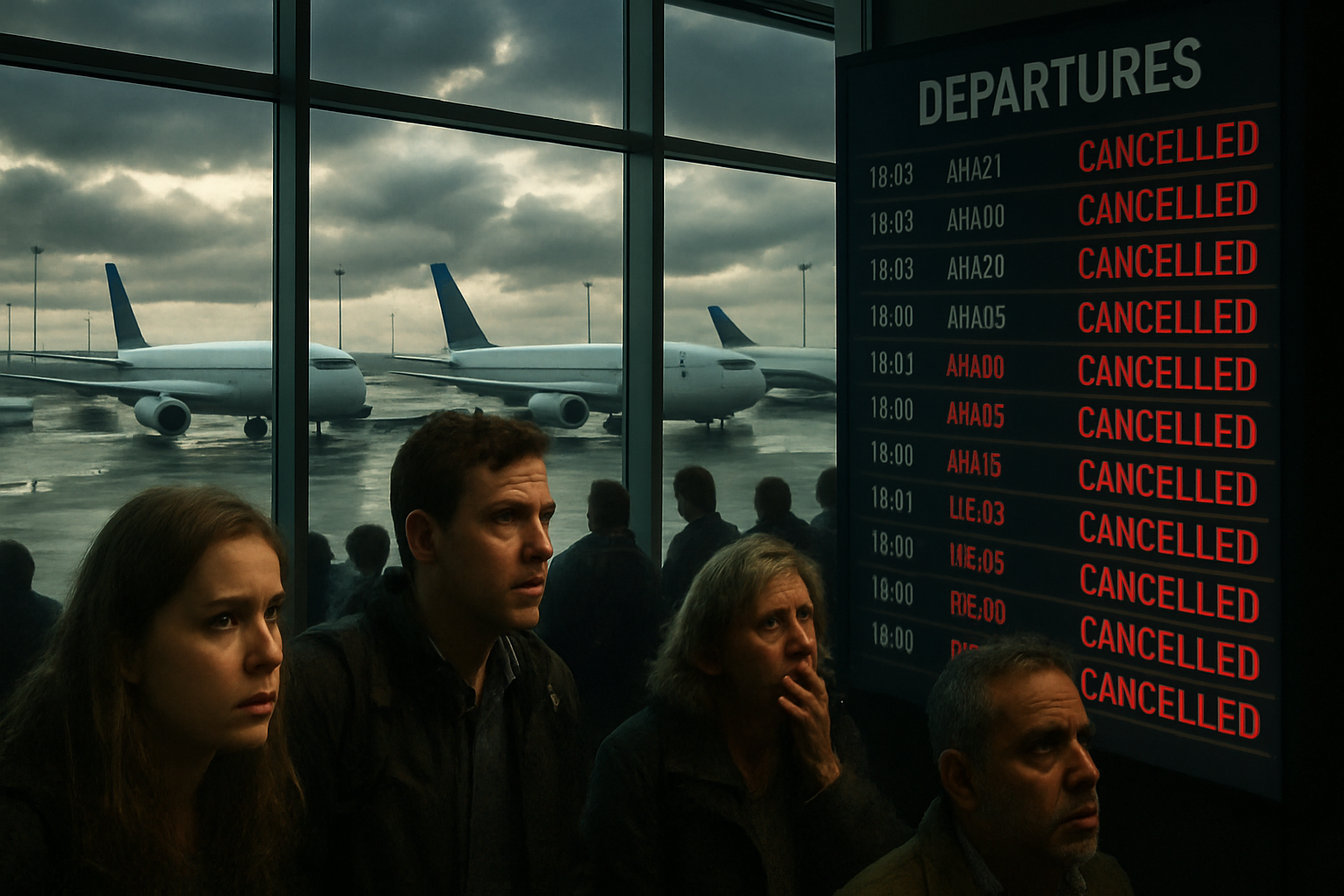
With over 18,000 flights cancelled worldwide since March 2026 and jet fuel costs surging by 122%, airlines across continents are implementing emergency measures while passengers face unprecedented disruptions and skyrocketing fares. The crisis has exposed critical vulnerabilities in global transportation networks and forced a complete reassessment of aviation industry operations.
Middle East Conflicts Create Aviation Black Hole
The epicenter of the current crisis lies in the Middle East, where simultaneous airspace closures by eight countries—Iran, Iraq, Israel, UAE, Qatar, Syria, Kuwait, and Bahrain—have created what industry experts describe as an "aviation black hole" severing critical Europe-Asia corridors.
Dubai International Airport, the world's busiest with over 86 million passengers annually, remains completely shut down following missile damage sustained during escalating regional conflicts. The closure eliminates a crucial hub that has facilitated global connectivity for decades, forcing airlines to implement complex rerouting strategies through Caribbean stopovers for trans-Pacific routes.
"This represents the most comprehensive regional aviation disruption in modern history, exceeding even the 1991 Gulf War's impact on air travel,"
— Aviation Industry Analyst
Major carriers including Emirates, Etihad Airways, Air France-KLM, and Wizz Air have suspended Middle East operations indefinitely, while others have implemented costly alternative routing that adds hours to journey times and hundreds of dollars to ticket prices.
Fuel Crisis Drives Industry to Breaking Point
The aviation sector's challenges extend far beyond route restrictions. Iran's Revolutionary Guard declaration that the Strait of Hormuz—through which 40% of global seaborne oil transits—is "unsafe for shipping" has triggered unprecedented fuel cost increases.
Jet fuel prices have exploded from $85-90 per barrel to peaks of $150-200, representing increases of up to 122%. This dramatic surge has forced airlines worldwide to implement emergency fare surcharges, with Air France-KLM adding €50 to economy class and €200 to business class tickets for long-haul flights.
The International Energy Agency has responded with the largest strategic petroleum reserve release in its 50-year history—400 million barrels from 32 countries—but aviation fuel supply chains face unique recovery challenges that could persist for months.
Ryanair CEO Michael O'Leary has issued stark warnings that European jet fuel supplies could face disruption from June if Middle East conflicts continue, potentially forcing widespread summer flight cancellations during the peak travel season.
Airline Responses Reveal Industry Stress
Airlines worldwide are adapting to the crisis through various strategies, highlighting the unprecedented nature of current challenges:
- Norwegian Airlines has deployed 125 additional flights in Nordic regions after SAS cancelled over 1,000 flights due to unsustainable fuel costs
- Air New Zealand has suspended its 2026 financial outlook and cut over 1,000 flights, affecting 44,000 passengers
- Malaysia Airlines CEO Nasaruddin Bakar views the crisis as an "opportunity to expand while competitors reduce capacity," securing 36% of fuel needs for 2026
- Lufthansa has grounded up to 40 aircraft and permanently closed its CityLine subsidiary citing unsustainable operational costs
The crisis has also exposed significant gaps in passenger protection, as standard travel insurance policies exclude war-related cancellations, leaving individual travelers financially vulnerable. Swedish traveler Emily Grosser paid $560 for alternative routing from Paris to Australia after her Dubai connection was cancelled, exemplifying the extreme costs passengers face during emergency rerouting.
Government Emergency Responses
Recognizing the aviation sector's critical importance to their economies, governments worldwide have implemented unprecedented emergency measures:
- Cyprus activated its ESTIA evacuation plan for the first time, coordinating the extraction of over 2,000 EU nationals from the UAE
- Multiple European nations have deployed strategic fuel reserves and implemented temporary price controls
- France has deployed 500 fuel inspectors to prevent price manipulation
- The Philippines reduced passenger service charges across all 44 CAAP-operated airports to provide industry relief
Labor Disputes Compound Industry Woes
Adding to operational pressures, the aviation industry faces significant labor unrest as workers demand compensation adjustments amid soaring costs. Lufthansa confronts coordinated strikes by both the Vereinigung Cockpit pilots' union and UFO cabin crew union during the airline's 100th anniversary celebrations, marking a departure from traditional German social partnership toward confrontational labor relations.
In Latvia, the government has convened extraordinary Cabinet meetings to address the deteriorating financial situation at airBaltic, implementing enhanced supervision and stricter conditions for a €30 million emergency loan as the airline announces "adjustments" to its May flight schedule.
Regional Winners and Losers Emerge
The crisis has created distinct winners and losers in the global tourism landscape. European destinations, particularly Croatia and Spain, are benefiting as travelers seek safer alternatives to traditional Middle Eastern and North African destinations.
Croatia has positioned itself strategically with Europe's most extensive seasonal healthcare network, comprising 62 tourist medical clinics for the 2026 season. Spain, with its 513.6 million annual tourist nights capacity, is capturing significant redirected demand from Middle Eastern destinations.
Conversely, destinations heavily dependent on Middle Eastern aviation hubs face severe challenges. New Zealand's tourism recovery is threatened as one-third of European travelers typically use Middle Eastern airports for connections. The Caribbean faces a "perfect storm" of Middle East disruptions combined with Cuba's aviation isolation.
Technology and Infrastructure Adaptations
The crisis has accelerated technological integration and infrastructure development across the industry. Airlines are implementing sophisticated fuel optimization algorithms, real-time routing adjustments, and predictive maintenance systems to maximize efficiency under constrained conditions.
"We're witnessing a fundamental transformation in how airlines operate, with enhanced contingency planning and route diversification becoming essential survival strategies,"
— Industry Technology Expert
Countries are also upgrading tourism infrastructure to enhance competitiveness. Rome's Trevi Fountain generates €6 million annually through its €2 entry system, while Venice has expanded entry fees to 60 days in 2026. These revenue management innovations reflect a broader shift toward quality-focused tourism strategies over volume approaches.
Long-term Industry Transformation
Aviation industry experts agree that the current crisis represents more than a temporary disruption—it's a template-setting moment that will influence operational practices and regulatory frameworks for decades.
Key permanent changes emerging include:
- Enhanced security screening procedures at all airports
- Mandatory conflict insurance for high-risk destination travel
- Pre-approval requirements for flights to volatile regions
- Accelerated route diversification to reduce dependency on Middle Eastern hubs
- Improved international cooperation on safety data sharing
The International Civil Aviation Organization (ICAO) is conducting a comprehensive review of emergency coordination protocols at airports worldwide, with findings expected to influence global airport safety procedures for years to come.
Financial Market Impacts
The aviation crisis has triggered severe financial market disruptions globally. Pakistan's KSE-100 index recorded its largest single-day decline in history at -8.97%, while South Korea's KOSPI fell 12%, triggering circuit breakers and pushing the Korean won to 17-year lows.
Central banks, including the European Central Bank and Bank of Japan, are coordinating emergency liquidity measures, though traditional monetary policy shows limited effectiveness against structural geopolitical disruptions.
The International Monetary Fund has cut global growth forecasts to 3.1% for 2026, warning that continued Middle East conflicts could push worldwide inflation above 6% in worst-case scenarios, creating lasting economic damage across all continents.
Recovery Timeline Remains Uncertain
Unlike weather-related disruptions with predictable recovery timelines, the current aviation crisis depends entirely on military and diplomatic resolutions of ongoing Middle East conflicts. Airlines are conducting daily operational reviews but cannot make long-term scheduling decisions with multiple airspaces closed and fuel markets volatile.
UN Secretary-General António Guterres has described the situation as the "greatest test of multilateral cooperation and crisis management in the modern era," with nuclear risks at their "highest levels in decades."
Energy expert Samuel Ciszuk characterized this as "the most severe energy security crisis in decades, with single-chokepoint vulnerabilities completely exposed." The 21-mile Strait of Hormuz has proven to be a dangerous single point of failure for modern logistics, with no realistic alternatives for handling massive oil and LNG volumes.
Passenger Behavior Evolution
The crisis is fundamentally altering passenger behavior and expectations. Security-conscious travel planning is becoming standard practice, extending beyond traditional considerations of climate and attractions. The exposure of travel insurance gaps—with standard policies excluding war-related cancellations—is driving a shift toward package tours over independent travel.
Generation Z travelers, representing 50% of multiple trip-takers annually, are increasingly demanding AI-integrated travel planning that balances authentic experiences with comprehensive safety information and flexible rebooking options.
Looking Forward: A New Aviation Era
April 2026 represents a watershed moment for the global aviation industry, determining whether it will emerge stronger and more resilient or fragment into limited regional networks that prioritize security over connectivity.
Success factors for destinations and operators navigating this transformation include cultural authenticity preservation, strategic infrastructure enhancement, meaningful community involvement, robust international cooperation, and adaptive management capabilities.
The choices made during this crisis period will influence aviation operational practices, regulatory frameworks, and international cooperation approaches for decades ahead, potentially defining the fundamental nature of international mobility in an increasingly interconnected yet unstable world.
As the industry grapples with these unprecedented challenges, one certainty emerges: the global aviation sector that emerges from this crisis will be fundamentally different from the one that entered it, shaped by lessons learned during one of its most testing periods since commercial aviation began.