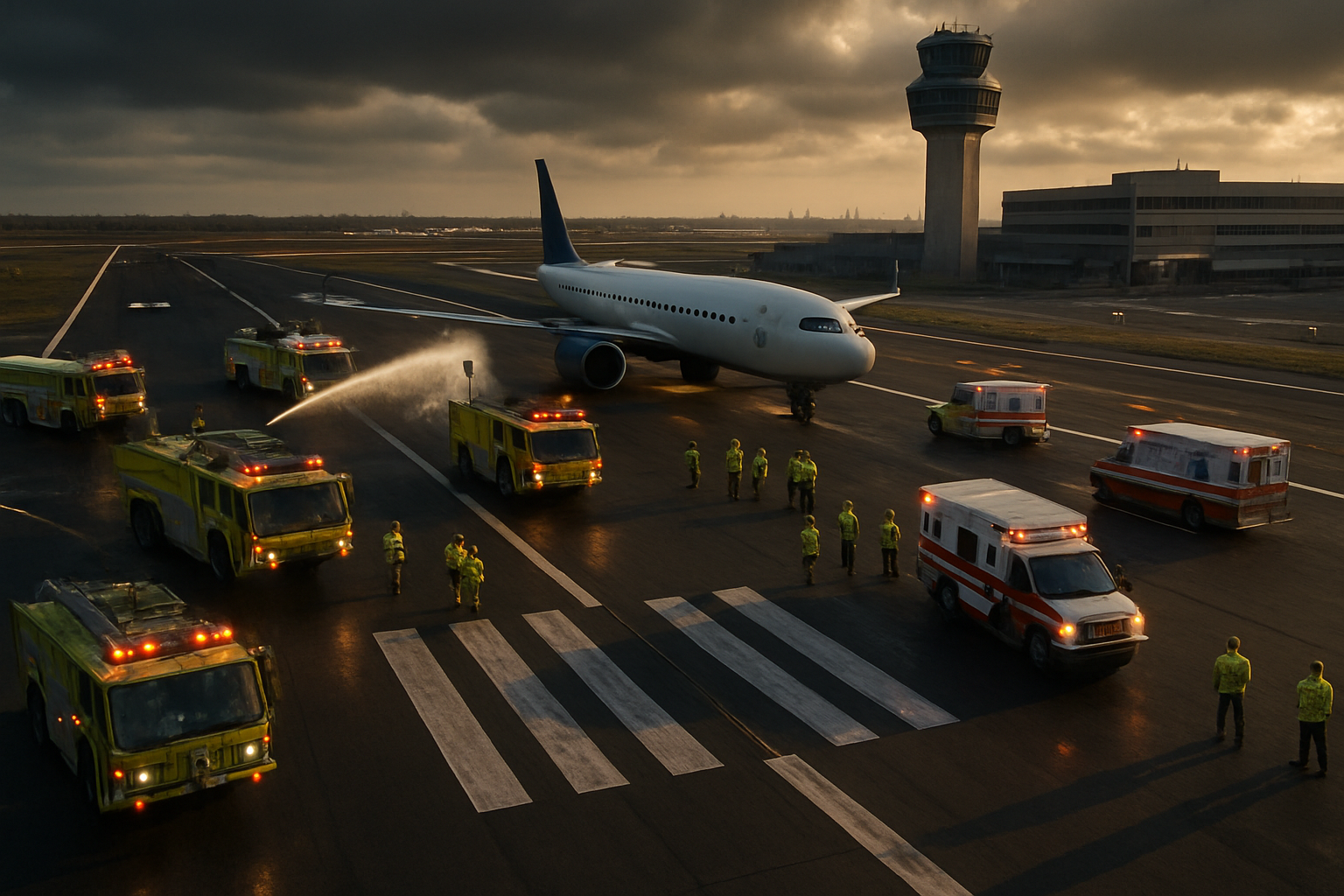
A devastating collision between an Air Canada Express jet and a fire truck at LaGuardia Airport has killed two pilots and injured dozens of passengers, while simultaneous safety issues at Newark Airport forced the temporary suspension of flight operations, highlighting mounting concerns about aviation safety protocols at America's busiest airports.
The Air Canada Express CRJ-900 aircraft, operated by Jazz Aviation, collided with a Port Authority aircraft rescue and firefighting vehicle after landing at LaGuardia late Sunday evening, March 22, 2026. The collision occurred at approximately 11:40 PM EST during what authorities describe as routine landing operations.
Both the pilot and co-pilot were killed instantly when the aircraft's nose and cockpit section were completely crushed upon impact. The flight, arriving from Montreal, carried 72 passengers and four crew members. While passenger injuries were largely non-life-threatening due to successful evacuation from the main cabin, thirteen people were hospitalized, including eleven passengers and two first responders from the fire truck.
Newark Airport Compound Crisis
Adding to the aviation safety concerns, Newark Liberty International Airport experienced its own emergency Monday morning when smoke was reported inside the air traffic control tower. Federal Aviation Administration officials confirmed that a burning odor, localized near an elevator within the tower infrastructure, led to the immediate suspension of flights at approximately 7:30 AM.
Air traffic control operations were relocated to a backup facility while emergency services investigated the source of the smoke. Flight operations resumed approximately one hour later, but the incident created additional stress on the already strained New York metropolitan aviation network following the LaGuardia closure.
Operational Impact and Airport Closures
LaGuardia Airport remains completely closed through Monday at 2:00 PM minimum, with the FAA issuing a comprehensive ground stop affecting thousands of passengers. As a critical domestic hub, the closure has created ripple effects throughout the national aviation network, forcing airlines to cancel or reroute hundreds of flights.
The timing of these incidents during peak travel periods has compounded the disruption. Airport authorities and emergency responders have established comprehensive protocols to manage passenger assistance, rebooking, and accommodation needs while investigations proceed.
Investigation and Safety Protocols Under Scrutiny
Federal authorities, including the National Transportation Safety Board (NTSB) and FAA, have launched comprehensive investigations into the LaGuardia collision. Initial reports indicate the fire truck was responding to a separate, unrelated emergency incident when it was struck by the landing aircraft during routine operations.
NTSB investigators are focusing on several key areas: mechanical systems performance, weather conditions at the time of landing, communication protocols between air traffic control and emergency vehicles, and coordination procedures for simultaneous aircraft operations and ground emergency responses.
"This tragic incident highlights critical vulnerabilities in coordinating emergency responses with active flight operations at our busiest airports. We're examining every aspect of our safety protocols to prevent similar occurrences."
— Senior FAA Official
The investigation has ruled out terrorism or hostile activity, confirming the collision occurred during standard landing procedures. However, the incident raises significant questions about the adequacy of current protocols for coordinating emergency vehicle movements with active aircraft operations.
Pattern of Aviation Safety Challenges in 2026
These incidents occur within the context of a particularly challenging year for aviation safety globally. The industry has faced an unprecedented series of disruptions, including the recent Middle East crisis that resulted in over 18,000 flight cancellations worldwide, multiple safety incidents across continents, and ongoing concerns about aging infrastructure and emergency response coordination.
Aviation safety experts note that while commercial aviation maintains an exceptional statistical safety record, each incident provides crucial lessons for improving protocols and emergency response procedures. The coordination between aircraft operations and ground emergency services represents a particularly complex operational challenge at busy airports like LaGuardia, which handles millions of passengers annually.
Emergency Response and Casualty Management
The immediate response to the LaGuardia collision involved multiple agencies, including the New York City Fire Department, Port Authority Police, and federal aviation authorities. Emergency responders successfully evacuated passengers from the main cabin section of the aircraft, preventing what could have been a far more catastrophic outcome.
The two first responders injured in the collision were part of the fire truck crew responding to the unrelated emergency. Their injuries underscore the risks faced by emergency personnel working in active airport environments where split-second coordination is essential for safety.
Hospital networks across the New York metropolitan area activated emergency protocols to handle the influx of patients, demonstrating the effectiveness of regional emergency medical coordination systems.
Industry-Wide Safety Implications
The LaGuardia incident represents a critical case study for airport safety procedures globally. Aviation authorities worldwide are closely monitoring the investigation findings, which are expected to influence safety protocols at major airports internationally.
The collision highlights the complex operational environment at busy airports, where aircraft operations must be carefully coordinated with emergency vehicle responses, ground support activities, and air traffic control procedures. The investigation will likely examine whether current safety margins are adequate for managing these simultaneous operations.
Economic and Operational Consequences
Beyond the human tragedy, the incidents have significant economic implications for the aviation industry and passengers. LaGuardia Airport serves as a crucial hub for domestic travel, and its extended closure affects airline operations nationwide. Airlines are implementing emergency protocols including alternative routing strategies, enhanced fuel planning to avoid affected zones, and comprehensive passenger accommodation procedures.
The disruption comes at a time when the aviation industry is still recovering from previous crises, including weather-related disruptions and international conflicts that have strained operational resilience throughout 2026.
Historical Context and Learning Opportunities
This incident joins a concerning pattern of aviation safety challenges that have marked 2026 as a particularly difficult year for the industry. From military aircraft crashes in Bolivia and Colombia to emergency landings due to equipment malfunctions across Europe, the aviation community has faced multiple learning opportunities to enhance safety protocols.
The loss of experienced pilots in the LaGuardia collision represents not only a human tragedy but also the loss of valuable aviation expertise. The industry's commitment to safety depends heavily on the knowledge and skills of experienced flight crews, making such losses particularly significant for the broader aviation community.
Looking Forward: Enhanced Safety Measures
As investigations continue, aviation authorities are already discussing potential enhancements to airport safety procedures. These may include improved communication systems between air traffic control and emergency vehicles, enhanced coordination protocols for simultaneous operations, and potentially redesigned airport layouts to better separate emergency vehicle routes from active aircraft operations.
The incidents at both LaGuardia and Newark demonstrate the interconnected nature of aviation safety, where problems at one major airport can cascade through the entire regional network. This interconnectedness requires comprehensive, system-wide approaches to safety improvement rather than isolated solutions.
The investigation findings from these incidents will likely influence international aviation safety standards for years to come, contributing to the ongoing evolution of airport operations in an increasingly complex aviation environment. The aviation industry's exceptional safety record depends on learning from every incident and continuously improving the systems that protect millions of passengers who travel through airports like LaGuardia and Newark every year.