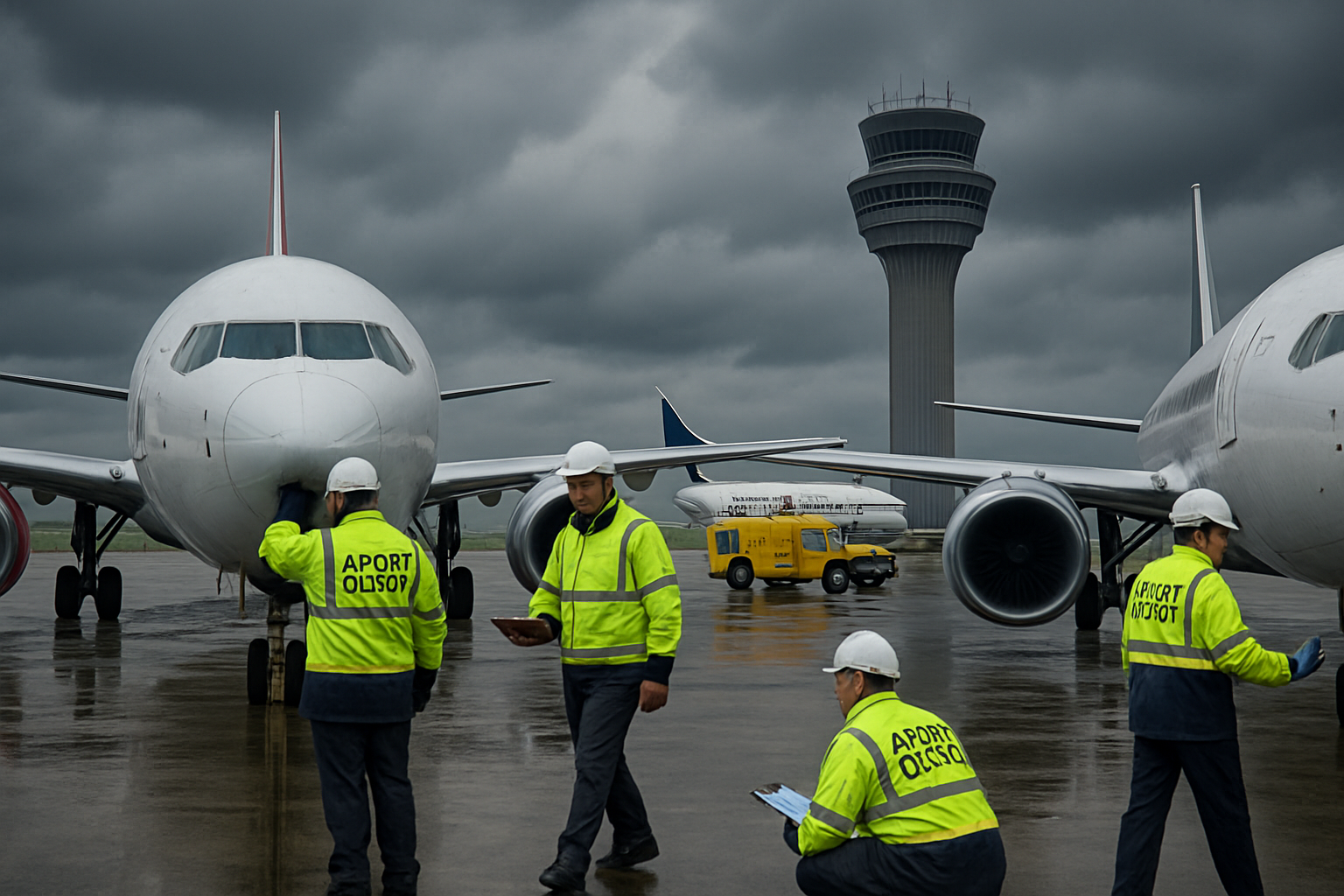
Aviation safety concerns reached a critical juncture in March 2026 as multiple serious incidents across Canada, Colombia, and Europe exposed systemic vulnerabilities in both commercial and military aviation operations, prompting urgent reviews of international safety protocols.
The most tragic incident occurred at LaGuardia Airport on Sunday evening, March 22, when an Air Canada Express Bombardier CRJ-900 collided with a Port Authority fire truck during landing operations. The crash killed both pilots instantly, including Quebec pilot Antoine Forest from Coteau-du-Lac, while injuring 41 passengers and two firefighters. Despite the complete destruction of the aircraft's nose and cockpit sections, the successful evacuation of passengers from the main cabin prevented a far more catastrophic outcome.
LaGuardia Collision Exposes Coordination Failures
The collision at LaGuardia highlighted critical vulnerabilities in airport operations coordination. The fire truck was responding to a separate emergency incident on Runway 4 when struck by the landing aircraft traveling approximately 30 mph after touchdown. Industry experts described the survival of 72 passengers as "miraculous," attributing it to modern aircraft design and effective emergency response protocols.
"It's a miracle more weren't killed," said aviation safety expert, noting that commercial planes are built for flight safety even when encountering unexpected ground obstacles.
— Aviation Industry Insider
The incident forced a complete closure of LaGuardia Airport through Monday afternoon, creating nationwide aviation network disruptions as the facility serves as a critical domestic hub. The NTSB and FAA launched comprehensive investigations focusing on communication protocols between air traffic control and emergency vehicle coordination procedures.
Colombian Military Aviation Tragedy
Meanwhile, in South America, Colombia's military aviation faced its deadliest accident in recent history when a C-130 Hercules transport aircraft crashed during takeoff at Puerto Leguízamo airport in Putumayo province on March 23. The aircraft, carrying 128 personnel including 115 army soldiers, 11 Air Force crew members, and 2 police officers, crashed in the challenging Amazon region near the Ecuador border.
Initial reports of casualties varied dramatically, with official Colombian sources reporting lower figures while international agencies confirmed 69 deaths and 57 injured. The discrepancy reflected the challenging terrain and remote location that complicated rescue operations and casualty assessment.
The crash occurred during a routine military transport mission supporting counter-narcotics and territorial control operations in an area where ground transportation is impractical due to security conditions and terrain challenges. Human stories emerged from the tragedy, including a young soldier from La Guajira who had requested wedding permission for March 26, leaving behind two children and a fiancée.
Investigation Challenges in Remote Areas
Colombian Air Force Commander Carlos Fernando Silva Rueda established a comprehensive Accident Investigation Board examining mechanical systems, weather conditions, pilot procedures, and airport infrastructure. The investigation faces unique challenges due to the Amazon operational environment, including high humidity, tropical conditions, limited runway capacity, and remote emergency response infrastructure.
The black box recovery became a priority as investigators sought to understand what caused the aircraft to crash shortly after takeoff. Local reports indicated that some personnel may have attempted to evacuate before impact, highlighting the desperate final moments of the flight.
In-Flight Medical Emergencies Raise New Concerns
Adding to aviation safety concerns, a disturbing incident on a long-haul flight highlighted inadequate protocols for handling in-flight medical emergencies. A Swedish media report detailed how a woman who died one hour into a long-distance flight was left on the cabin floor for 13 hours as the aircraft continued its journey. Passengers began complaining about odors toward the end of the flight, creating an unprecedented situation that raised questions about crew training for medical emergencies.
The incident underscored gaps in international aviation protocols for handling fatalities during flight operations, particularly on long-haul routes where diversion options may be limited.
Regional Pattern of Military Aviation Challenges
The Colombian tragedy represents the third major aviation accident in the country during 2026, following a broader pattern of military aviation challenges across Latin America. This includes the February 2026 Bolivia C-130 Hercules crash at El Alto Airport that killed 22 people, highlighting persistent vulnerabilities in military aviation operations combining aging equipment with challenging geographic conditions.
Aviation experts note that aging military aircraft fleets operating in demanding tropical and high-altitude environments present unique risks. The C-130 Hercules, while generally reliable, faces particular stresses in complex Amazon operations where traditional safety margins may be reduced due to environmental factors and infrastructure limitations.
Broader Aviation Safety Context
These incidents occurred within the context of 2026 being one of the most challenging years for global aviation since the COVID-19 pandemic. The year has seen unprecedented disruptions including the Middle East crisis that cancelled over 18,000 flights worldwide, multiple European strikes, and various safety incidents across continents.
The International Air Transport Association's 2025 safety report showed 51 aviation accidents among 38.7 million flights globally, maintaining the industry's exceptional statistical safety record. However, each incident provides crucial lessons for protocol improvements and emergency response procedures across the global aviation network.
Technology and Human Factors
Industry experts emphasize that modern aviation safety depends on the intersection of advanced technology and human expertise. The LaGuardia incident demonstrated both the effectiveness of current safety systems—in passenger survival—and the vulnerabilities in coordinating complex airport operations involving multiple agencies and emergency responders.
The push toward predictive rather than reactive safety management has accelerated, with investments in AI-powered maintenance systems, enhanced crew training programs, and improved international cooperation for safety data sharing.
International Response and Future Implications
The series of incidents has prompted calls for enhanced international cooperation in aviation safety standards. The International Civil Aviation Organization (ICAO) is reviewing protocols for emergency vehicle coordination at airports, while military aviation authorities are examining safety procedures for aging aircraft fleets operating in challenging environments.
Investigation findings from both the LaGuardia collision and Colombian military crash are expected to influence global airport safety procedures and military aviation protocols for years to come. The emphasis is shifting toward comprehensive safety frameworks that can adapt to emerging risks while maintaining the essential connectivity that modern aviation provides.
As the aviation industry continues to recover from recent disruptions while managing new challenges, these incidents serve as sobering reminders of the constant vigilance required to maintain safety standards in one of humanity's most complex transportation systems. The lessons learned will undoubtedly strengthen safety frameworks protecting millions of travelers worldwide through improved emergency response coordination, enhanced training protocols, and more robust international cooperation mechanisms.