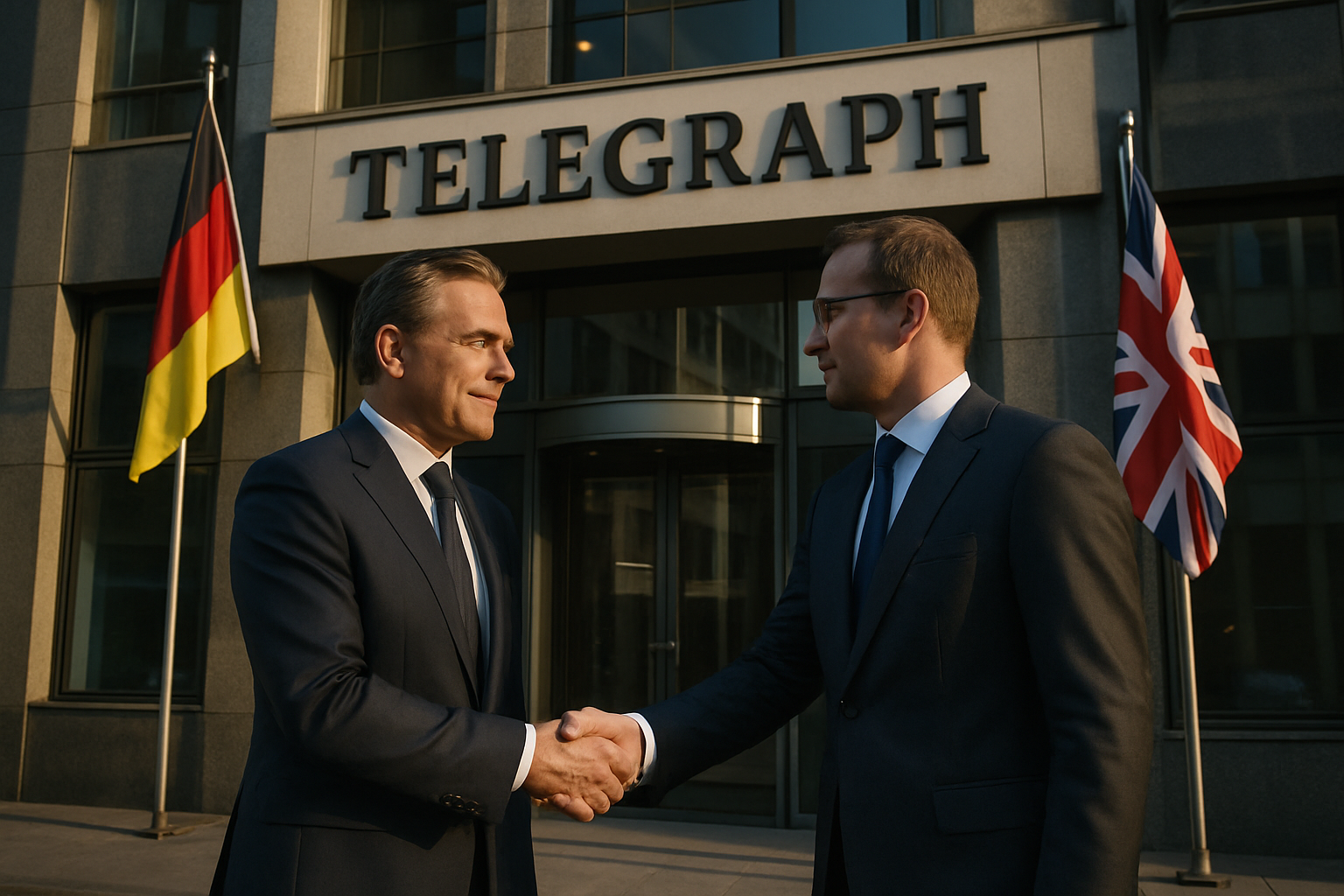
German media conglomerate Axel Springer has successfully completed its £575 million ($766.3 million) acquisition of Britain's Telegraph Media Group, bringing to an end months of ownership uncertainty and marking one of the most significant cross-border media transactions in recent European history.
The all-cash deal, announced Friday, represents Axel Springer's second-largest investment since its founding in 1946, following its $1 billion acquisition of Politico in 2021. The acquisition positions the German publisher as a major force in Anglo-German media relations while preserving one of Britain's most influential conservative newspapers.
Strategic Acquisition Details
The Telegraph purchase becomes Axel Springer's most ambitious European expansion, building on its established portfolio that includes Germany's Bild and Die Welt newspapers. The transaction effectively ended a competitive bidding process that had seen interest from multiple parties, including Daily Mail owner DMGT, which had been pursuing the broadsheet rival amid regulatory scrutiny over media plurality concerns in Britain.
Axel Springer committed to preserving the Telegraph's editorial independence and legacy while providing a platform for international expansion, particularly targeting the lucrative U.S. market. The company reaffirmed its dedication to "high-quality, independent journalism" and media plurality in the British market, addressing regulatory concerns that had complicated previous ownership discussions.
"We will preserve the Telegraph's legacy while providing a platform for expansion, including in the US, and reaffirm our commitment to high-quality, independent journalism."
— Axel Springer Statement
Historical Context and Market Position
The acquisition marks Axel Springer's second attempt to acquire the Telegraph, following a failed bid in 2004. This successful purchase demonstrates the company's long-term strategic interest in British media assets and commitment to expanding its English-language operations beyond its successful Politico acquisition.
The Telegraph Media Group, founded in 1855, represents one of Britain's oldest and most prestigious newspaper brands, with significant influence in conservative political circles and substantial digital readership. The publication has faced ongoing challenges adapting to digital transformation while maintaining its traditional broadsheet authority.
Industry analysts note that the acquisition comes during a period of intense consolidation in European media, driven by digital disruption, declining print revenues, and the need for scale to compete with global technology platforms. The Telegraph's integration into Axel Springer's operations could provide operational synergies and shared resources across multiple markets.
Regulatory Landscape and Media Plurality
The successful completion of the acquisition required navigating complex British media ownership regulations designed to preserve media plurality and prevent excessive concentration. The transaction faced scrutiny from regulatory bodies concerned about foreign ownership of influential British media assets, particularly given ongoing discussions about media independence and foreign influence.
European Commission oversight was minimal, as the combined entity's market share remains below the 20% threshold that typically triggers intervention. The deal's structure as an all-cash transaction simplified regulatory approval processes compared to more complex merger arrangements.
The acquisition's success contrasts with recent challenges facing other major media deals, including the protracted negotiations that have characterized entertainment industry consolidations such as the ongoing Paramount-Warner Bros Discovery merger discussions.
Strategic Implications for European Media
The Telegraph acquisition represents a broader trend toward European media consolidation as traditional publishers seek scale and resources to compete in an increasingly digital marketplace. Axel Springer's expansion strategy reflects confidence in premium journalism's continued viability when properly resourced and strategically positioned.
The deal's emphasis on U.S. expansion aligns with Axel Springer's successful Politico model, which has maintained editorial quality while expanding internationally. This approach suggests a template for European media companies seeking to compete globally without sacrificing local editorial integrity.
Media industry observers note that the acquisition could influence similar cross-border transactions as European publishers seek partnerships and acquisitions to maintain competitiveness against American technology platforms and streaming services that increasingly dominate news consumption patterns.
Financial Structure and Market Impact
The £575 million all-cash structure demonstrates Axel Springer's financial strength and commitment to the acquisition's success. This approach avoids the complex debt arrangements that have complicated other recent media transactions, providing operational flexibility for future investments in editorial quality and digital transformation.
Financial analysts view the transaction as strategically sound, given the Telegraph's established brand recognition, loyal readership, and potential for digital growth under proper investment. The acquisition price reflects both the publication's current operations and potential for expansion into new markets and revenue streams.
The deal's completion during a period of broader media industry uncertainty demonstrates confidence in quality journalism's long-term viability when supported by adequate resources and strategic vision.
Editorial Independence and Future Direction
Axel Springer's commitment to editorial independence addresses concerns about foreign ownership potentially compromising the Telegraph's journalistic integrity. The company's track record with Politico, which has maintained editorial autonomy while benefiting from increased resources, provides a positive precedent for the Telegraph's future operations.
The publisher's emphasis on preserving the Telegraph's conservative editorial positioning while expanding its reach suggests a strategy focused on audience growth rather than fundamental editorial changes. This approach aims to maintain existing reader loyalty while attracting new audiences through improved digital offerings and international content.
Industry experts anticipate that Axel Springer's digital expertise and international perspective could enhance the Telegraph's online presence and subscriber growth, particularly in markets where British journalism maintains strong appeal.
International Media Consolidation Trends
The successful Telegraph acquisition occurs within a broader context of international media consolidation, including major entertainment industry mergers such as the recent $111 billion Paramount-Warner Bros Discovery transaction. These deals reflect industry-wide recognition that scale and diversification are essential for competing in rapidly evolving media markets.
Unlike purely domestic consolidations, cross-border media acquisitions like the Telegraph deal require navigating complex regulatory environments while maintaining cultural sensitivity and editorial authenticity. Axel Springer's approach suggests that successful international media expansion requires commitment to local editorial values alongside global strategic vision.
The transaction's success may encourage similar cross-border partnerships as European media companies seek to combine resources while preserving distinct editorial identities and market positions.
Looking Forward
The completion of Axel Springer's Telegraph acquisition marks a significant milestone in European media consolidation, demonstrating that well-structured cross-border transactions can succeed when they respect editorial independence while providing strategic advantages.
The deal's focus on preserving journalistic quality while enabling expansion reflects growing recognition that media sustainability requires balancing tradition with innovation. Success will ultimately depend on Axel Springer's ability to maintain the Telegraph's editorial authority while leveraging its international resources for growth.
As European media faces continued digital transformation pressure, the Telegraph acquisition provides a template for strategic consolidation that could influence industry development across the continent. The transaction's long-term impact will depend on execution quality and the broader evolution of news consumption patterns in an increasingly digital marketplace.