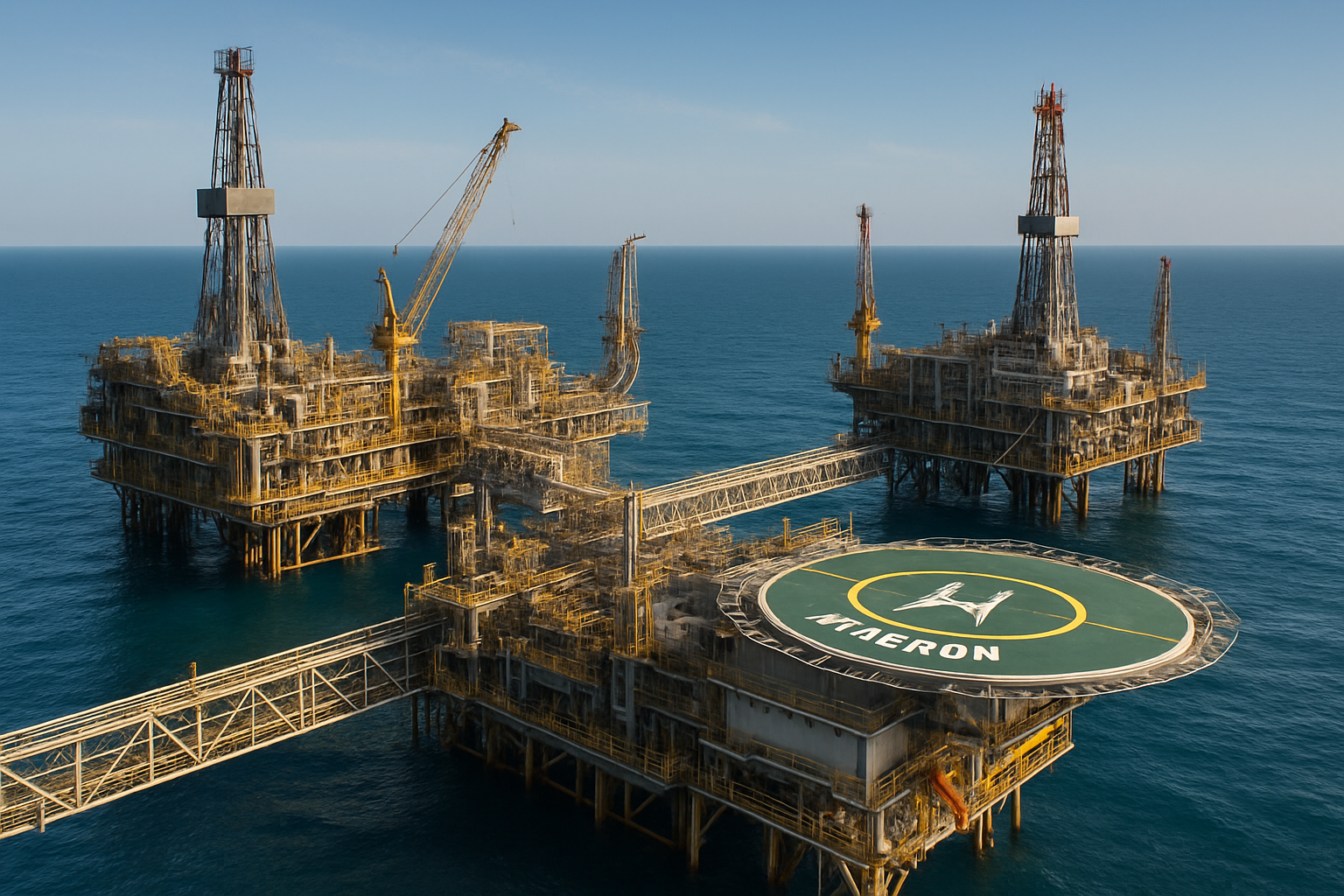
Azerbaijan has announced two major energy developments that underscore the country's strategic positioning as a regional energy hub: first natural gas production from the offshore Absheron field is scheduled to begin September 1, 2029, while Azerenergy has signed procurement contracts with Austrian company GUGLER Water Turbines GmbH for three new hydroelectric power stations in the Karabakh region.
The Absheron field announcement, reported through Total Energies, marks a significant milestone in Azerbaijan's offshore energy expansion in the Azerbaijani sector of the Caspian Sea. This development comes as Azerbaijan continues to consolidate its position as what the U.S. Chamber of Commerce has identified as a key regional energy coordinator, with current U.S.-Azerbaijan trade totaling $74.9 million annually but holding massive expansion potential from Azerbaijan's $27.2 billion in total global exports.
Absheron Field: Strategic Caspian Sea Development
The Absheron field represents a crucial component of Azerbaijan's energy diversification strategy. Located in the Azerbaijani sector of the Caspian Sea, this offshore development is being advanced through international partnerships, demonstrating the country's ability to attract major global energy companies for complex deep-water projects.
The September 2029 production timeline reflects the sophisticated engineering and infrastructure requirements for offshore Caspian Sea operations. This development builds on Azerbaijan's established track record in offshore energy, including bp's substantial $3.4 billion investment in the Shah Deniz gas field, which has positioned Azerbaijan as a vital link in European energy security through the Southern Gas Corridor.
Total Energies' involvement in the Absheron project represents the continuation of major international confidence in Azerbaijan's energy sector. The project's timeline allows for comprehensive technical preparation, environmental compliance, and infrastructure development necessary for successful offshore gas production in Caspian Sea conditions.
Karabakh Hydroelectric Expansion
Simultaneously, Azerenergy Open Joint Stock Company has signed significant procurement contracts with Austria's GUGLER Water Turbines GmbH for the supply of electromechanical equipment for three new small hydroelectric power stations (SHPs) in the Karabakh region. This million-dollar deal represents a strategic investment in renewable energy infrastructure in Azerbaijan's liberated territories.
The Austrian partnership demonstrates international confidence in Azerbaijan's reconstruction efforts in Karabakh, where the government has been systematically developing infrastructure following the 2020 conflict resolution. GUGLER Water Turbines GmbH brings specialized expertise in small-scale hydroelectric systems that are particularly suitable for regional energy distribution and grid stability.
These hydroelectric developments align with Azerbaijan's broader energy diversification goals, complementing the country's oil and gas resources with renewable energy capacity. The projects will contribute to regional energy security while providing economic opportunities in areas undergoing reconstruction and development.
Regional Energy Hub Positioning
These developments occur within the context of Azerbaijan's emergence as a strategic East-West energy corridor. The country has successfully leveraged its geographic position between Europe and Asia to become what industry observers describe as a critical energy coordinator for regional security.
Historical context reveals Azerbaijan's systematic approach to energy partnership development. In February 2026, Vice President JD Vance and President Ilham Aliyev signed a historic Strategic Partnership Charter establishing comprehensive bilateral cooperation frameworks, including TRIPP project provisions for regional economic opportunities and energy cooperation expansion through Chamber of Commerce business missions.
The timing of these announcements coincides with significant global energy market volatility, where natural gas prices have surged 24% in Europe and 78% in the United States, highlighting Azerbaijan's strategic value as an alternative energy supplier. The country's positioning as an attractive investment destination with regional hub capabilities between Europe-Asia energy markets continues to attract international attention.
Economic Diversification Success
Azerbaijan's energy developments reflect broader economic transformation success. The country achieved a historic economic diversification milestone with non-oil GDP reaching 52.7% of total output by December 2025, representing 8.6% growth in non-oil sectors despite declining oil production. This diversification provides a foundation for sustainable investment in renewable energy projects beyond traditional energy exports.
The Austrian hydroelectric partnership specifically demonstrates how international cooperation can support both reconstruction efforts in Karabakh and renewable energy deployment. GUGLER's expertise in small hydroelectric systems offers technology transfer opportunities that could benefit broader regional development.
International Cooperation Framework
The Absheron field and Karabakh hydroelectric projects exemplify Azerbaijan's multi-vector energy diplomacy. The country has successfully attracted partners from France (Total Energies) for offshore gas development and Austria (GUGLER) for renewable energy infrastructure, while maintaining strategic relationships with multiple international partners.
This approach has been reinforced through recent diplomatic initiatives, including the February 2026 C6 conference in Baku, which established institutional frameworks for regional cooperation with working groups, investment committees, and monitoring mechanisms. As CAIR Chairman Farid Shafiyev described, Central Asia represents "natural partners" rather than merely neighbors for Azerbaijan's energy strategy.
Future Energy Security Implications
The September 2029 timeline for Absheron field production positions Azerbaijan to respond to evolving European energy security needs. With ongoing geopolitical tensions affecting traditional energy supply routes, Azerbaijan's expansion of gas production capacity through projects like Absheron provides additional flexibility for European partners seeking supply diversification.
The Karabakh hydroelectric projects contribute to Azerbaijan's renewable energy portfolio while supporting regional reconstruction. These small hydroelectric stations will provide distributed generation capacity, improving grid resilience and reducing dependence on centralized power systems.
Together, these projects demonstrate Azerbaijan's comprehensive approach to energy development, combining offshore fossil fuel production with renewable energy infrastructure to maintain its strategic position as a reliable energy partner for both European and regional markets.
Technology and Infrastructure Integration
Both projects represent sophisticated technology integration approaches. The Absheron field requires advanced offshore drilling and production technologies adapted to Caspian Sea conditions, while the Austrian hydroelectric partnership brings specialized small-scale renewable energy systems suitable for mountainous terrain in Karabakh.
The development timeline allows for comprehensive environmental compliance and community engagement, reflecting international best practices for energy infrastructure development. These projects demonstrate how modern energy development incorporates digital monitoring, smart grid management, and automated efficiency systems.
As Azerbaijan continues to position itself as a bridge between European and Asian energy markets, these projects provide concrete examples of how strategic planning, international cooperation, and technological innovation can create sustainable energy solutions that serve both domestic development needs and regional energy security objectives.