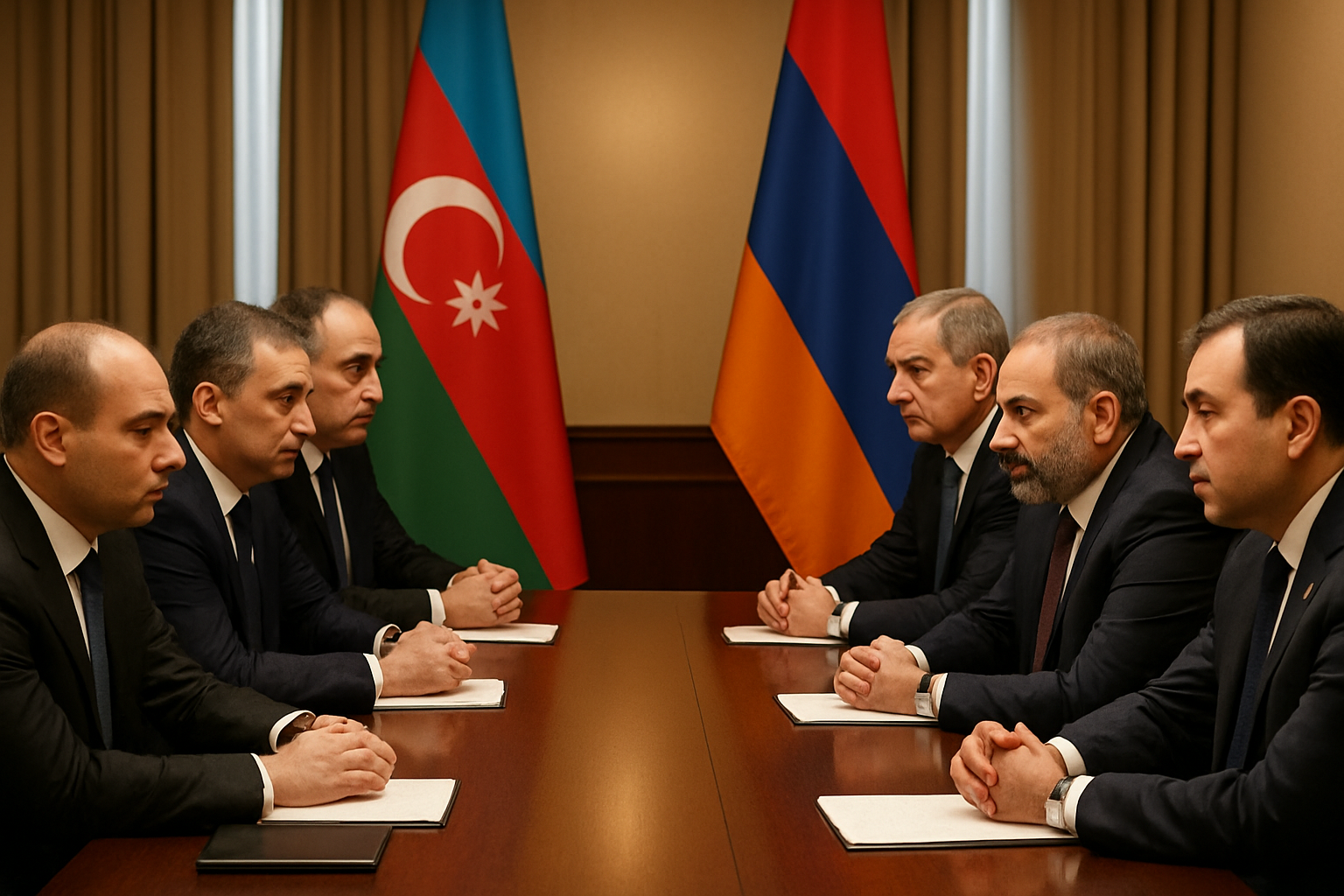
Azerbaijani President Ilham Aliyev has emphasized the importance of mutual visits between Azerbaijani and Armenian civil society representatives, highlighting how these exchanges contribute to establishing "normal atmosphere" between the two nations during a significant period of regional diplomatic progress.
The diplomatic engagement comes as both nations continue working toward comprehensive peace process normalization following the September 2023 military operation that ended decades of Armenian control over Nagorno-Karabakh. President Aliyev's recent discussions with international partners, including his conversation with Latvian counterpart President Edgars Rinkēvičs, have consistently focused on updating the broader international community about the Azerbaijan-Armenia peace process developments.
Civil Society Bridge-Building Initiative
The growing emphasis on civil society engagement represents a strategic shift toward people-to-people diplomacy as a foundation for lasting peace. These exchanges between media representatives, cultural organizations, and civic groups from both countries are creating practical channels for understanding and cooperation beyond formal government negotiations.
According to diplomatic sources familiar with the discussions, the civil society component has become increasingly important in recent months as both governments recognize that sustainable peace requires broad societal support rather than merely elite-level agreements. The mutual visits have included journalists, educators, business representatives, and cultural figures working to build practical cooperation frameworks.
Complex Historical Context
The current peace initiatives build upon decades of complex regional dynamics in the South Caucasus. The relationship between Azerbaijan and Armenia has been shaped by the prolonged conflict over Nagorno-Karabakh, which began in 1991 and resulted in approximately 30,000 deaths over three decades of intermittent warfare.
The decisive September 2023 Azerbaijani military operation fundamentally altered the regional security landscape by ending Armenian control over the internationally recognized Azerbaijani territory. This development created new opportunities for comprehensive peace arrangements while simultaneously presenting challenges for managing post-conflict reconciliation processes.
"The establishment of normal relations requires sustained commitment from both societies, not just governments. These civil society exchanges are building the human connections that make lasting peace possible."
— Regional diplomatic observer familiar with the peace process
Regional and International Dimensions
The Azerbaijan-Armenia peace process is occurring within a broader context of South Caucasus transformation that has attracted significant international attention. The February 2026 visit by U.S. Vice President JD Vance to the region, which included the signing of a Strategic Partnership Charter with Azerbaijan, demonstrated growing American engagement in South Caucasus stability.
Armenia's simultaneous pursuit of European integration aspirations has added complexity to the regional diplomatic equation. Prime Minister Nikol Pashinyan's March 2026 address to the European Parliament explicitly identified Armenia's desire for closer ties with European institutions, creating a multi-dimensional diplomatic environment that requires careful navigation by all parties.
The European Court of Human Rights has also played a role in the post-conflict landscape, with an April 2026 ruling requiring Azerbaijan to provide complete court transcripts regarding Armenian prisoners by August 31, 2026. This intervention represents direct international judicial oversight in the aftermath of the territorial resolution.
Energy and Economic Cooperation Framework
Azerbaijan's role as a strategic energy coordinator has become increasingly prominent in international discussions, particularly given European energy security concerns following global disruptions. The country's position as an East-West energy hub through initiatives like the Southern Gas Corridor provides economic incentives for regional stability.
Current U.S.-Azerbaijan trade stands at $74.9 million annually, with significant expansion potential from Azerbaijan's $27.2 billion in global exports. The Chamber of Commerce has positioned Azerbaijan as a key regional energy coordinator, a role that creates natural incentives for maintaining peaceful relationships with neighboring countries including Armenia.
Challenges and Implementation
Despite the positive momentum in civil society exchanges, significant challenges remain in translating grassroots cooperation into comprehensive peace agreements. The process must address complex issues including displaced populations, economic integration, security arrangements, and historical reconciliation.
The international community, including organizations such as the European Union and various United Nations bodies, continues to support confidence-building measures while encouraging direct dialogue between the parties. The focus on civil society engagement represents recognition that sustainable peace requires broad-based societal commitment beyond formal diplomatic agreements.
Recent developments have also highlighted the intersection between regional peace processes and broader geopolitical dynamics, including great power competition and changing alliance structures in the post-Soviet space. Both Azerbaijan and Armenia must navigate these international pressures while maintaining focus on bilateral relationship normalization.
Future Prospects
The emphasis on civil society engagement and "normal atmosphere" creation suggests a long-term approach to peace-building that goes beyond immediate political settlements. This methodology recognizes that sustainable peace in the South Caucasus requires addressing not only territorial and security issues but also the social and cultural dimensions of reconciliation.
International observers note that the current approach represents learning from post-conflict experiences worldwide, where societies have achieved lasting peace through sustained people-to-people engagement alongside formal diplomatic processes. The mutual visits between Azerbaijani and Armenian representatives provide a practical foundation for broader relationship normalization.
As both nations continue navigating their respective international partnerships and domestic priorities, the civil society dimension offers a pathway for building trust and cooperation that can withstand political changes and regional pressures. The success of these exchanges may well determine whether the current diplomatic momentum translates into comprehensive and lasting peace in the South Caucasus.