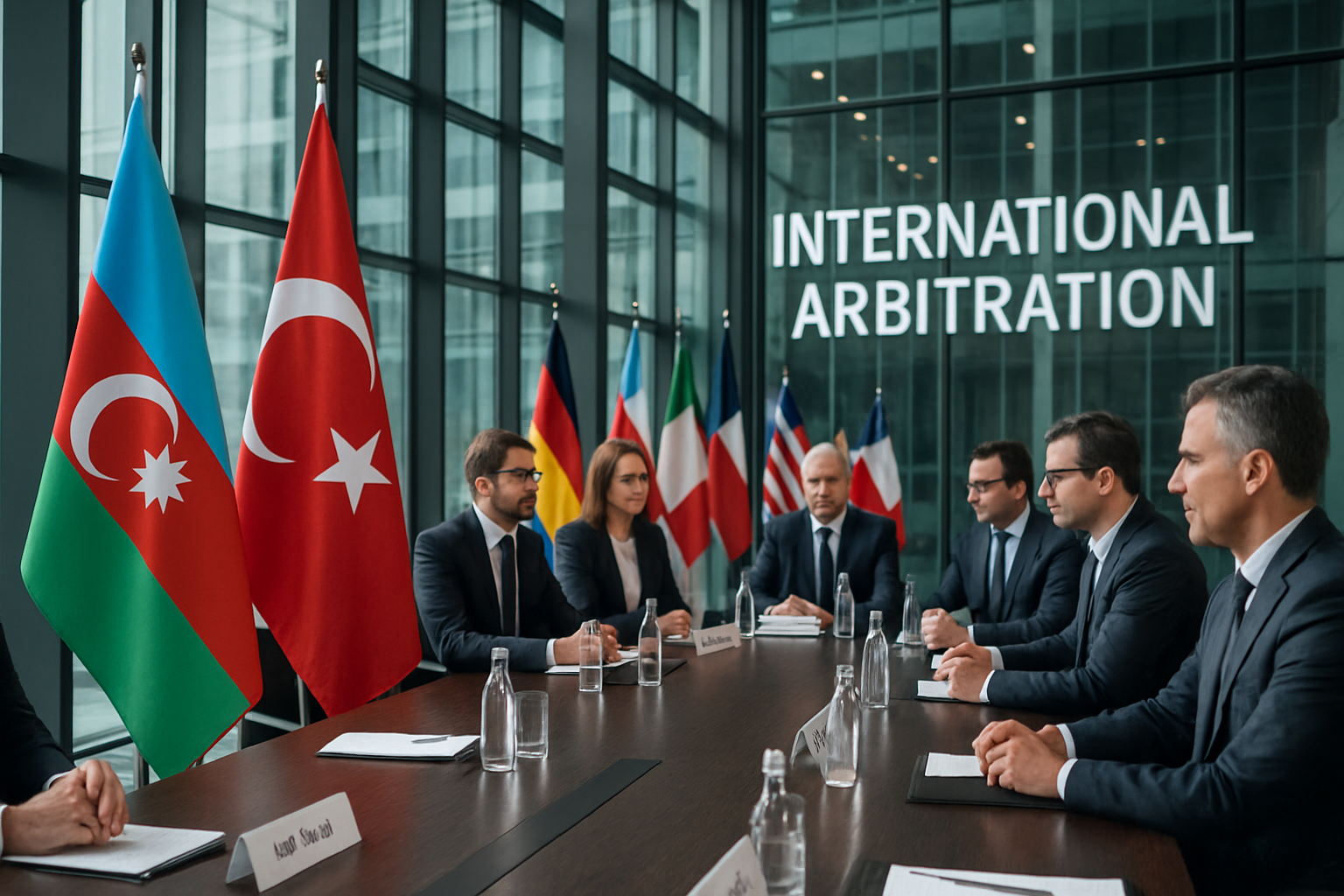
Azerbaijan has taken a significant step forward in international legal affairs by co-hosting a major arbitration conference during the prestigious 10th Paris Arbitration Week, signaling the nation's growing prominence in global dispute resolution frameworks.
The Azerbaijan and Turkish Arbitration Associations jointly organized a conference titled "Development of Regional and International Arbitration in Azerbaijan and the Region" at the Cultural Center, highlighting the strategic partnership between these two nations in advancing legal cooperation and institutional capacity building.
Strategic Importance of International Arbitration
This conference represents more than a diplomatic gathering—it demonstrates Azerbaijan's commitment to establishing itself as a key player in international legal frameworks. The timing coincides with broader regional initiatives to strengthen institutional capacity, particularly in light of historical context where international arbitration has played crucial roles in resolving complex disputes across various sectors.
The Paris Arbitration Week, now in its 10th edition, serves as one of the world's premier forums for arbitration professionals, legal practitioners, and policymakers to discuss emerging trends and challenges in international dispute resolution. Azerbaijan's participation alongside Turkey underscores the growing sophistication of regional legal institutions.
Regional Legal Cooperation Framework
The partnership between Azerbaijan and Turkey in hosting this conference reflects deeper strategic cooperation in legal affairs. Both nations have been working to strengthen their arbitration capabilities, particularly in sectors critical to their economies including energy, mining, and infrastructure development.
"This collaboration represents a new phase in regional legal cooperation, where nations are actively building institutional capacity to handle complex international disputes."
— Legal Affairs Expert
The conference addressed several key themes relevant to both countries' economic development strategies. These include the establishment of modern legal frameworks that can attract international investment while protecting national sovereignty, and the development of skilled legal professionals capable of handling sophisticated arbitration cases.
Global Context and Precedents
Azerbaijan's initiative comes at a time when international arbitration is experiencing unprecedented growth globally. Recent examples from other regions demonstrate the critical importance of robust arbitration systems. Sierra Leone's collaboration with Hogan Lovells London in developing arbitration capacity for mining and power sectors, and similar initiatives across West Africa, highlight a continental trend toward strengthening legal frameworks.
The establishment of modern arbitration systems has proven essential for countries seeking to attract international investment while maintaining regulatory oversight. The African Finance Corporation's identification of $29.5 trillion in mineral reserves across the continent, with $8.6 trillion untapped, illustrates the scale of economic activity requiring sophisticated legal frameworks.
Economic Development Implications
For Azerbaijan, strengthening arbitration capacity serves multiple strategic objectives. As the country continues developing its energy sector and expanding into new economic areas, having robust dispute resolution mechanisms becomes crucial for maintaining investor confidence and managing complex international partnerships.
The conference also addressed practical challenges facing regional arbitration systems, including the need for specialized training programs, modernized legal frameworks, and enhanced institutional coordination. These elements are essential for creating arbitration systems that can effectively handle the increasingly complex nature of international commercial disputes.
Building Institutional Capacity
The joint approach taken by Azerbaijan and Turkey reflects best practices in institutional development. By collaborating with established international partners and participating in prestigious forums like Paris Arbitration Week, both countries are positioning themselves to benefit from knowledge transfer and professional networks essential for effective arbitration systems.
This strategy mirrors successful approaches implemented elsewhere, where countries have combined domestic capacity building with international partnerships to create robust legal frameworks. The emphasis on regional cooperation also provides advantages in handling cross-border disputes and creating consistent legal approaches across neighboring jurisdictions.
Future Implications
Azerbaijan's participation in Paris Arbitration Week and the subsequent conference represents a template that other developing nations can follow in strengthening their international legal capacity. The focus on practical implementation, combined with high-level international engagement, provides a sustainable approach to institutional development.
The success of this initiative will likely be measured not just in terms of immediate outcomes, but in the long-term development of Azerbaijan's capacity to handle complex international disputes, attract foreign investment, and maintain its position as a regional leader in legal innovation.
As international arbitration continues to evolve, Azerbaijan's proactive approach to building institutional capacity and fostering regional cooperation positions the country well for future challenges in international legal affairs. The combination of strategic partnerships, professional development, and institutional modernization provides a comprehensive framework for sustained progress in this critical area.