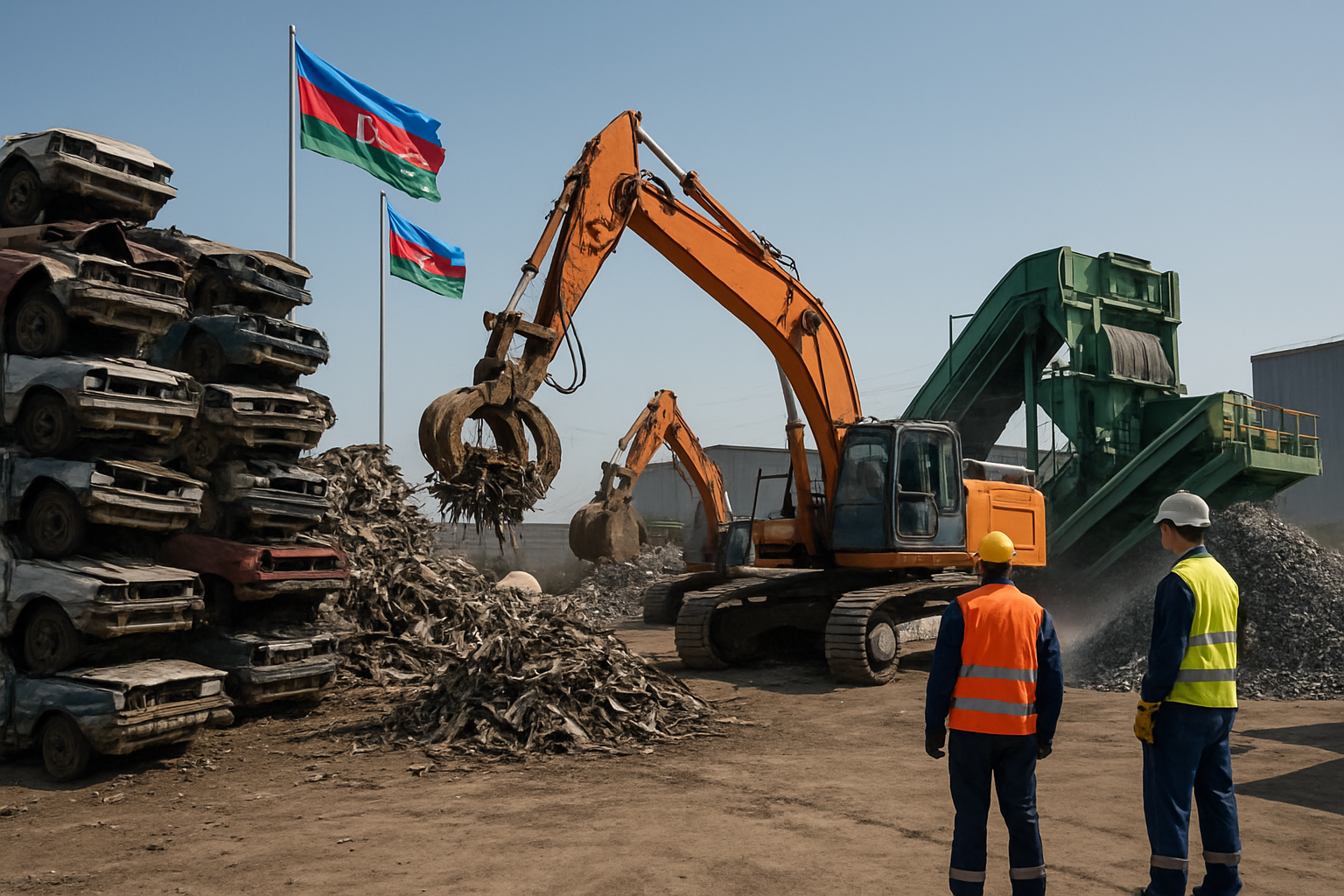
Azerbaijan has achieved a significant environmental milestone, recycling over 23,000 old and end-of-life vehicles through its nationwide green initiative, while simultaneously launching a major digital transformation project for its railway infrastructure that promises to revolutionize transportation connectivity.
"Təmiz Şəhər" (Clean City) OJSC continues to expand its comprehensive vehicle recycling program, representing one of the most ambitious environmental initiatives in the South Caucasus region. The program addresses the growing challenge of automotive waste while positioning Azerbaijan as a leader in sustainable resource management and circular economy principles.
Massive Scale Environmental Impact
The recycling of over 23,000 vehicles represents a substantial environmental achievement, removing thousands of tons of metal, rubber, and hazardous materials from Azerbaijan's landscape. Each recycled vehicle eliminates potential soil and groundwater contamination while recovering valuable materials for reuse in manufacturing processes.
This initiative builds on Azerbaijan's broader environmental transformation strategy, which has gained international recognition. The U.S. Chamber of Commerce has identified Azerbaijan as a key East-West energy coordinator, with current annual trade of $74.9 million and massive expansion potential from the country's $27.2 billion in global exports.
Railway Digital Transformation Initiative
Parallel to the environmental achievements, the Asian Development Bank (ADB) has launched procurement procedures for the "Azerbaijan Railways Digital Transformation Project," announcing an international tender for comprehensive infrastructure modernization. This initiative represents a strategic investment in Azerbaijan's position as a crucial transportation hub connecting Europe and Asia.
The digital railway transformation aligns with Azerbaijan's emergence as a regional energy and transportation corridor. The country has advanced significant infrastructure projects, including the Black Sea green power corridor requiring the world's longest and deepest subsea cables, demonstrating sophisticated technological integration capabilities.
Strategic Regional Positioning
Azerbaijan's dual focus on environmental sustainability and digital infrastructure transformation reflects its strategic positioning within the broader Central Asian renewable energy corridor. In March 2026, Kazakhstan's parliament ratified a historic green energy partnership agreement with Azerbaijan and Uzbekistan, creating the world's first transcontinental green energy corridor connecting Central Asia to European markets.
The country has successfully diversified its economy beyond traditional energy exports, achieving non-oil GDP of 52.7% of total output by December 2025, with 8.6% growth in the non-oil sector. This economic transformation provides a foundation for sustainable investment in both environmental protection and advanced infrastructure development.
Technology Integration and Innovation
The convergence of vehicle recycling programs and railway digitalization demonstrates Azerbaijan's sophisticated approach to technology integration. The environmental initiatives incorporate advanced materials recovery systems, while the railway project will feature digital monitoring, smart grid management, and automated efficiency systems.
Azerbaijan's telecommunications sector has pioneered regional innovations, including the launch of solar-powered GPON (Gigabit Passive Optical Network) stations in Qarasaqqal and Mollakənd villages. This integration of renewable energy with critical telecommunications infrastructure provides a template for sustainable technology deployment across the region.
International Cooperation Framework
The success of Azerbaijan's environmental and infrastructure initiatives reflects sophisticated international cooperation strategies. The February 2026 C6 conference in Baku established comprehensive cooperation mechanisms including working groups, joint investment committees, and monitoring systems for regional collaboration.
CAIR Chairman Farid Shafiyev emphasized that "Central Asia is not merely a neighbor for Azerbaijan, but a natural partner," highlighting the strategic importance of regional integration in advancing both environmental protection and infrastructure development goals.
Environmental and Economic Benefits
The vehicle recycling program creates multiple economic benefits beyond environmental protection. The initiative supports job creation in processing facilities, develops expertise in materials recovery technology, and positions Azerbaijan as a leader in automotive waste management for the broader region.
Combined with the railway digital transformation, these projects demonstrate how environmental protection functions as an economic development strategy rather than a regulatory burden. The initiatives create employment in green technology sectors while establishing Azerbaijan as a hub for sustainable infrastructure development.
Global Climate Context
These developments occur during a critical period for global environmental action, with January 2026 marking the 18th consecutive month of temperatures exceeding 1.5°C above pre-industrial levels. Azerbaijan's proactive approach to environmental challenges, combined with strategic infrastructure investments, positions the country to contribute meaningfully to international climate goals while maintaining economic growth.
The success of both the vehicle recycling program and railway digitalization project provides templates for other nations seeking to balance environmental protection with economic development and technological advancement.
Future Expansion Plans
The momentum generated by these initiatives suggests continued expansion of Azerbaijan's environmental and infrastructure programs. The country's strategic positioning as an East-West corridor, combined with its proven capability in managing large-scale technological projects, creates opportunities for additional international partnerships and investment.
As the global community faces increasing pressure to address climate change while maintaining economic competitiveness, Azerbaijan's integrated approach to environmental sustainability and digital infrastructure transformation offers valuable lessons for sustainable development strategies worldwide.