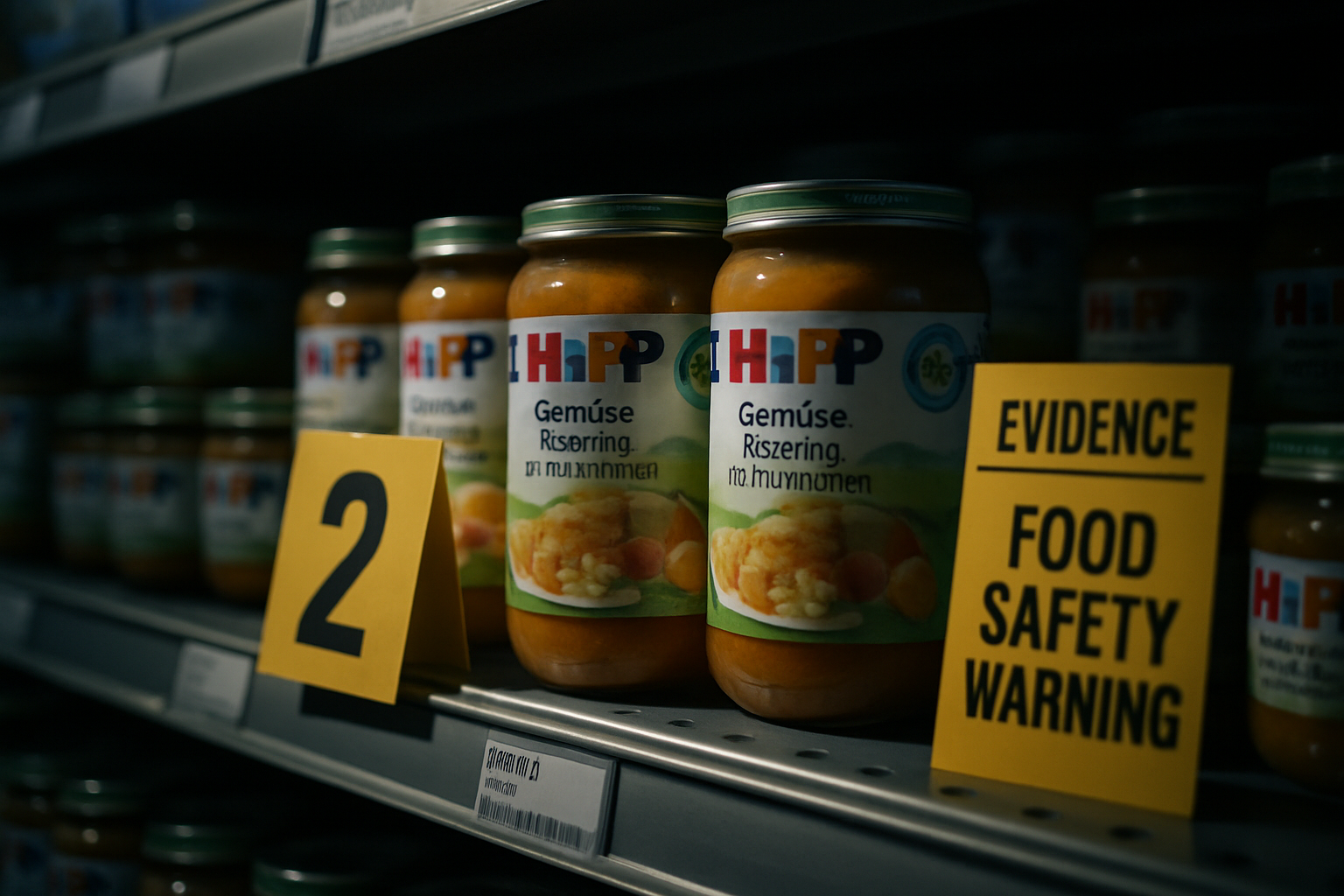
A shocking criminal extortion scheme has rocked the European baby food industry after investigators confirmed that rat poison was deliberately introduced into HiPP baby food products across multiple countries, with criminals demanding €2 million from the German manufacturer in what authorities are calling the most serious deliberate infant food contamination in European history.
German federal police launched an international manhunt in coordination with Austrian, Czech, and Slovak authorities after at least five contaminated baby food jars were discovered containing rat poison in retail stores across the three countries. The criminal operation targeted HiPP's popular "Carrots and Potatoes" baby food variety, threatening the lives of vulnerable infants.
Criminal Operation Details
According to Swedish media reports, the extortion began with an email sent to HiPP Germany in late March 2026, demanding €2 million in ransom. When the company allegedly failed to respond by the criminals' deadline, the perpetrators carried out their threat by contaminating products already in the retail supply chain.
Austrian Health Minister Korinna Schumann issued urgent warnings to parents, childcare facilities, and medical centers to exercise "heightened caution" - the highest infant food alert in recent Austrian history. The contaminated products have been identified by distinctive warning signs including red circle stickers on jar bottoms, damaged safety seals, unusual odors, and evidence of tampering.
Romanian media reports indicate coordinated police searches targeting a sophisticated criminal network with detailed insider knowledge of food distribution systems. The criminals demonstrated professional-level understanding of supply chain vulnerabilities, suggesting organized involvement rather than opportunistic crime.
International Response and Recalls
HiPP Germany immediately implemented voluntary recalls of entire baby food jar assortments from Austrian retailer SPAR, suspending distribution pending investigation completion. The Austrian food safety agency AGES responded by increasing inspection protocols by 300%, implementing mandatory molecular testing for heat-stable toxins that can survive conventional pasteurization.
The contamination has been confirmed in retail locations across Austria's Eisenstadt-Umgebung district, with authorities in Czech Republic and Slovakia conducting parallel investigations. Estonian and Lithuanian food safety authorities have also issued warnings after confirming at least one contaminated jar was identified through their monitoring systems.
Switzerland's food safety authorities confirmed HiPP voluntary recalls and distribution suspension pending investigation completion, demonstrating the international scope of the criminal operation's impact on infant nutrition security.
Historical Context of Food Safety Crisis
This deliberate contamination represents a dangerous escalation from accidental food safety incidents to criminal targeting of vulnerable infant populations. The scandal unfolds during what experts call the 21st consecutive month of global temperatures exceeding 1.5°C above pre-industrial levels, creating optimal pathogen growth conditions that have already strained food safety systems worldwide.
The criminal scheme follows a devastating pattern of infant formula contamination affecting 36+ European infants from cereulide toxin found in Nestlé and Danone products across the UK, France, Luxembourg, and Greece. However, this case marks the first confirmed deliberate contamination attempt for financial extortion, raising unprecedented concerns about food system vulnerability to criminal exploitation.
Law Enforcement Precedent
Federal Criminal Police are coordinating with German authorities and Europol for what represents the most serious test of democratic governments' capacity to regulate multinational supply chains and protect vulnerable populations from criminal exploitation. The success of cross-border enforcement capabilities will determine whether criminals can exploit regulatory gaps versus coordinated international responses protecting public health.
The investigation has revealed sophisticated criminal knowledge of food distribution networks, suggesting possible insider access or extensive surveillance of industry operations. This level of preparation indicates organized criminal activity rather than isolated threats, requiring enhanced security protocols throughout the food production and distribution chain.
Consumer Safety Measures
Authorities have issued specific guidance for parents and caregivers to identify potentially contaminated products. Warning signs include red circle stickers affixed to jar bottoms, damaged or missing safety seals, unusual chemical odors emanating from products, and any evidence of package tampering.
Parents are advised to immediately dispose of any HiPP baby food products showing these warning signs and contact healthcare providers if infants have consumed potentially contaminated food. Symptoms of rat poison exposure in infants can be life-threatening and require immediate medical intervention.
Economic and Industry Impact
The extortion scheme has accelerated declining consumer confidence in multinational food corporations, driving measurable shifts toward local sourcing and simplified supply chains offering transparency and traceability. Rising insurance costs and mandatory molecular testing infrastructure investments are becoming standard requirements across the industry.
The crisis occurs during what food safety experts identify as a critical 2026 transformation window requiring international cooperation, climate-adaptive processing technologies, and prevention-focused approaches integrating traditional wisdom with modern safety science.
Regulatory Evolution
The European Food Safety Authority (EFSA) is accelerating development of standardized international protocols and coordinated early warning systems for cross-border contamination prevention. Enhanced molecular testing capabilities for detecting heat-stable toxins that survive conventional processing are being implemented across member states.
Some jurisdictions are considering criminal executive liability frameworks that would create personal accountability for food safety failures, representing a fundamental shift in corporate responsibility for consumer protection.
Strategic Implications
Food safety experts emphasize that this criminal targeting of infant populations represents a watershed moment requiring unprecedented international cooperation and advanced detection technologies. The resolution will establish crucial precedents for international cooperation versus criminal exploitation of vulnerable populations through food contamination during climate-stressed food systems.
Success requires sustained political commitment, adequate funding, and comprehensive coordination addressing both immediate threats and systemic vulnerabilities. Food safety is increasingly recognized as a global public good requiring collective protection as sophisticated criminal threats target vulnerable populations during the critical climate action decade.
The window for building resilient, equitable food systems continues to narrow rapidly as environmental pressures accelerate and criminal actors seek to exploit vulnerabilities in global supply chains essential for infant nutrition security.