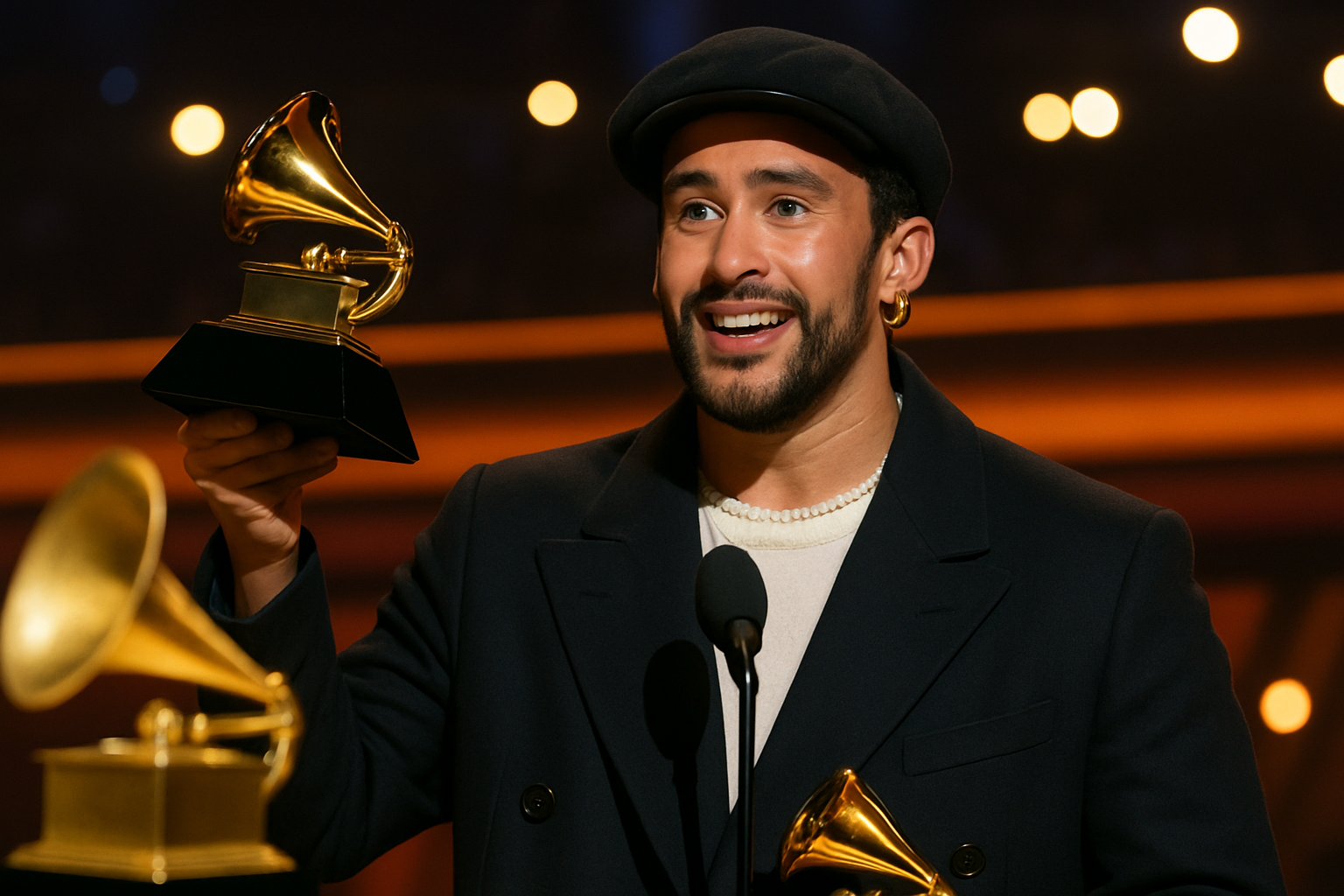
Bad Bunny's historic Grammy victory has transformed from a celebration of Latino artistry into a lightning rod for political controversy, as the Puerto Rican rapper prepares for his Super Bowl halftime performance while facing criticism from President Trump over his Grammy acceptance speech.
The 30-year-old artist, whose real name is Benito Antonio Martínez Ocasio, made history on February 1, 2026, when his album "Debí tirar más fotos" became the first Spanish-language album ever to win Album of the Year at the Grammy Awards in the ceremony's 68-year history. His victory speech, which included powerful pro-immigration statements declaring "Immigrants are the heartbeat of this country" and criticism of ICE enforcement policies, has since become the center of a national debate.
Grammy Victory Becomes Political Statement
Bad Bunny's Grammy triumph represented more than just musical achievement. During his acceptance speech at the Crypto.com Arena in Los Angeles, the artist used his platform to deliver pointed criticism of current immigration policies, stating anti-ICE positions that drew both thunderous applause from the audience and immediate condemnation from conservative political figures.
The victory was particularly significant as Bad Bunny became the first Latino artist to claim the Grammy's most prestigious prize, breaking decades of barriers in an industry that has historically overlooked Spanish-language music for its top honors. His album, which translates to "I Should Have Taken More Photos," explores themes of identity, nostalgia, and social justice that resonated with both Latino and mainstream audiences.
"This victory is not just for me, but for every immigrant who has built this country with their hands and their dreams."
— Bad Bunny, Grammy acceptance speech
Trump Administration Response
President Trump quickly responded to Bad Bunny's Grammy speech, taking to Truth Social to accuse the artist of "spreading hate" and "divisive rhetoric." Trump's criticism focused on what he termed the artist's "anti-American" statements during the ceremony, referencing Bad Bunny's comments about immigration enforcement and his criticism of current administration policies.
The controversy has intensified as Bad Bunny prepares for what may be the most politically charged Super Bowl halftime show in recent memory. Trump has suggested that the NFL's decision to feature the Puerto Rican artist represents a "clear political statement" and has questioned whether the performance should proceed given what he characterizes as Bad Bunny's "divisive agenda."
NFL Stands Firm on Super Bowl Performance
Despite mounting political pressure, NFL Commissioner Roger Goodell has publicly backed Bad Bunny's Super Bowl appearance, describing the halftime show as "a stage for unity, not division." The league's support comes as various political figures call for the artist's removal from the February 9, 2026, championship game festivities.
According to sources within the NFL organization, Bad Bunny's performance has been in development for months and represents a significant investment in showcasing Latino culture to the Super Bowl's massive global audience of over 100 million viewers. The league has emphasized that the halftime show has traditionally featured diverse artists and that Bad Bunny's inclusion reflects America's multicultural landscape.
The controversy has divided opinions along predictable political lines, with supporters praising Bad Bunny's willingness to use his platform for social advocacy, while critics argue that entertainment venues should remain apolitical. The debate has been further complicated by the current political climate surrounding immigration enforcement and the broader tensions between the Trump administration and Latino communities.
Cultural Significance Beyond Politics
Music industry analysts emphasize that Bad Bunny's Grammy victory represents a fundamental shift in American music culture. His success has validated the artistic merit of reggaeton and Latin trap genres, which have often been marginalized despite their massive commercial success and cultural influence.
The artist's album "Debí tirar más fotos" topped Billboard charts for multiple weeks and garnered critical acclaim for its innovative blend of traditional Puerto Rican sounds with contemporary urban music. Industry experts note that Bad Bunny's victory could open doors for other Latino artists and signal a broader recognition of the Hispanic community's contributions to American culture.
Beyond the immediate political controversy, Bad Bunny's achievement has sparked celebrations across Latin America and in Latino communities throughout the United States. Community leaders have described the Grammy win as a moment of validation for Latino identity and artistic expression in mainstream American culture.
Super Bowl Preparations Continue
Despite the political firestorm, preparations for Bad Bunny's Super Bowl halftime performance continue as scheduled. The artist is currently on his "Debí Tirar Más Fotos World Tour," which recently included a successful concert in Medellín, Colombia, demonstrating his continued international appeal and drawing capacity.
Sources close to the production indicate that Bad Bunny's halftime show will feature elaborate choreography, multiple costume changes, and guest appearances from other Latino artists. The performance is expected to showcase Puerto Rican culture and include songs from his Grammy-winning album, though specific details remain closely guarded by NFL officials.
The controversy has only heightened anticipation for the performance, with social media engagement around Bad Bunny's Super Bowl appearance reaching unprecedented levels. Marketing experts suggest that the political debate may actually increase viewership for the halftime show, as audiences tune in to witness what has become one of the most discussed cultural moments of 2026.
Looking Forward: Impact on Latino Representation
The Bad Bunny controversy extends beyond individual politics to broader questions about Latino representation in American entertainment and culture. His Grammy victory and the subsequent backlash highlight ongoing tensions about the role of immigrant communities and Latino voices in American society.
Civil rights organizations have rallied behind Bad Bunny, viewing the criticism of his Grammy speech as part of broader efforts to silence Latino voices in public discourse. Conversely, some conservative commentators argue that major entertainment events should remain politically neutral and that Bad Bunny's comments were inappropriate for the Grammy platform.
As the Super Bowl approaches, the controversy shows no signs of abating. Bad Bunny's team has indicated that he remains committed to his scheduled performance and will not modify his artistic vision in response to political pressure. The NFL has similarly maintained its position supporting the artist's appearance, setting up what promises to be one of the most politically charged Super Bowl halftime shows in the event's history.
The outcome of this controversy may have lasting implications for how entertainment industry events handle political expression by artists and the extent to which cultural celebrations can remain separate from political discourse in an increasingly polarized America.