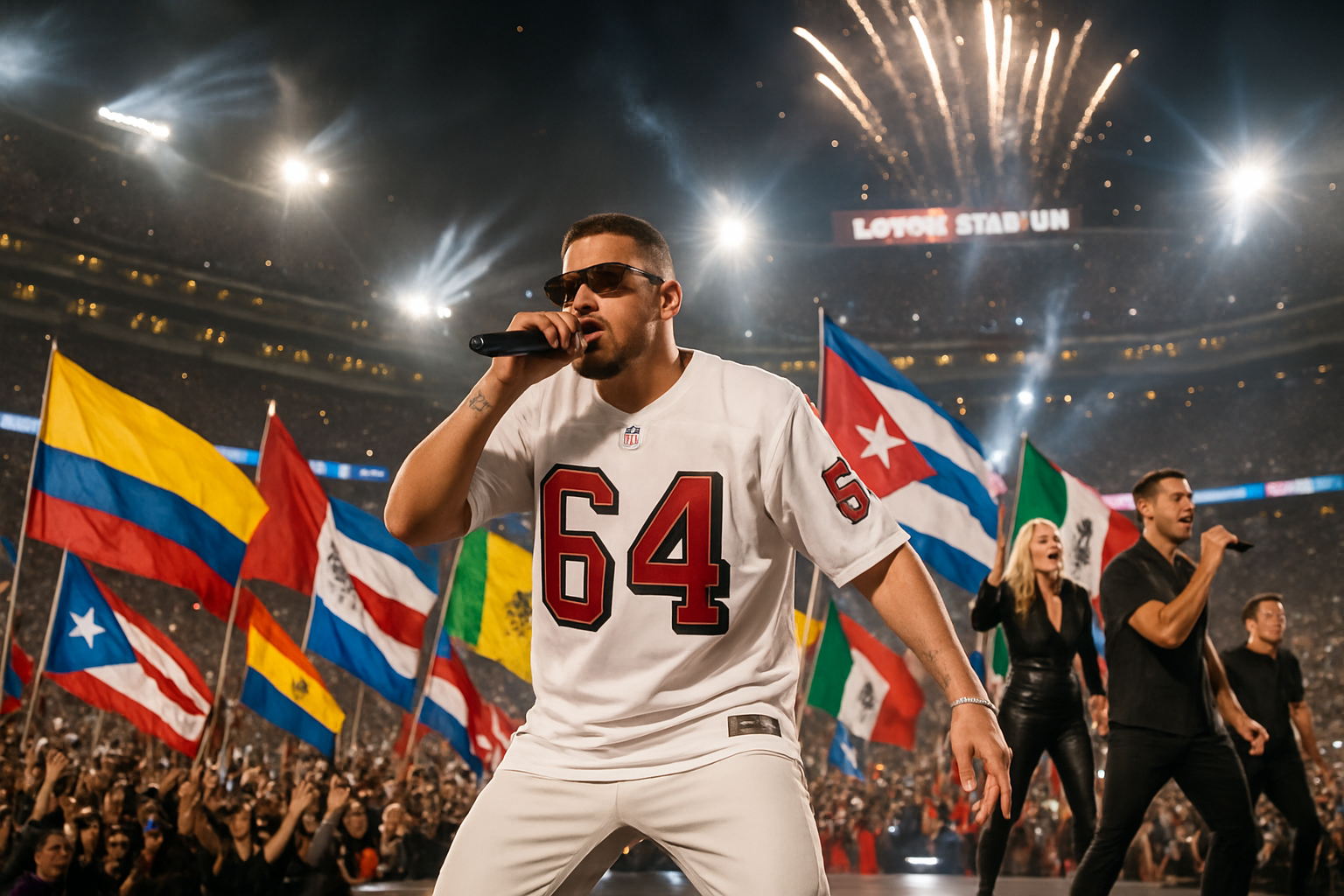
Puerto Rican superstar Bad Bunny made history at Super Bowl LX on February 8, 2026, delivering the first all-Spanish halftime show in NFL history, transforming Levi's Stadium into a vibrant celebration of Latino culture that captivated over 120 million viewers worldwide.
The 13-minute spectacular, dubbed the "Benito Bowl" in Puerto Rico, featured an elaborate production that transformed the Santa Clara stadium's field into a sugarcane plantation complete with authentic Caribbean elements, food carts, and a traditional Puerto Rican "casita" that served as the centerpiece for the performance.
Wearing a white jersey emblazoned with the number 64 and "OCASIO" on the back—a reference to his real name, Benito Antonio Martínez Ocasio—Bad Bunny opened the show with his hit "Tití me preguntó" before launching into a medley that included "Yo perreo sola" and "Voy a llevarte pa PR."
Star-Studded Guest Appearances
The performance reached its zenith when Lady Gaga joined Bad Bunny on stage, followed by fellow Puerto Rican icon Ricky Martin, who performed "Lo que le pasó a Hawái," adding a subtle political dimension to the celebration. The collaboration between the three superstars created one of the most memorable moments in Super Bowl halftime history.
The casita also hosted an impressive array of celebrities throughout the performance, including Cardi B, Jessica Alba, Pedro Pascal, Venezuelan baseball star Ronald Acuña Jr., Colombian singer Karol G, and Puerto Rican rapper Young Miko, all of whom danced and celebrated alongside Bad Bunny in what organizers described as an authentic Latino street party atmosphere.
Cultural Celebration and Unity Message
In a powerful display of pan-Latino solidarity, the performance concluded with Bad Bunny showcasing flags from across Latin America, including Guatemala, El Salvador, Honduras, Mexico, Chile, and other nations. This moment served as a tribute to the diverse Latino diaspora in the United States and emphasized themes of unity and cultural pride.
"Nadie tiene que aprender español, es mejor si aprenden a bailar"
— Bad Bunny, describing his performance philosophy
The show featured songs from Bad Bunny's Grammy-winning album "Debí tirar más fotos," which made history just days earlier by becoming the first Spanish-language album to win Album of the Year at the Grammy Awards. The performance also incorporated elements from his current world tour of the same name.
Unprecedented Production and Accessibility
The halftime show broke new ground beyond its cultural significance by featuring the first comprehensive sign language interpreters in NFL halftime show history, making the performance accessible to deaf and hard-of-hearing audiences—a milestone in sports entertainment inclusivity.
The production's scale was immense, with reports confirming that it included a real wedding ceremony during the performance, adding to the authentic community celebration atmosphere. The couple's identity was later confirmed to be genuine attendees, making their marriage a unique part of Super Bowl history.
Record-Breaking Viewership and Global Impact
The performance exceeded all expectations, drawing an estimated 120+ million global viewers and surpassing the previous halftime show viewership record held by Shakira and Jennifer Lopez's 2020 performance, which attracted 103 million viewers. The show's success was particularly notable in Latin America, where viewing parties were organized in major cities from Bogotá to Mexico City.
In Puerto Rico, the island virtually shut down as residents gathered in bars, public spaces, and homes to watch their hometown hero. In Vega Baja, Bad Bunny's birthplace, thousands gathered in the main plaza for a massive viewing party, while San Juan hosted multiple large-scale events at El Escambrón beach and Distrito T-Mobile.
Political Context and Controversy
The performance took place amid heightened political tensions following Bad Bunny's pro-immigration statements during his Grammy acceptance speech and increased ICE enforcement operations under the Trump administration. President Trump later criticized the performance on social media, calling it "absolutely terrible" and "an affront to American greatness," while questioning the use of Spanish language in the show.
However, NFL Commissioner Roger Goodell defended the performance, reiterating the league's position that the halftime show serves as "a stage for unity, not division." The performance's emphasis on celebration over political confrontation appeared to resonate with audiences across demographic lines.
Economic and Cultural Impact
The San Francisco Bay Area projected a $630 million economic impact from Super Bowl LX, with Bad Bunny's involvement contributing significantly to increased Latino tourism and engagement. Mexico reported a 6.2 billion peso surge in avocado consumption related to the "Super Bowl effect," demonstrating the far-reaching economic implications of the cultural celebration.
The performance's influence extended to streaming platforms, where Bad Bunny's "Debí tirar más fotos" album had already topped Apple Music charts in China, marking a breakthrough for Spanish-language music in the world's largest market.
Historic Firsts and Legacy
Bad Bunny's halftime show represented multiple historic firsts: the first all-Spanish NFL halftime performance, the first comprehensive accessibility features with sign language interpretation, and the largest Latino cultural celebration on American television's most-watched annual event.
The performance also marked a personal milestone for Bad Bunny, who had previously appeared as a guest performer alongside Shakira and Jennifer Lopez at Super Bowl LIV in 2020. This time, as the headline act, he commanded the full stage and production resources typically reserved for the biggest names in American entertainment.
Music industry experts noted that the show's success could establish a template for future diverse halftime performances, potentially opening doors for more international and non-English speaking artists to headline America's premier entertainment stage. The performance's emphasis on authentic cultural expression rather than assimilated mainstream appeal marked a significant shift in how American entertainment approaches cultural representation.
Social Media and Global Response
The performance dominated social media across platforms, with hashtags like #BabyBowl, #QueRicoSerLatino, and #SuperBowlLX trending globally. Memes celebrating the Latino representation and Bad Bunny's energetic performance spread rapidly, with many noting that the halftime show overshadowed the actual football game between the New England Patriots and Seattle Seahawks.
International media coverage emphasized the cultural watershed moment, with European outlets describing the performance as occurring "in the shadow" of immigration enforcement concerns while celebrating the "proof of courage" shown by Latino artists taking prominent cultural positions.
The show's success validated the NFL's decision to resist political pressure and maintain their commitment to the scheduled performance despite the controversial political climate. Industry observers noted that the positive reception demonstrated American audiences' appetite for authentic cultural celebration and diverse entertainment programming.
As the confetti settled and the stadium returned to football, Bad Bunny's historic halftime show stood as a testament to the power of music to unite, celebrate, and create lasting cultural moments that transcend sports. The performance not only entertained but also affirmed the significant and growing influence of Latino culture in American mainstream entertainment, setting a new standard for Super Bowl halftime shows and cultural representation in major sporting events.