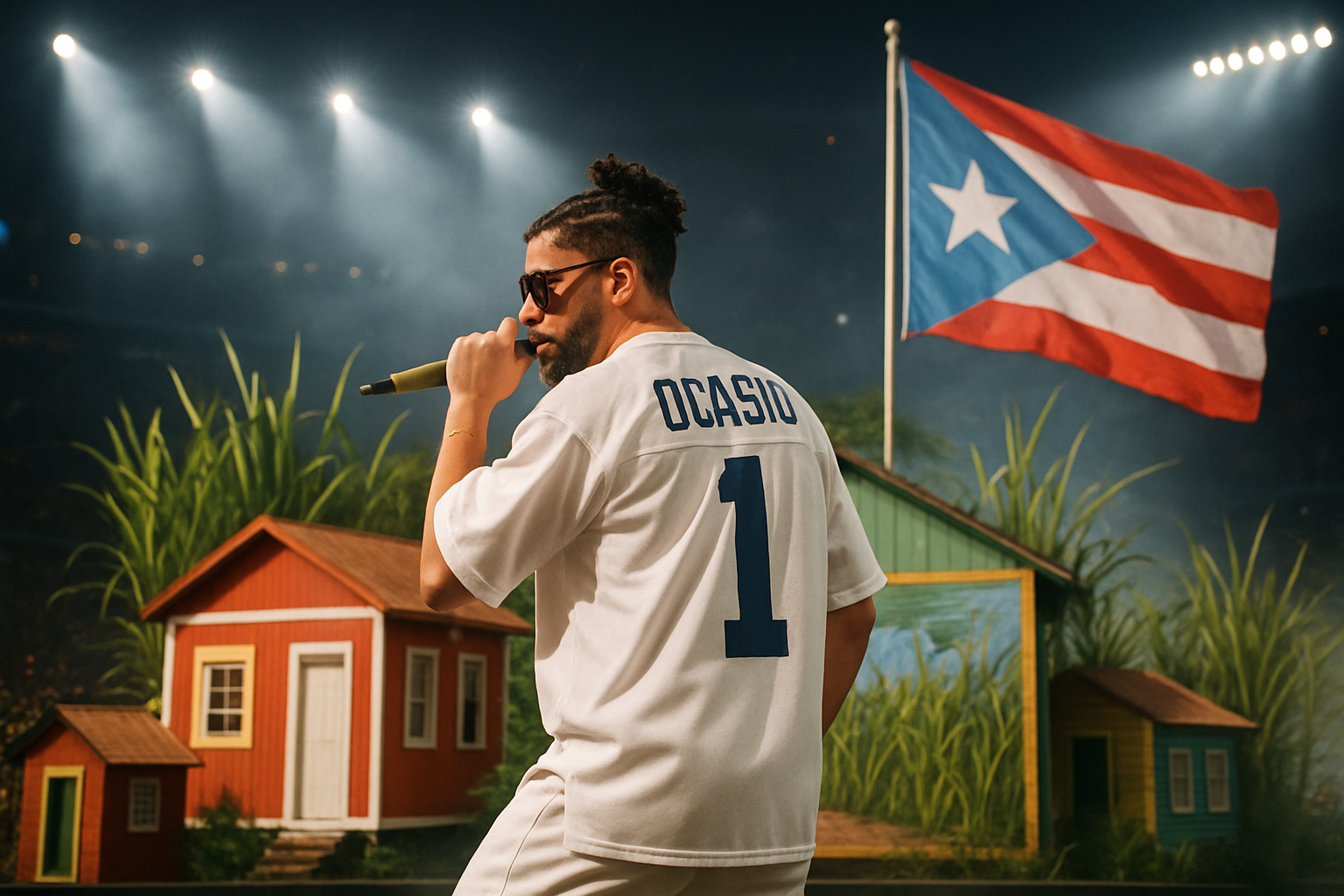
Bad Bunny's groundbreaking Super Bowl LX halftime performance continues to reverberate across the globe, transforming from a musical spectacle into a powerful symbol of cultural resistance and Latino identity. The Puerto Rican superstar's specially designed T-shirt has become a viral sensation, with replicas commanding extraordinary prices and sparking conversations about cultural authenticity in America's most-watched entertainment platform.
The February 8, 2026 performance at Levi's Stadium marked the first all-Spanish halftime show in NFL history, drawing over 120 million viewers worldwide and establishing a new paradigm for cultural representation in mainstream American entertainment. What began as a "gran fiesta" celebrating Puerto Rican heritage has evolved into a global movement of cultural pride and resistance.
The T-Shirt That Launched a Movement
Bad Bunny's white jersey bearing the name "OCASIO" and number 64 has become far more than a performance costume. According to Portuguese outlet PÚBLICO, the shirt was manufactured by Inditex, owner of Zara, at their Santo Tirso facility in Portugal specifically for the Super Bowl performance. The company produced both the original for Bad Bunny and replicas for employees, creating an immediate connection between the artist's message and working-class solidarity.
Norwegian media reports that replica T-shirts are now selling for 340,000 kroner (approximately $32,000), demonstrating the extraordinary cultural currency of Bad Bunny's resistance narrative. The astronomical prices reflect not just merchandise value, but the symbolic weight of wearing a piece of Latino cultural history.
"This isn't just about a T-shirt—it's about seeing yourself represented on the biggest stage in America without having to change who you are."
— Cultural analyst quoted by SBS Australia
Symbols of Independence and Resistance
The performance's most controversial element was Bad Bunny's use of the Puerto Rican independence flag, featuring a lighter shade of blue that represents the pro-independence movement. According to Portuguese media outlet Observador, this version of the flag was prohibited by a 1948 law, making its prominent display at the Super Bowl a direct challenge to colonial authority.
The flag's historical significance wasn't lost on international observers. As SBS Australia noted, the show was "riddled with easter eggs" that brought "Puerto Rican history and culture to one of the biggest platforms on the planet." The performance transformed the NFL's traditionally conservative halftime show into a stage for anti-colonial expression.
The Irish Times captured the cultural divide the performance created, describing how "while Benito Ocasio brought Puerto Rican resistance to the Super Bowl stage, conservatives watched a separate 'all-American' half time show." This split-screen America revealed the deep tensions surrounding Latino representation in mainstream culture.
Global Cultural Resonance
The performance's impact extended far beyond American borders, resonating with audiences worldwide who saw parallels to their own struggles for cultural recognition. International media coverage emphasized the universal themes of identity, resistance, and the right to exist authentically in dominant cultural spaces.
The show's philosophy of "Nadie tiene que aprender español, es mejor si aprenden a bailar" (Nobody has to learn Spanish, it's better if they learn to dance) represented a fundamental shift from assimilation to celebration. This message struck a chord with immigrant communities globally, who saw in Bad Bunny's unapologetic presentation a validation of their own cultural authenticity.
Venezuelan outlet Efecto Cocuyo fact-checked rumors about whether detained migrant child Liam Conejo appeared in the show, highlighting how the performance became intertwined with broader immigration debates. While the child did not appear, the inquiry itself demonstrates how the show became a focal point for discussions about Latino representation and immigrant rights.
Manufacturing a Cultural Moment
The Portuguese connection to Bad Bunny's iconic jersey adds another layer to the performance's global significance. The fact that Portuguese workers crafted the symbol that would become synonymous with Latino resistance creates a transnational narrative of working-class solidarity and cultural production.
Inditex's decision to produce employee replicas alongside the original suggests a corporate understanding of the performance's significance beyond mere entertainment. This distribution model ensured that the symbol of resistance reached working communities, not just wealthy collectors willing to pay inflated secondary market prices.
Cultural Diplomacy Through Performance
The performance functioned as a form of cultural diplomacy, presenting Puerto Rican identity to a global audience without the mediation of traditional political channels. Bad Bunny's approach transcended typical entertainment boundaries, creating space for political expression within the ostensibly apolitical realm of sports entertainment.
The use of traditional Puerto Rican cultural elements—the casita structure, sugarcane plantation imagery, and folk music—provided educational content alongside entertainment. International audiences received an informal lesson in Caribbean history and culture, delivered through the universal language of music and spectacle.
Economic and Cultural Impact
The extraordinary prices commanded by Bad Bunny merchandise reflect the economic value of authentic cultural representation. The T-shirt's transformation from promotional item to collector's artifact demonstrates how cultural authenticity can create significant economic value when properly presented and defended.
The performance's success has implications for future Super Bowl halftime shows and major entertainment events. It proved that audiences worldwide are hungry for authentic cultural content, even when—or especially when—it challenges dominant narratives about American identity and belonging.
"The show brought Puerto Rican history and culture to one of the biggest platforms on the planet, creating conversations that extend far beyond the entertainment industry."
— International media analysis
Legacy of Resistance
Bad Bunny's Super Bowl performance has established a new template for cultural resistance within mainstream entertainment platforms. By refusing to dilute his message for broader appeal, he demonstrated that authenticity can achieve both commercial success and political impact.
The viral success of his T-shirt represents more than merchandise sales—it symbolizes the global appetite for Latino cultural expression and resistance narratives. From Norwegian collectors paying premium prices to Portuguese workers crafting symbols of resistance, the performance created a transnational network of cultural solidarity.
The performance's lasting impact lies not just in its immediate viewership or economic success, but in its demonstration that major American cultural platforms can accommodate—and indeed benefit from—authentic expressions of non-Anglo identity. Bad Bunny's halftime show didn't just entertain; it educated, inspired, and challenged audiences to reconsider their assumptions about American culture and Latino belonging.
As the global conversation around the performance continues to evolve, one thing remains clear: Bad Bunny's Super Bowl moment transcended entertainment to become a cultural and political watershed, proving that resistance and celebration can coexist on the world's biggest stage.