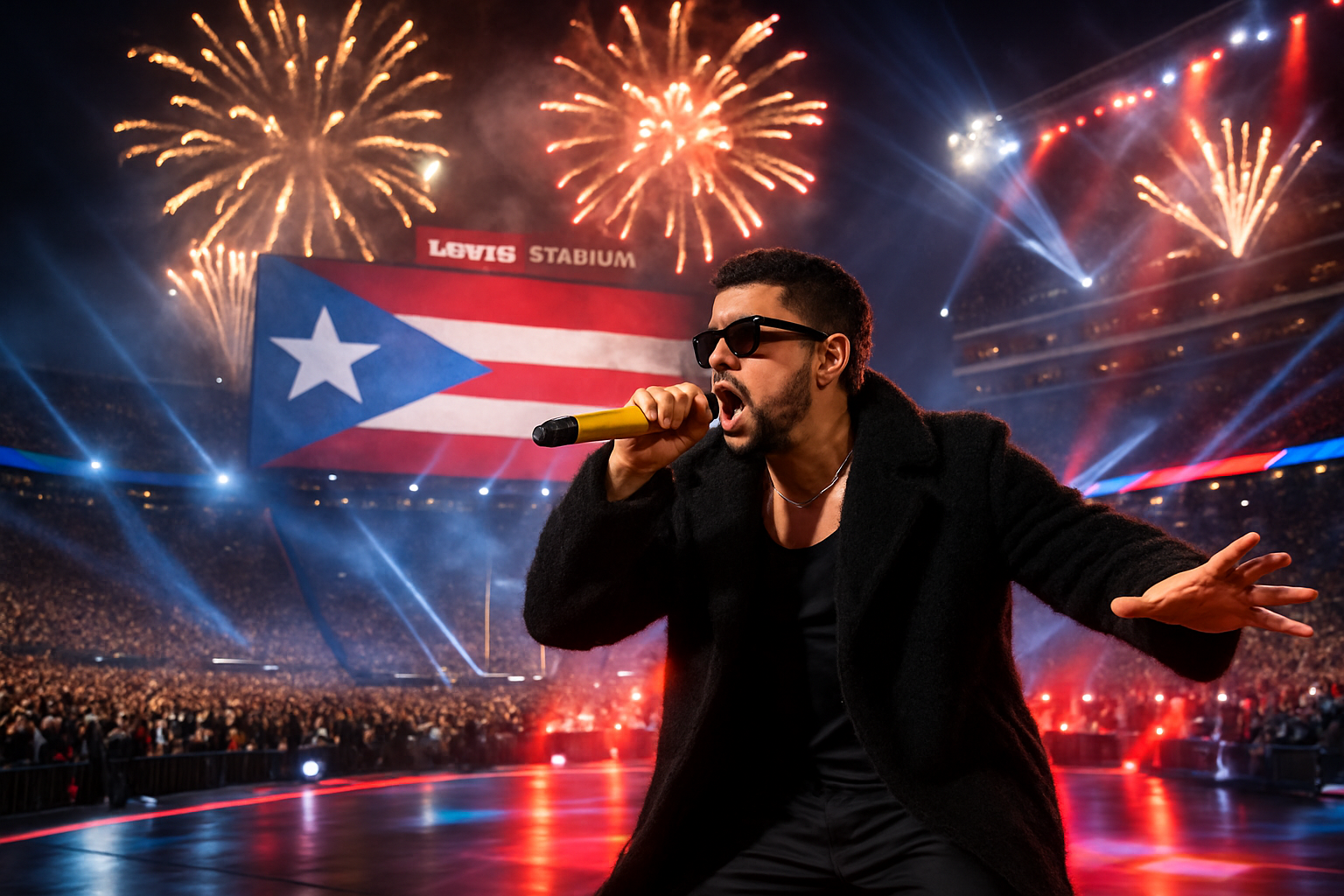
Puerto Rican reggaeton superstar Bad Bunny is set to make history at Super Bowl LX with a halftime performance that has generated both unprecedented excitement and significant political controversy, positioning Sunday's show as potentially the most culturally significant in the event's history.
As the New England Patriots and Seattle Seahawks prepare for their championship showdown at Levi's Stadium in Santa Clara, California, much of the global attention has focused on Bad Bunny's groundbreaking performance, which is expected to shatter Latino viewership records and surpass the 103 million viewers who watched Shakira and Jennifer Lopez's acclaimed 2020 halftime show.
A Performance Rooted in Cultural Celebration
Bad Bunny, whose real name is Benito Antonio Martínez Ocasio, has promised a "gran fiesta" that will showcase Puerto Rican cultural identity on America's biggest stage. The artist has emphasized that his performance philosophy centers on universal connection through music and dance rather than language barriers.
"Nadie tiene que aprender español, es mejor si aprenden a bailar" (Nobody has to learn Spanish, it's better if they learn to dance)
— Bad Bunny
The performance will feature elements from his Grammy-winning album "Debí tirar más fotos," which made history as the first Spanish-language album to win Album of the Year at the Grammy Awards in the ceremony's 68-year history. The album has achieved remarkable global success, even topping Apple Music charts in China, marking a significant breakthrough for Spanish-language music in the world's largest market.
Political Tensions and Security Concerns
The halftime show comes at a time of heightened political tension following Bad Bunny's powerful pro-immigration statements during his Grammy acceptance speech on February 1, 2026. His declaration that "immigrants are the heartbeat of this country" and his criticism of ICE enforcement policies drew sharp rebuke from President Trump, who accused the artist of "spreading hate" and questioned his upcoming Super Bowl appearance via Truth Social.
Despite political pressure, NFL Commissioner Roger Goodell has firmly defended Bad Bunny's participation, characterizing the halftime show as "a stage for unity, not division." The league has refused to modify or cancel the performance, setting up what many observers believe will be the most politically charged halftime show in Super Bowl history.
Security measures have been significantly heightened for the event, with particular attention to ICE enforcement concerns. The Mexican consulate has issued warnings to nationals about potential immigration operations during major public events, reflecting broader tensions around the Trump administration's intensified deportation policies.
Breaking Barriers in Entertainment
The performance represents a historic milestone for accessibility in sports entertainment. For the first time in NFL history, the halftime show will feature comprehensive sign language interpreters, making the musical performance fully accessible to deaf and hard-of-hearing viewers. This groundbreaking initiative reflects the league's commitment to inclusive entertainment.
Industry experts predict the show will generate massive economic impact, with the San Francisco Bay Area expecting approximately $630 million in economic benefits from the Super Bowl weekend. The "Super Bowl effect" has already been felt internationally, with Mexico reporting a 6.2 billion peso surge in avocado consumption tied to game-day celebrations.
Collaboration and Production
The halftime show will also feature punk rock legends Green Day, creating an unprecedented fusion of reggaeton and punk rock that promises to unite different musical generations and cultural backgrounds. The production has been supported by Israeli-American producer Yuval Chain, who collaborated on Bad Bunny's Grammy-winning album.
Global viewing parties have been organized across multiple continents, with particularly enthusiastic response from venues in Bogotá and other Latin American cities, demonstrating the international appetite for this cultural moment.
Industry Support and Celebrity Endorsements
Fellow artists have rallied behind Bad Bunny's historic moment. Cardi B recently expressed her pride in seeing him reach "the world's biggest stage," while renowned Panamanian singer Rubén Blades has defended the artist against critics, drawing comparisons to the early persecution faced by Elvis Presley.
"This is a historic moment for the entire Latino community and for music itself"
— Cardi B
The performance is being viewed as a watershed moment for Latino representation in mainstream American entertainment, potentially establishing a template for future diverse halftime shows and demonstrating the evolution of American entertainment toward greater cultural authenticity and global appeal.
The Game Context
While the halftime show generates headlines, the championship game itself features compelling storylines. The Seattle Seahawks enter as slight favorites, led by veteran quarterback Sam Darnold in a redemption story and his connection with receiver Jaxon Smith-Njigba, supported by a highly regarded defense.
The New England Patriots counter with second-year quarterback Drake Maye, a celebrated young talent leading a ball-control offense and an impressively underrated defense that has excelled throughout the playoffs. The game represents a collision of different team-building philosophies and playing styles.
Cultural and Historical Significance
Bad Bunny's halftime performance occurs against the backdrop of broader cultural transformation in American entertainment. His Grammy Album of the Year victory represents a fundamental shift in industry recognition of Spanish-language artistry and validates the artistic merit of reggaeton and Latin music on the global stage.
The performance is expected to exceed 100 million viewers globally, potentially setting new records for Super Bowl viewership and establishing Bad Bunny as a crossover superstar capable of transcending language and cultural barriers through the universal language of music and celebration.
As Sunday approaches, the convergence of sports, politics, culture, and entertainment promises to create a Super Bowl halftime show that will be remembered as much for its artistic achievement as for its cultural and political significance in American history.