Bad Bunny's groundbreaking Super Bowl LX halftime performance has ignited a fierce cultural and political battle over Latino identity and representation in America, drawing both celebration and condemnation from audiences of over 120 million viewers worldwide.
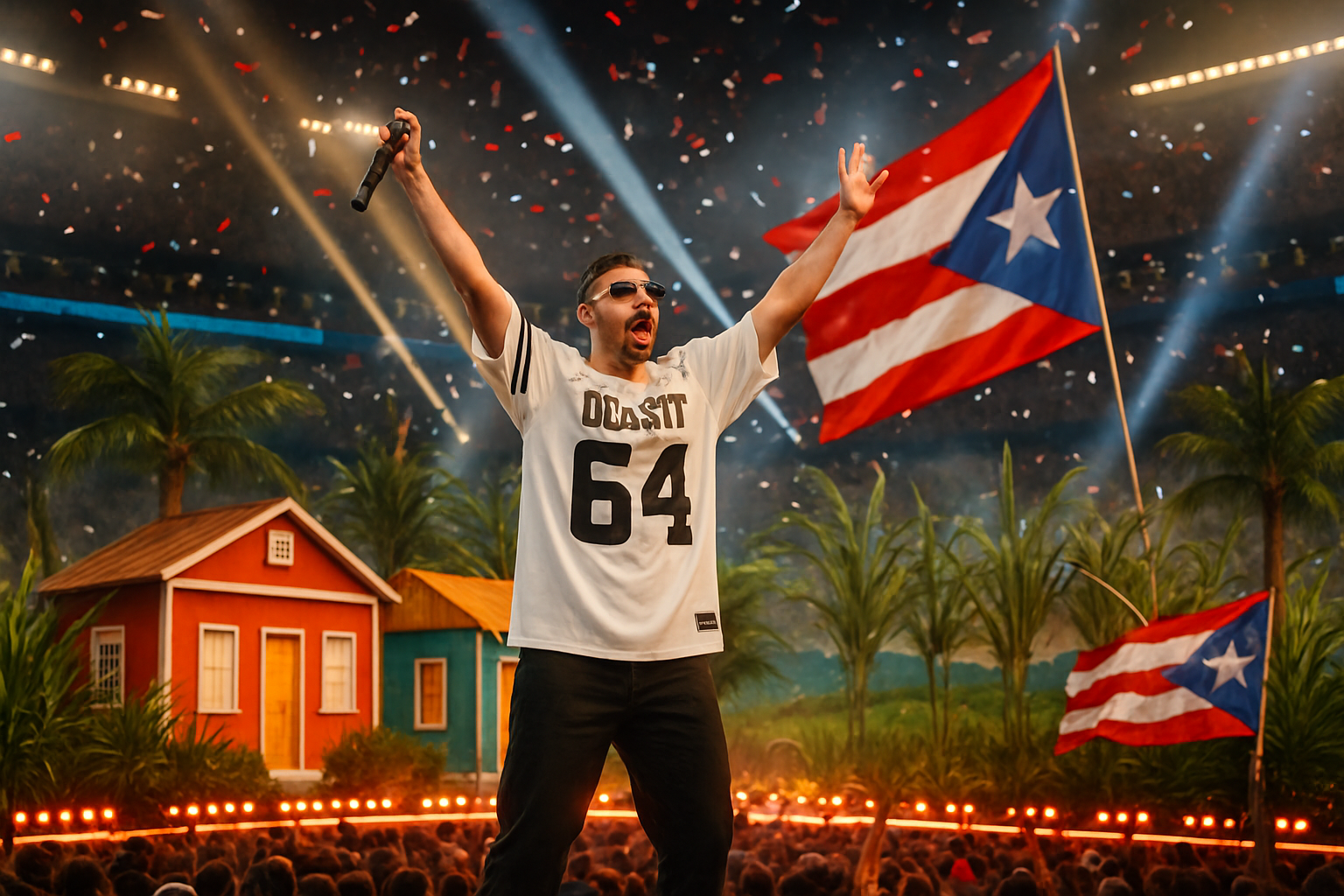
The Puerto Rican superstar delivered the first all-Spanish halftime show in NFL history on February 8, 2026, at Levi's Stadium in Santa Clara, transforming the field into a vibrant celebration of Caribbean culture complete with sugarcane plantations, traditional casitas, and Puerto Rican flags. The 13-minute spectacle, viewed by more people than any previous halftime show, has become a defining cultural moment that transcends sports entertainment.
Political Firestorm Erupts
President Donald Trump launched a scathing attack on the performance via Truth Social, calling it "absolutely terrible, one of the worst in history" and "an affront to the greatness of America." Trump's criticism focused particularly on the language barrier, stating "nobody understands a word of what this guy is saying" and calling the dancing "repugnant, especially for small children."
The president's reaction reflects broader tensions that had been building since Bad Bunny's Grammy victory speech on February 1, where he made powerful pro-immigration statements, declaring that "immigrants are the heartbeat of this country" and taking anti-ICE enforcement positions.
"This was more than entertainment – it was a statement about who belongs in America and whose culture deserves celebration on our biggest stage."
— Dr. María González, Latino Cultural Studies, UCLA
Cultural Celebration and Artistic Achievement
Bad Bunny's performance featured star guests including Lady Gaga and Ricky Martin, who performed "Lo que le pasó a Hawai" alongside appearances by Cardi B, Jessica Alba, Pedro Pascal, and others. The show made history as the first NFL halftime performance to include comprehensive sign language interpreters, marking a breakthrough in accessibility.
The artist wore a white jersey with "OCASIO" and number 64, performing against elaborate sets that recreated Puerto Rican village life, complete with domino games, nail salons, and corner stores. The performance concluded with a display of Latin American flags from Guatemala, El Salvador, Honduras, Mexico, and Chile, emphasizing continental solidarity.
Bad Bunny's philosophy for the show was clear: "Nadie tiene que aprender español, es mejor si aprenden a bailar" (Nobody has to learn Spanish, it's better if they learn to dance). This message of cultural bridge-building through music and movement resonated with millions, while challenging others who saw it as divisive.
International and Cultural Impact
The performance's impact extended far beyond the stadium. Duolingo reported a massive 35% increase in Spanish language enrollment in the hours following the show, with the language learning app sharing data showing unprecedented interest in Latino culture and language acquisition.
Puerto Rico virtually shut down during the halftime show, with viewing parties organized across the island, particularly in Bad Bunny's hometown of Vega Baja and throughout San Juan. The event was dubbed "Benito Bowl" locally, reflecting the artist's cultural significance to his homeland.
Mexico's President Claudia Sheinbaum praised the performance during her morning press conference, emphasizing the "symbolism and message of unity" while European media characterized it as the "joyful face of another America" – a direct contrast to Trump's immigration policies.
Polarized Reactions Across Political Lines
The performance has divided Americans along predictably partisan lines. NFL Commissioner Roger Goodell defended the show as providing "a stage for unity, not division," rejecting political pressure to modify or criticize the performance despite the White House's objections.
Civil rights organizations and Latino advocacy groups have celebrated the performance as a watershed moment for representation in mainstream American entertainment. The show demonstrated that authentic cultural celebration could attract massive audiences without requiring assimilation or English-language adaptation.
Conversely, conservative voices have echoed Trump's criticism, arguing that major American cultural events should prioritize English-language content and traditional American themes. Some called for boycotts of the NFL, though early ratings data suggests the controversy may have actually increased viewership.
Economic and Social Reverberations
The San Francisco Bay Area experienced a $630 million economic impact from Super Bowl LX, with the halftime show contributing significantly to international attention and tourism interest. Mexico alone saw a 6.2 billion peso surge in avocado consumption, dubbed the "Super Bowl effect."
The performance's success has already influenced entertainment industry discussions about Spanish-language content in mainstream American venues. Bad Bunny's streaming numbers are expected to increase by $1.7 million weekly following the show, while his album "Debí tirar más fotos" topped charts in China, marking a breakthrough for Spanish-language music in global markets.

Historical Context and Broader Implications
The controversy occurs during heightened immigration enforcement operations under the Trump administration, which have quadrupled deportation rates and created what immigration advocates call a "climate of concern" in Latino communities. Bad Bunny's celebration of Latino identity comes at a moment when the community faces increased scrutiny and targeting.
The performance also coincides with broader cultural debates about representation, assimilation, and what constitutes "American" culture. While 89% of Europeans support greater unity and diversity according to recent Eurobarometer polling, American audiences remain more divided on these questions.
Cultural historians note that the performance represents a significant evolution in how Latino artists present their identity on mainstream American stages. Rather than adapting to Anglo expectations, Bad Bunny presented an uncompromisingly authentic celebration of Puerto Rican and broader Latino culture.
Looking Forward: Cultural Watershed or Temporary Moment?
The long-term impact of Bad Bunny's performance remains to be seen, but early indicators suggest it may represent a genuine cultural watershed moment. The combination of massive viewership, international praise, and sustained political controversy has elevated conversations about Latino representation beyond entertainment into broader questions about American identity.
The performance's success despite – or perhaps because of – the political backlash suggests that American audiences are increasingly receptive to authentic cultural celebration over assimilated entertainment. This trend could influence future major events, from award shows to sporting events, potentially establishing a new template for inclusive American cultural programming.
"Bad Bunny proved that you don't need to change your culture to reach American audiences – you can bring them into your world instead."
— Rubén Blades, Salsa Legend and Cultural Commentator
As America continues to grapple with questions of identity, belonging, and cultural representation, Bad Bunny's Super Bowl performance will likely be remembered as a pivotal moment when Latino culture claimed its place at the center of American entertainment, regardless of political opposition.
The performance demonstrated that cultural authenticity, when presented with artistic excellence and joyful celebration, can transcend political divisions and create genuine connection across communities. Whether this moment leads to broader cultural change or remains an isolated breakthrough will depend on how both Latino artists and American audiences respond to the conversations it has initiated.