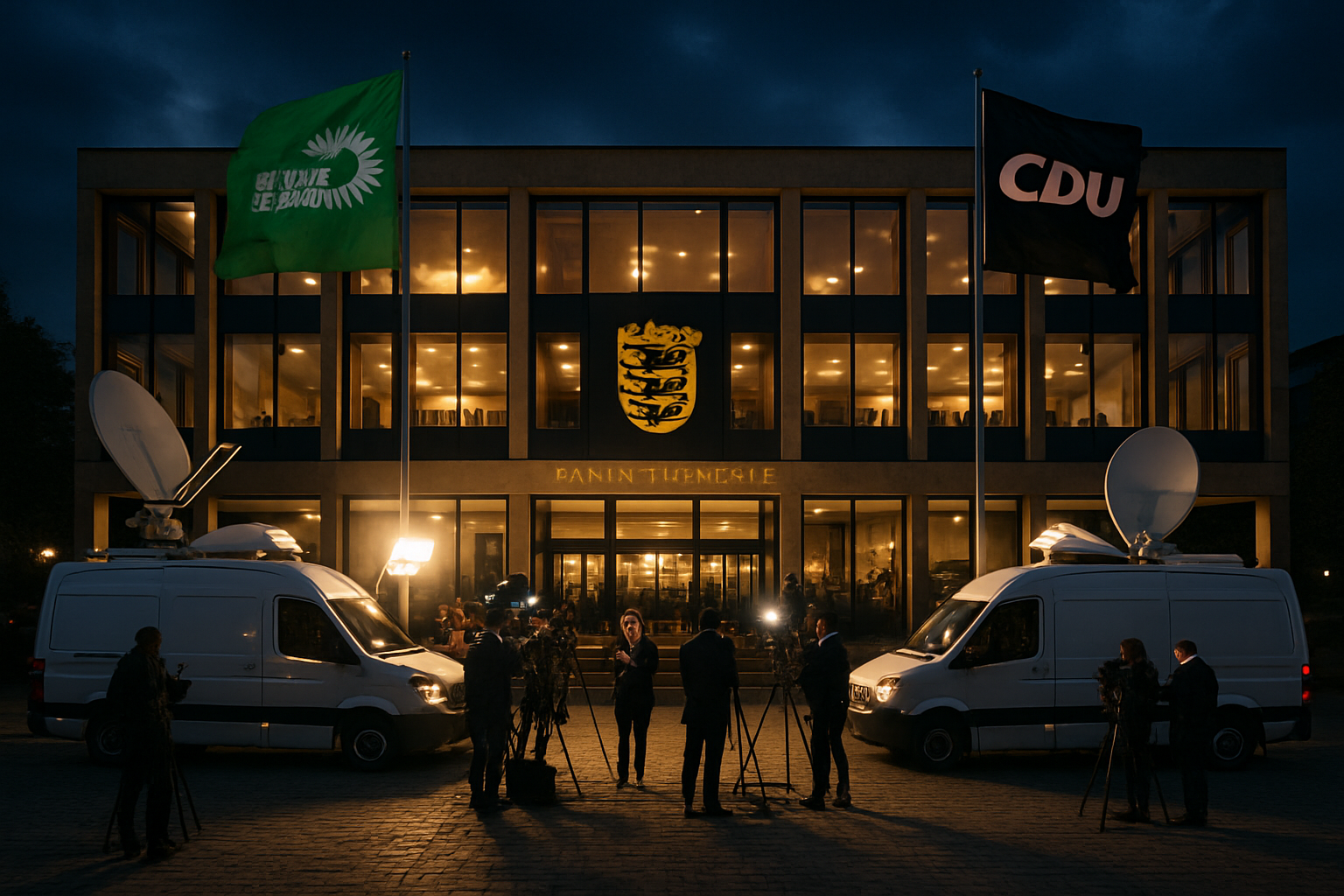
Germany's Green Party successfully defended their leading position in Baden-Württemberg's state election on March 8, 2026, with Environment Minister Cem Özdemir's candidacy proving to be the decisive factor in maintaining power against the CDU's strong challenge led by Manuel Hagel.
According to Tagesschau exit polls and final results, the Greens secured approximately 31.8% of the vote, maintaining their position as the largest party in the southwestern German state. The CDU, despite a strong campaign, secured 29.6% of the vote, representing significant gains from previous elections but falling short of the victory many predicted.
Özdemir's Personal Victory
Political analyst Jörg Schönenborn noted that "for every second Green voter, Cem Özdemir was the decisive factor for casting their ballot for the Greens." The Environment Minister's decision to lead the Green campaign represented a major political gamble that ultimately paid off, completing what Schönenborn described as the Greens' successful "comeback on the home straight."
The election campaign saw the CDU initially leading in polls, with many observers expecting a potential change in government after 15 years of Green leadership under the outgoing Winfried Kretschmann. However, Özdemir's entry into the race fundamentally altered the political dynamics, allowing the Greens to capitalize on his national profile and policy expertise.
"The CDU gained compared to previous elections, but the Greens managed to overtake them in the final stretch"
— Jörg Schönenborn, Political Analyst
Dramatic Political Realignment
The election results revealed significant changes to Baden-Württemberg's political landscape. The AfD emerged as a major force, nearly doubling their 2021 result and securing third place in the state parliament. This represents a significant breakthrough for the far-right party in a state traditionally dominated by moderate politics.
In a dramatic reversal of fortunes, both the FDP and The Left party failed to meet the 5% threshold required for parliamentary representation. The SPD managed to narrowly secure their place in the Landtag, though with reduced representation compared to previous elections.
Coalition Mathematics and Future Governance
The results create complex coalition mathematics for the next state government. While the Greens maintained their leading position, they will likely need to form a coalition government to secure a stable majority in the state parliament.
Interactive coalition calculators suggest several possible combinations, with the most likely scenarios involving either a Green-CDU coalition or a potential three-party arrangement. The dramatic rise of the AfD has significantly complicated the political arithmetic, as all other parties have ruled out cooperation with the far-right party.
Voter Demographics and Motivations
Detailed voter analysis reveals significant variations across demographic groups. The election saw particularly strong engagement among younger voters, with environmental concerns and economic policy ranking as top priorities. Rural-urban divides also played a significant role, with the Greens performing strongly in urban areas while the CDU maintained significant support in rural constituencies.
The AfD's gains were particularly pronounced in certain regions, reflecting broader concerns about immigration, economic policy, and dissatisfaction with federal politics under Chancellor Friedrich Merz's CDU-led government.
End of the Kretschmann Era
The election marks the end of Winfried Kretschmann's remarkable 15-year tenure as Minister-President, during which he became Germany's first Green state leader and helped transform Baden-Württemberg into a model of ecological modernization while maintaining the state's economic strength.
Under Kretschmann's leadership, the state successfully balanced environmental policies with its traditional automotive and manufacturing industries, implementing innovative approaches to citizen participation and sustainable development. His pragmatic style helped establish the Greens as a viable governing party beyond their traditional environmental base.
National Political Implications
The Baden-Württemberg result carries significant implications for national politics, serving as the first major electoral test since Friedrich Merz became Chancellor. The CDU's strong performance, despite falling short of victory, may provide momentum for federal politics, while the Greens' success demonstrates their continued viability as a major political force.
The AfD's breakthrough performance will likely intensify debates about the far-right party's growing influence in German politics, particularly as the country prepares for additional state elections throughout 2026.
Looking Forward
With the election results confirmed, attention now turns to coalition negotiations and the formation of a new state government. Cem Özdemir's transition from federal Environment Minister to potential Minister-President represents a significant political evolution, bringing national experience to state-level governance.
The successful conduct of the election, despite challenging weather conditions across parts of the state, demonstrated the resilience of Germany's democratic institutions. Voter turnout exceeded expectations, with many citizens viewing the election as a crucial test of the state's political direction.
The new government will face significant challenges, including managing the state's economic transition, addressing housing costs, implementing climate policies, and maintaining Baden-Württemberg's position as one of Germany's most prosperous regions. How successfully these challenges are addressed will likely influence the political landscape for years to come.