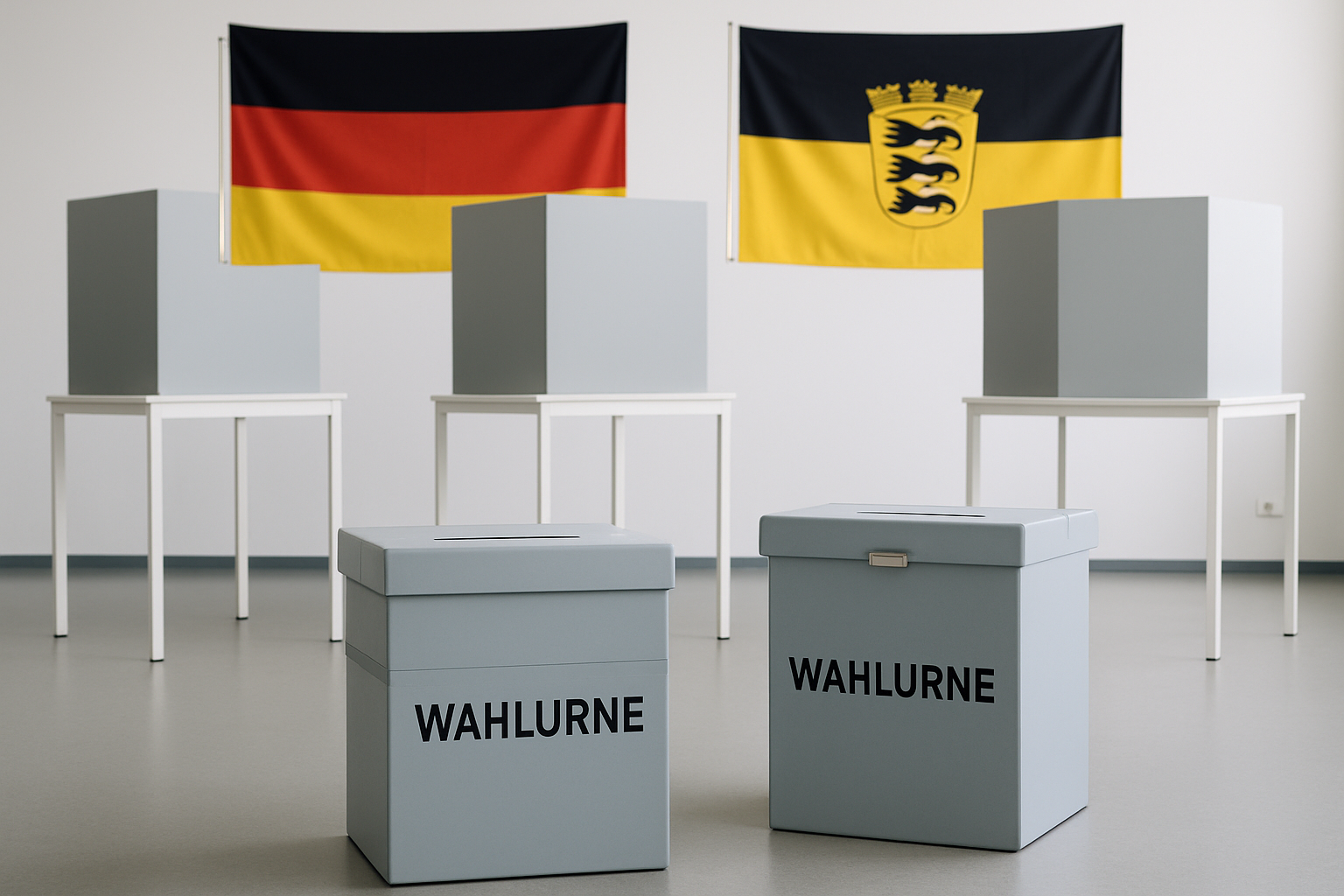
Baden-Württemberg's state election has emerged as a pivotal political battleground, serving as the first major test for Chancellor Friedrich Merz's leadership amid mounting pressure from the far-right Alternative for Germany (AfD) and evolving political dynamics across the country.
The election in Germany's southwestern state represents far more than a regional contest—it has become a critical barometer for the CDU's ability to reclaim political ground under Merz's leadership while confronting the persistent challenge of far-right populism that has reshaped German politics over the past decade.
Historic Youth Participation Reshapes Electoral Landscape
In a groundbreaking development, 16-year-olds are participating in a Baden-Württemberg election for the first time, fundamentally altering the electoral calculus. This expansion of voting rights has drawn particular attention to how younger demographics might influence traditional party loyalties in one of Germany's most economically prosperous regions.
The inclusion of these new voters comes at a time when German politics is experiencing unprecedented volatility. According to recent analyses, the CDU faces a complex challenge of appealing to both traditional conservative voters and younger demographics who prioritize different policy issues, from climate action to digital infrastructure.
Merz's Leadership Under Scrutiny
Chancellor Friedrich Merz enters this election cycle with his political authority under intense examination. Having secured a commanding 91.2% re-election as CDU leader at the February Stuttgart party congress, Merz demonstrated rare public self-criticism while promising to prevent the AfD from "ruining our country."
The Stuttgart congress, marked by technical difficulties that forced a switch from digital to paper ballots, served as a metaphor for broader institutional resilience. Merz's uncompromising anti-AfD rhetoric and reaffirmation of the coalition with the SPD positioned the CDU as a centrist bulwark against populist pressure.
"I accept this criticism. The AfD will not ruin our country."
— Friedrich Merz, German Chancellor
However, the Chancellor faces the challenge of translating party unity into electoral success while managing competing pressures from traditional allies and responding to evolving voter priorities in a region known for its economic dynamism and political pragmatism.
The AfD Challenge and Right-Wing Momentum
The Alternative for Germany's presence looms large over the Baden-Württemberg contest, representing part of a broader European trend toward far-right political gains. The party aims to capitalize on various grievances, from migration concerns to economic anxieties, despite the region's relative prosperity.
This election occurs against the backdrop of concerning developments across Germany, including reports of a pro-Russian employee within AfD circles that have raised questions about foreign influence and democratic integrity. The controversy surrounding Markus Frohnmaier's extended employment of individuals with questionable loyalties has added another layer of complexity to an already charged political environment.
The CDU's strategy involves combining reform promises with explicit anti-extremist positioning, attempting to consolidate centrist voters while preventing defection to populist alternatives. Success in Baden-Württemberg could provide a template for countering far-right advances in other German states scheduled for elections throughout 2026.
Green Party Competition and Coalition Dynamics
The contest has developed into a particularly intense competition between the CDU and the Green party, with Environment Minister Cem Özdemir representing the Greens' effort to maintain their strong position in a state where environmental consciousness runs deep.
Özdemir's presence in the race adds national significance to the local contest, as he brings federal-level experience and recognition that could influence voter perceptions about the Greens' governing capabilities. The party faces the challenge of maintaining relevance amid shifting political priorities while defending their environmental agenda against economic concerns.
The dynamic between these two parties reflects broader questions about German politics post-Angela Merkel, including how traditional center-right and center-left coalitions might evolve and whether new political formations can emerge to address contemporary challenges.
Electoral Innovation and Democratic Participation
Baden-Württemberg has introduced significant electoral innovations, including a new voting system that allows voters to cast two separate ballots. This technical change reflects broader efforts to enhance democratic participation and provide citizens with more nuanced ways to express their political preferences.
The expanded franchise to include 16-year-olds represents a particularly bold democratic experiment, potentially influencing how other German states and European countries approach youth political participation. Early reports suggest strong engagement among these new voters, who have received special education about electoral processes to ensure informed participation.
National Implications and European Context
The Baden-Württemberg election occurs within a broader European context marked by democratic stress and institutional challenges. Recent memory storage indicates ongoing concerns about foreign interference, political violence in neighboring countries, and questions about democratic resilience across the continent.
Chancellor Merz's international positioning—including recent diplomatic engagement with China and participation in European strategic autonomy discussions—adds another dimension to how voters might evaluate CDU leadership. The party must balance local concerns with Germany's role in addressing global challenges, from climate change to geopolitical tensions.
The election also serves as a test case for whether traditional democratic parties can effectively respond to populist challenges while maintaining their core policy commitments and coalition relationships.
Economic Prosperity Meets Political Uncertainty
Baden-Württemberg's economic strength—home to major automotive and technology companies—provides a unique backdrop for political competition. The state's prosperity creates both opportunities and challenges for political messaging, as parties must address how to maintain economic competitiveness while responding to social and environmental concerns.
The region's industrial base faces significant transformation pressures, from electric vehicle transitions to digitalization requirements, creating employment and investment questions that political parties must address. These economic realities intersect with political choices in ways that could influence voter behavior beyond traditional party loyalties.
Conclusion: A Defining Moment
The Baden-Württemberg state election represents more than a regional contest—it serves as a crucial test of German democratic resilience and political adaptation capacity. The outcome will influence not only local governance but also national political trajectories and European democratic development patterns.
For Chancellor Merz and the CDU, success could provide momentum for addressing far-right challenges while demonstrating effective centrist governance. For the broader German political system, the election offers insights into how democratic institutions can adapt to contemporary challenges while preserving core democratic values and effective governance capacity.
As voters head to polling stations, they carry the responsibility of shaping not just regional leadership but contributing to broader questions about democratic governance in an era of political uncertainty and institutional challenge across Europe and beyond.