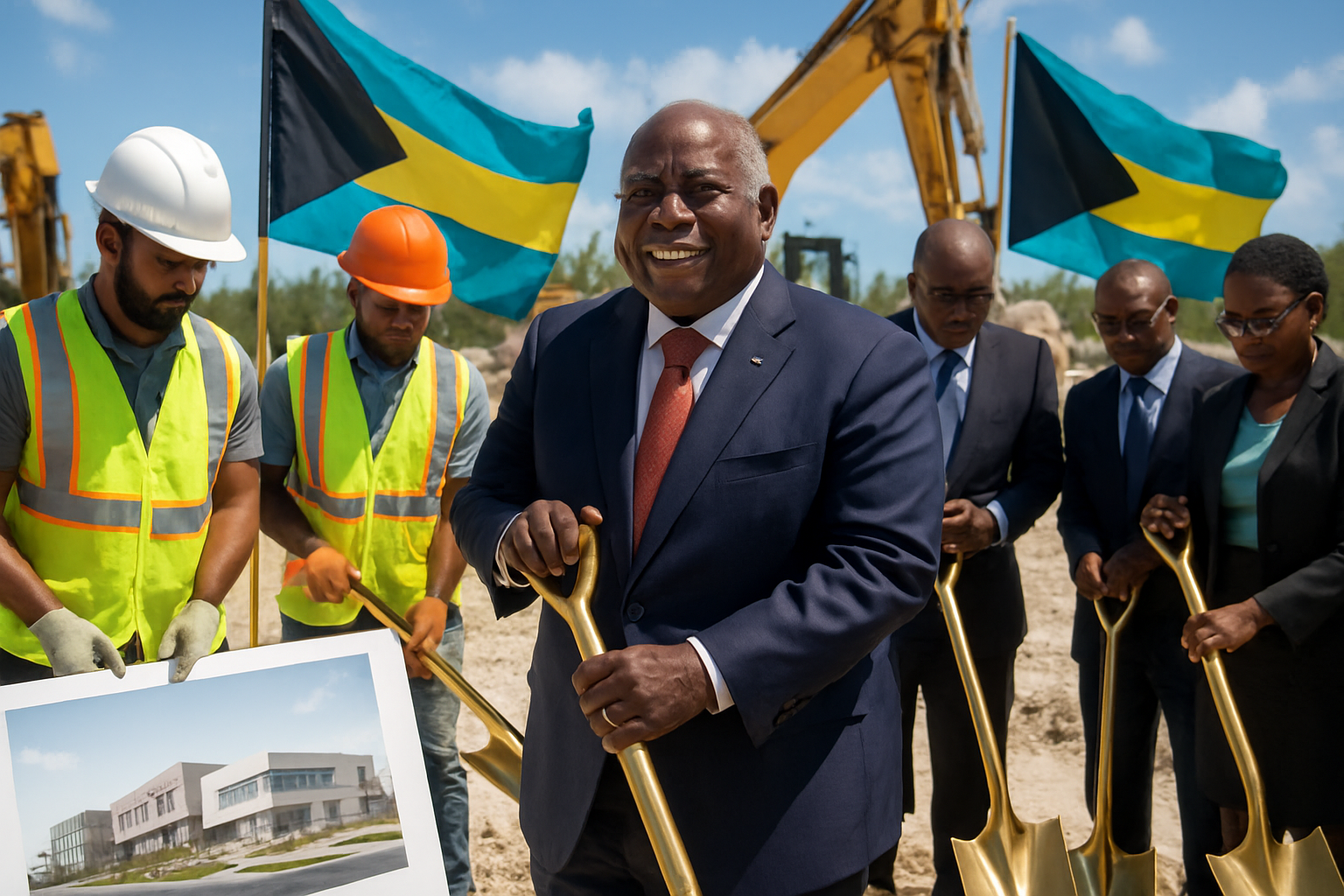
The Bahamas has officially broken ground on a transformative $285.25 million national specialty hospital along New Providence Highway, marking the largest healthcare infrastructure investment in the nation's modern history and positioning the Caribbean nation as a regional medical leader during the global "Therapeutic Revolution of 2026."
Prime Minister Philip Davis, flanked by Minister of Health and Wellness Dr. Michael Darville and key government officials, presided over the groundbreaking ceremony on April 17, 2026, declaring that "we are building better healthcare for all" and emphasizing that the country can no longer rely on a healthcare system designed for a different era.
Unprecedented Healthcare Investment
The ambitious project is backed by a $195 million loan from the Chinese Export-Import Bank, with additional government funding completing the comprehensive healthcare infrastructure initiative. The facility represents more than just a hospital construction project—it embodies The Bahamas' strategic vision for healthcare sovereignty and regional medical leadership.
"The existing Princess Margaret Hospital, built in a different era, cannot meet the demands of modern healthcare delivery," Prime Minister Davis stated during the ceremony. "This new facility will transform how we serve our people and position The Bahamas as a Caribbean destination for world-class medical care."
Advanced Medical Capabilities
Once completed, the national specialty hospital is expected to provide sophisticated medical services previously unavailable domestically, reducing the need for costly overseas medical referrals and attracting medical tourism from across the Caribbean region. The facility will feature state-of-the-art surgical suites, advanced diagnostic equipment, and specialized treatment units designed to address complex medical conditions.
The project aligns with global healthcare transformation trends documented throughout 2026, where nations are investing in prevention-first strategies and advanced medical infrastructure rather than relying solely on reactive treatment models. Healthcare experts have identified this approach as demonstrating superior cost-effectiveness, with some countries achieving 40% cost reductions through comprehensive prevention and early intervention programs.
Global Healthcare Context
The Bahamas hospital project emerges during what healthcare experts have termed the "Therapeutic Revolution of 2026," characterized by unprecedented international cooperation in medical innovation, prevention-focused healthcare strategies, and technology integration enhancing human-centered care. Despite funding challenges facing traditional multilateral health organizations, bilateral partnerships like the China-Bahamas cooperation continue driving medical advancement through peer-to-peer knowledge sharing.
This development occurs alongside similar healthcare infrastructure investments across the Caribbean, including Jamaica's HEAT programme transforming Port Antonio Hospital and Costa Rica's mobile mammography success reaching over 70,000 patients since 2011. The regional trend demonstrates Caribbean nations transitioning from healthcare recipients to emerging medical leaders through sustained infrastructure investment and international cooperation.
Economic and Strategic Implications
Beyond immediate healthcare benefits, the national hospital project creates substantial economic multiplier effects through medical tourism potential, reduced international medical referral dependency, enhanced workforce productivity, and improved quality of life for Bahamian citizens. Healthcare infrastructure investments of this scale typically generate positive feedback loops strengthening regional healthcare ecosystems while building national medical sovereignty.
The Chinese financing partnership reflects evolving South-South cooperation models where developing nations collaborate directly on major infrastructure projects, bypassing traditional multilateral frameworks. This approach has proven particularly effective for healthcare infrastructure development, allowing for culturally responsive solutions while maintaining evidence-based medical standards.
Climate Resilience and Future Planning
The hospital construction incorporates climate resilience considerations, crucial as healthcare infrastructure must address immediate medical needs while building long-term environmental durability. With January 2026 marking the 18th consecutive month of global temperatures exceeding 1.5°C above pre-industrial levels, Caribbean healthcare facilities require sophisticated design considerations for extreme weather events and changing disease patterns.
Regional Leadership Vision
Minister of Health Dr. Michael Darville emphasized that the project represents more than infrastructure development—it embodies The Bahamas' commitment to becoming a regional healthcare destination. "This facility will serve not only our citizens but position our nation as a center of medical excellence for the entire Caribbean region," Dr. Darville stated.
The hospital project demonstrates successful integration of technological innovation with comprehensive community healthcare approaches, avoiding the "wellness paradox" where sophisticated medical capabilities coexist with fundamental service delivery failures affecting healthcare access and equity.
Implementation and Future Impact
The groundbreaking ceremony included participation from Minister of National Security Wayne Munroe and other key stakeholders, reflecting the project's strategic importance beyond healthcare to national development and security. The comprehensive approach includes workforce development, technology transfer, and operational protocols ensuring sustainable long-term success.
Success factors identified from similar international projects include sustained political commitment to healthcare investment, comprehensive professional training programs, authentic community engagement, and continued international cooperation for knowledge sharing and resource optimization.
As The Bahamas embarks on this transformative healthcare journey, the $285.25 million national specialty hospital represents a critical juncture in Caribbean healthcare evolution. The project provides a template for combining precision medicine advances, international cooperation models, and prevention-focused strategies to create resilient healthcare systems addressing 21st-century health challenges.
The initiative positions The Bahamas at the forefront of the Caribbean healthcare renaissance, demonstrating how strategic infrastructure investment, international partnerships, and community-centered approaches can transform national healthcare capabilities while contributing to regional medical advancement and economic development.