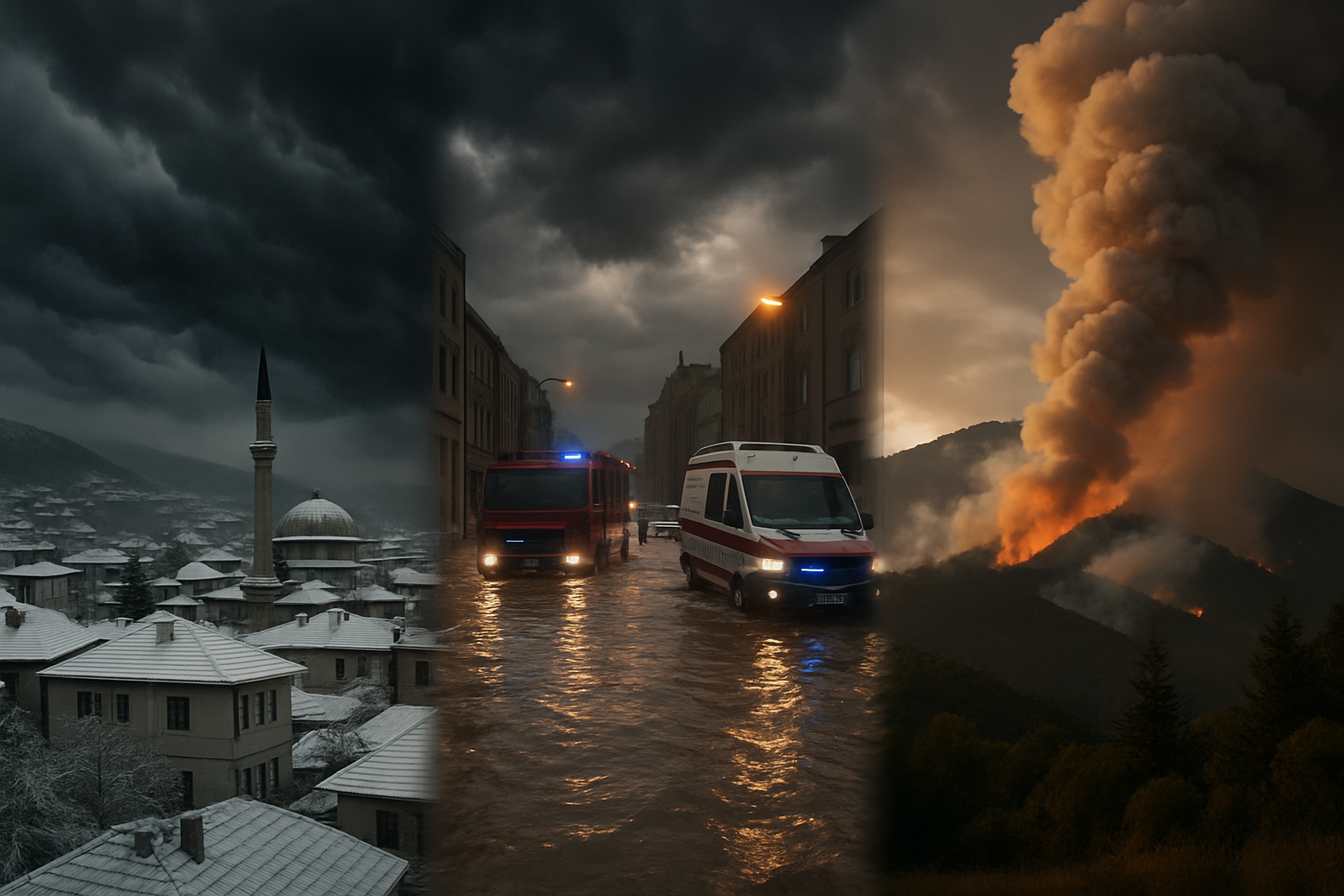
Extreme weather conditions have unleashed devastation across the Balkans and wider Europe, with Bosnia and Herzegovina experiencing catastrophic snow damage while Serbia faces flooding and Portugal battles wildfires, marking another chapter in the ongoing global climate crisis during the 22nd consecutive month of record-breaking temperatures.
The crisis reached its peak this weekend as Bosnia and Herzegovina reported widespread infrastructure collapse under heavy snow loads. In Vranska near Bosanska Krupa and Tršac near Cazin, buildings have collapsed under the weight of accumulated snow, leaving families without livestock and facing devastating economic losses according to local social media reports.
Bosnia's Infrastructure Under Siege
The scale of the crisis has prompted urgent warnings from Bosnia's Elektroprivreda utility company, which reported "extreme loading of electrical infrastructure" from wet, heavy snow causing serious mechanical damage to transmission and distribution lines. The unprecedented conditions have led to the breaking of concrete and steel-lattice poles, demonstrating the extreme nature of the mechanical stress on infrastructure systems.
The most severely affected region is the Una-Sana Canton, particularly around Velika Kladuša, where power supply disruptions continue. Emergency alternative solutions have been implemented for Bosanska Krupa and Bužim, while significant outages persist in Bihać, Cazin, and Sanski Most.
Meteorologist Nedim Sladić, speaking on N1 television, provided a sobering assessment: "The majority of precipitation is behind us, and now it's slowly weakening. The coming period doesn't bring any significant amount of precipitation until the end of the month." However, he warned that weather conditions will remain unstable for the next seven to eight days, with eastern Bosnia potentially facing new sleet and snow.
Regional Impact Spreads
The weather crisis extends far beyond Bosnia's borders. In neighboring Serbia, authorities have declared a state of emergency in Dagestan's capital following heavy precipitation that caused flooding and left 330,000 people without electricity. Emergency services report overwhelming demand as multiple systems strain under the extreme conditions.
"Due to faults on Elektroprenos BiH facilities that are not under Elektroprivreda BiH's jurisdiction, the most difficult situation with electricity supply is still in the Una-Sana Canton."
— Elektroprivreda BiH Statement
Portugal's Wildfire Emergency
While the Balkans battle snow, Portugal faces a different but equally dangerous threat. More than 100 emergency personnel and three aircraft have been mobilized to combat a forest fire that broke out in the Pedra Bela area of Peneda-Gerês National Park. The fire demonstrates the continent-wide nature of the current extreme weather pattern, with different regions facing contrasting but equally severe conditions.
Unprecedented Climate Context
This latest crisis unfolds during what climate scientists are calling an unprecedented period of global warming. January 2026 has been confirmed as the hottest month in recorded history, extending a streak of 22 consecutive months where global temperatures have exceeded 1.5°C above pre-industrial levels—the longest sustained extreme warming period in human history.
The World Meteorological Organization has indicated a 50-60% probability of El Niño development between July and September 2026, potentially driving temperatures to unprecedented levels by combining baseline warming with natural cycle amplification.
Infrastructure at Breaking Point
The current crisis exposes critical vulnerabilities in infrastructure systems designed for historical climate patterns rather than current extreme conditions. Emergency services across the affected regions report operating at or beyond capacity limits, while traditional mutual aid mechanisms prove inadequate when multiple countries face simultaneous disasters.

The European Union's Civil Protection Mechanism has been activated repeatedly in recent months, with Sweden and Denmark providing €246 million in assistance—representing the largest coordinated European weather response on record. However, experts warn that even these unprecedented support measures may prove insufficient given the scale and simultaneity of current challenges.
Economic and Social Devastation
The economic toll continues to mount across affected regions. Agricultural sectors face billions in losses as extreme weather destroys crops and disrupts supply chains during critical seasons. Tourism industries struggle with extended cancellations and infrastructure damage, while families risk losing generational properties.
Mental health services report increased demand as climate anxiety and repeated trauma from extreme weather events affect communities across Europe. The recovery timeline has shifted from traditional weeks to months or years, representing a fundamental change in disaster response approaches.
Adaptation Watershed Moment
Climate experts describe the current crisis as a watershed moment requiring a choice between reactive crisis management and transformative infrastructure adaptation. The concept of "building back better" with climate-resilient infrastructure has evolved from an optional enhancement to an essential survival strategy.
Dr. Nedim Sladić's warning that current instability represents "the price of a warm February" underscores how seasonal patterns that have guided infrastructure design, agricultural planning, and emergency preparedness for centuries are no longer reliable frameworks.
International Cooperation Under Strain
Environmental challenges transcend political boundaries, with atmospheric systems and ocean currents carrying climate effects globally regardless of borders. The simultaneity of disasters is testing cooperation mechanisms originally designed for stable regions to assist others during isolated emergencies.
Success in addressing current challenges requires unprecedented international cooperation, enhanced multi-sector coordination, and increased financial commitments to environmental protection as essential infrastructure rather than optional spending.
Looking Forward
Additional weather systems are developing in the Atlantic and Pacific regions, with authorities maintaining high alert status globally. Current conditions may persist for weeks, potentially establishing a "new normal" characterized by extreme weather frequency and intensity that permanently challenges traditional emergency response frameworks.
The convergence of extreme weather, infrastructure vulnerabilities, and emergency response limitations underscores the urgent need for coordinated international action. The tools, knowledge, and cooperation frameworks exist for comprehensive environmental protection, but success depends on unprecedented speed and coordination through sustained international cooperation and political commitment to environmental protection as essential infrastructure for human prosperity and planetary sustainability.
As the crisis continues to unfold, the fundamental question remains whether humanity can organize and implement solutions rapidly enough to maintain planetary habitability during what scientists describe as Earth's most environmentally challenging period in recorded history.